SEE MORE COVERAGE OF CADA SUMMIT 2016

Two demographic experts presented a snapshot into the changing consumer landscape with their presentation: The DemandShift at the fourth annual CADA Summit at the Omni King Edward Hotel in Toronto.
Their main message: most of us haven’t noticed how much our country has changed — and even fewer are prepared for what those changes will mean for their businesses.
“You don’t know your own country anymore,” says John Wright, Senior Vice-President and Managing Director Public Opinion Polling Division, Ipsos Public Affairs. “This room doesn’t look like Canada anymore. Not at all.”
Wright says some of the key changes are captured in their next book called DemandShift. “There are three things changing this country: age, urban and ethnicity,” says Wright.
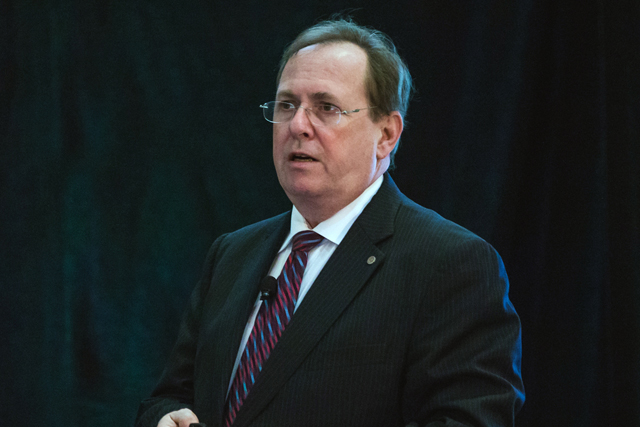
John Wright, Senior Vice-President and Managing Director Public Opinion Polling Division, Ipsos Public Affairs
Wright says our outdated notions of Canada mean that we are “living a stereotype” that no longer matches the demographic reality of the country, in terms of age, values and ethnicity. “The car industry will no doubt experience part of this,” says Wright.
Wright then called upon his colleague Dr. Darrell Bricker, the CEO of Ipsos Public Affairs, a division of the world’s second largest market research firm with offices in 25 countries, to further illustrate the point.
“We have changed,” says Bricker. The old Canada was English and French and very white, more rural, trusted public authorities, we were fearful, paternalistic and conservative, and “reflexively” anti-American, says Bricker.
But massive and unstoppable demographic trends have changed everything. “These forces of change have produced a new Canada,” says Bricker.
The new Canada is more urban and multi-cultural, we are world traders with a growing focus on services, we are older and more female, we are tolerant and opinionated, demanding and difficult, we are becoming more ideologically divided, we are less engaged with traditional institutions, we have a growing loss of historical memory and context, and we are aggressively Canadian.
One of the big things that has changed is people’s attitudes. People are far less trusting than they used to. Bricker presented a chart that showed that car salespeople are among the least trusted at eight per cent. That’s just below politicians at nine per cent. “There is nowhere to go but up,” says Bricker.
LIVING LONGER
One impactful trend is that we living much longer. “We are really good at keeping people alive,” he says. In the 1920s, the average lifespan of Canadians was 57. Now it’s about 81 and by 2036 it will be 87.
Compounding the issue is the fact that our birth rate is also steadily dropping. Statistics Canada projects that by 2060, Canada’s birth rate will be 0.9. “This is happening in every province,” says Bricker.
When we have a lot more older people, what does that mean for society?
It means we stay in our homes longer, we work longer, we don’t create opportunities for Gen X and millennials, we have a longer financial spend horizon, higher healthcare costs and we will require an explosion in services towards 2036 to manage all of this.

Dr. Darrell Bricker, the CEO of Ipsos Public Affairs
“We aren’t talking about this,” says Bricker. “Demographics are entirely predictable. You can see it coming at you like a slow train. This isn’t going to change. You are just going to see more and more of it.”
“Low fertility and an aging population means a workforce that is shrinking,” says Bricker. Simply put, Canada will need more people, says Bricker.
But Canada’s immigrants are no longer coming from traditional places like the United Kingdom and Europe. Instead, they are coming from other countries such as China and the Philippines. “Every second person in Toronto today was born in another country,” says Bricker. “That’s an enormous amount of change.”
“Get used to it, that’s our new future,” says Bricker. “We need them. We will be about one million skilled jobs short by 2020.”
The good news is that immigrants like Canada. They feel good about the country, and we rank high on the list of countries where people would want to relocate.
Wright says technology itself isn’t the big changer. It just helps us do things better.
“It’s about mobility,” says Wright, who discussed the impact of all these demographic trends on the auto retail industry.
Wright discussed trends impacting three distinct consumers: maturing drivers 65+, caregivers (family/agency), and transport and delivery (Uber).
Wright talked about the need for vehicle designs to adapt and evolve to better meet the needs of this group who see “mobility” as the service not just vehicle ownership.
The experts then fielded questions from the audience about how these trends impacted their businesses.