New services make tire storage a smarter option for some dealers — and customers love it
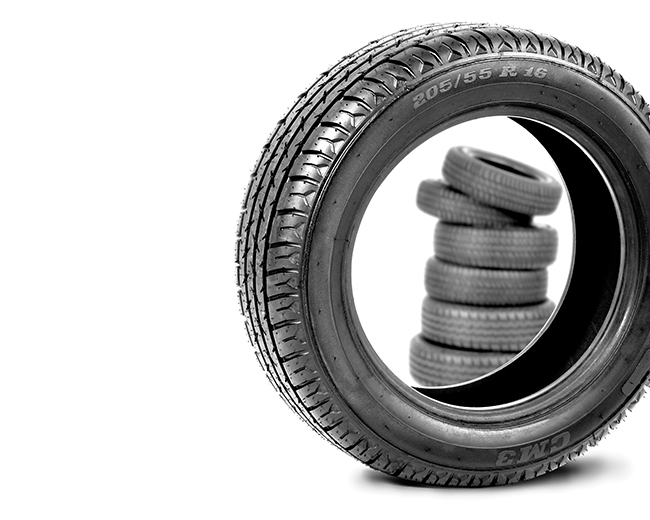
FOR MANY CONSUMERS, having their dealership store their tires is an added bonus, not a huge cost.
For some, it’s as simple as not wanting the hassle of moving them and getting their hands dirty. Just moving them in and out of the garage each season can become a dreaded chore.
For those who live in condominiums or tight urban settings, finding the space is a challenge in itself. Because tire storage through a dealership is both convenient and usually inexpensive, it’s become a no-brainer for many consumers who will be thankful for the offer.
Consumers also like to know that the storage facility is insured, that tire inspection is part of the service, and that their tires will be stored in a climate-monitored space that’s simply better for the rubber than anything they could match at home. Most of all, they don’t want to be inconvenienced.
DO-IT-YOURSELF
Some dealers manage the service themselves, usually with a separate tire storage facility that’s easily accessible from the dealerships.
Apart from pleasing customers, it can also be a good line of business, and can have added benefits such as boosting tire sales and generating more service.
“We charge $60 a season,” says apprentice mechanic Matthew Elmer, whose job includes tire wrangling for his west-Toronto dealer’s storage business. “And we offer free storage for one season if you buy a set of tires, which seems to really perk people up, especially first-time winter tire buyers who haven’t yet figured out what to do with them.”
Elmer says his employers have off-site storage about three kilometres from the dealership at a former service centre they bought for the purpose. “It’s heavy and dirty, not the most fun work,” he says, but his upbeat attitude and being around the cars he loves make up for it. “I can transfer six sets of tires each trip with a pickup,” he says, “so that’s $360 round trip, and it only takes me an hour.”
While making its management the purview of the service department, its actual handling can be done efficiently by a dealership junior like Elmer, who’s on an hourly rate.
USE SPECIALIZED SERVICES
Before embarking on using a third-party tire storage service, Parts Manager Darryl Schlichting of Murray Chevrolet Cadillac Buick GMC in Brandon, Man., says research is key.
“I looked into it really well,” he says. “We’ve been in the customer tire storage business now for two years, so four rotation cycles, but before that we found out what other dealers were doing and what they were charging. I decided that, unlike some, we weren’t going to do this for free, as it does involve labour to store and retrieve the tires.”
“The second obstacle we had to overcome was how to catalogue and track them,” Schlichting says. He says that while many dealers he talked to were simply tagging the tires with customer information and inputting it into a spreadsheet, he found an excellent program from Tire Storage Solutions in Toronto.
“It interfaces with our ADP system and pulls the customer info from the ADP system, creates special tire labels with all the customer information on them, as well as wheel location (left front, right rear, etc.). We have a hand-held device we scan the labels with and enter the tread depth, type of wheel, size of tire, and then download it against the customer information in the program,” he says.
This level of organization can help upsell the storage service into repairs as well. “The program allows us to see how many sets we have stored and where they’re stored too. We can even take pictures of the wheels and tires and we do if we notice any prior damage,” Schlichting says.
“We can then target customers with low tread depths and create a sales proposal for replacement tires on their next visit, or create a custom report of how many customers have 5/32 left on their tires, as an example.”
The system also allows multiple vehicles under the same owner, as it tracks tires by the serial number of the vehicle of which they came off. Although the program isn’t cheap — about $300/month — because of the number of tires they handle and the fact that it interfaces so well, it greatly reduces staff time and paperwork.
“We have never lost or misplaced a set of tires,” Schlichting says.
Schlichting says that while they haven’t done an ROI analysis yet, he thinks it’s definitely been a plus for customer loyalty. “It allows us to see the customer at least two times a year, and when we have the vehicle here we can inspect it for any other needed services or repairs. We want our customers to drive safe and reliable vehicles.”
Since they started offering the service, the dealership has run out of space in their own building and started to store additional customers’ tires at a secure location off-site. It makes wrangling easier, as it takes only about four hours’ notice to pull the tires from storage and have them ready for the customer’s arrival.
Their BDC pulls reports of the tires in storage and contacts customers to set up appointments pro-actively, which Schlichting says allows them to maintain an orderly flow into the shop, and gives them adequate time to properly prepare.
There are also a host of off-site storage solution providers available right across the country, and many offer similar services and competitive pricing. Your OEM might even have a preferred vendor they recommend working with. Shop around and find the service that’s a best fit for your needs and that services your region.
Although they are bulky, require a lot of storage space, and in the busy changeover periods do require adequate personnel to ensure a smooth flow, focussing on a few important aspects of the tire storage business can help ensure profitability.
“The keys to having a profitable tire storage program are: charging a fair market price for the service, having a good system to track customers’ tires — it would take ‘losing’ just one set of expensive wheels or tires and all your profits would be gone for the year — and good communication between the people storing the tires and the service department,” says Schlichting.