HOW BOTH DEALERS AND OEMS CAN WORK TOGETHER TO DELIVER A CONSISTENT, HIGH QUALITY CUSTOMER EXPERIENCE
Take a step back. Think for a minute. When somebody steps foot into your showroom or drives into your service lane, what do you think is most likely on their mind about the facility in which they’re entering? That it’s your dealership, or that you’re essentially an extension of the manufacturer? As far as they’re concerned, there’s a good chance the customer views both the OEM and retailer as one in the same.
Richard Cooper, Canadian auto dealer columnist and a customer research expert in automotive retail, who has conducted thousands of surveys, says a core issue with our industry is the fact that it’s hard to define what roles each of the stakeholders actually has in delivering on the customer experience. It’s something he touches on his column for this issue but relating to our feature article right here, says there are two sides that need to be considered.
One, as stated above, the customer doesn’t often tend to make a huge distinction between the dealer and the manufacturer and two, the dealer, manufacturer and finance provider often find it difficult to provide a consistent message to the customer.
And when you have consumers that are now comparing their car shopping or service experience to almost any other in retail, the situation is further complicated.
He says for the industry to deliver a consistent message, OEMs, dealers and finance providers need to have the right people in place, with the right tools and resources to deliver a consistent and relevant message to the customer. “There needs to be that responsibility,” he says “for all stakeholders involved in delivering the customer experience.”
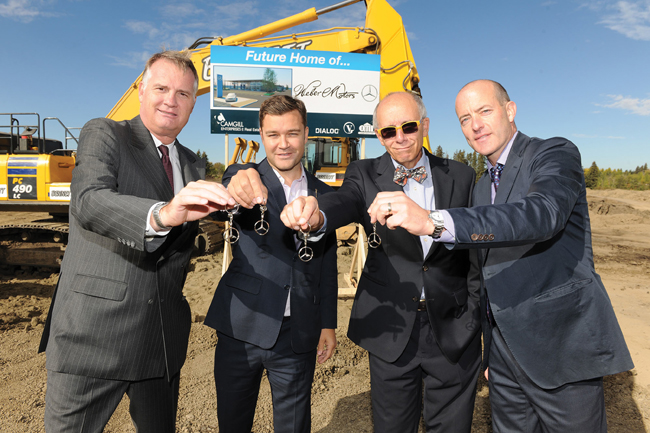
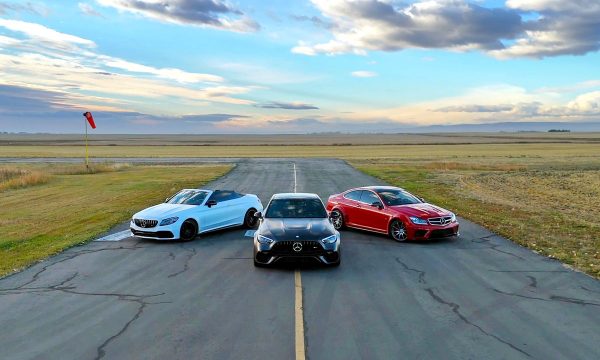
Mercedes-Benz Canada has been breaking ground on new dealerships and revamping existing stores to boost service capacity
FROM BOTH SIDES
Mercedes-Benz Canada is arguably in a very unique position, for as President and CEO Tim A. Reuss explains, “we are both an OEM and a dealer — one of the largest dealers in Canada.” Sitting across from me in the boardroom of one of the company’s corporately owned stores, Reuss says that from the moment a particular brand is being represented, there needs to be “a seamless process,” all the way through to vehicle delivery and after sales service.
“The customer interacts with the brand and expects that brand experience, no matter whom they are communicating with, whether it’s national headquarters or talking to a salesperson, service advisor or technician at the dealership.”
Mercedes-Benz Canada, which sees around 50 per cent of all sales volume generated through its 13 corporately owned stores nationwide, has placed a very strong emphasis on integration when it comes to systems and processes.
“Within the corporate realm, all our dealerships run the same IT, DMS and sales system,” says Reuss. “The idea is to make the flow of information seamless, so there are no breaks in the wall. In the past, there were often these walls, let’s call them breaks in communication, where perhaps an OEM came up with an idea, threw it over the wall told the dealers to implement it, which they did and then nothing was heard back, or a dealer would try to communicate customer issues to the OEM and wasn’t able to get an effective response.”
Another common issue and one which some dealers are still grappling with, concerns the handling of customer leads. Reuss uses a good example of those leads that come in during auto shows, when attendees inquire about a vehicle on display. “It used to be that leads were often collected at the show, faxed to the nearest dealer but when the OEM regional manager would contact the store there was often a mystery as to what happened to those leads.”
Today, as Reuss notes, the process has become a lot more sophisticated. Leads are captured electronically and automatically pushed out to nearby dealers for those people that enquire at the show. “Not only do the leads get pushed out,” says Reuss “but we also get feedback, so if there is a problem, the OEM and the retail network can immediately tackle the problem and address it.”
He does note however, that the auto retail industry still has a long way to go to match the retail experience in some other fields. “Let’s not kid ourselves, the customer is way ahead of us on this. We, as an industry are playing catch up. Customers have already become accustomed to everything working instantly. They aren’t comparing our dealership to one down the road, they are comparing it other industries and brands, such as Apple or Amazon.”
Reuss notes that now, in some Apple stores, a customer can literally check themselves out at the store with their phone. “You can take something of the shelf, scan it and pay for it with your iTunes account,” he says. By doing so, the bureaucratic hurdle of ringing the item through is essentially eliminated, freeing up staff to do more product consulting and building rapport with customers.
SOFT SKILL FOCUS
So where is the auto retailing industry really positioned right now? Are we making serious steps in the right direction? According to J.D. Ney, Experience Manager, Automotive Research and Consulting at J.D. Power in Canada, based on studies J.D. Power has conducted, there’s a strong correlation between high customer satisfaction scores and completion rates for brands that pay a great deal of attention to processes both at the OEM and retail level.
“The top performing brands spend a great deal of time on training staff for soft skills in executing these processes and being consistent in deploying them,” says Ney. “It’s about making sure whether the people employed at a dealership have the appropriate soft skill training to tailor the sales or service experience to that particular customer that is standing in front of them.”
He notes that the hospitality industry and particularly high profile brands such as Four Seasons and Ritz-Carlton are seen as benchmarks when it comes to soft skill training and that it’s no coincidence that in some auto retail locations, customers are referred to as “guests.”
When it comes to the customer vehicle experience, there’s the old adage that sales is the honeymoon, service is the marriage. Once the novelty of the car purchase has worn off, a customer will spend the next several years, having to decide where to take their vehicle for scheduled maintenance and (when required) repairs.
Tim Reuss says there’s still a huge opportunity for both OEMs and dealers to capitalize on the fixed ops side in delivering the experience customers want and increasingly, expect.
He says that in the case of Mercedes-Benz Canada, while sales demand has continued to grow, service capacity hasn’t kept up. “And it’s not just us, but our competitors in the luxury segment,” says Reuss. To help address the issue, Mercedes-Benz Canada is revamping existing stores and opening up new ones, in both its corporate and independently owned retail networks. “It’s one reason why you’ve seen me touring the country in a hard hat,” he says.
A third option is looking for ways to extract more efficiencies out of existing stores, either by re-configuring service departments to handle more vehicles and/or extending service hours and opening on Saturdays. He says that for dealerships in locations where there really isn’t room to expand, like those located in expensive downtown urban centres, such an approach can reap huge benefits. “When we talked about extending service to weekends around two and a half years ago, there was some skepticism,” he says. Today however, Reuss notes that the results have been phenomenal. “Our customers like it for the convenience factor because they drop their car off and go to the mall, instead of taking time off work to schedule their vehicle for service.” Meanwhile, he says, technicians love it because they get to spend more quality time during the week with their families.
Reuss says that when both OEMs and dealers are able to work together on expanding service capacity and understanding the particular needs of a store’s clientele, a lot of the other issues related to customer dissatisfaction tend to get resolved.
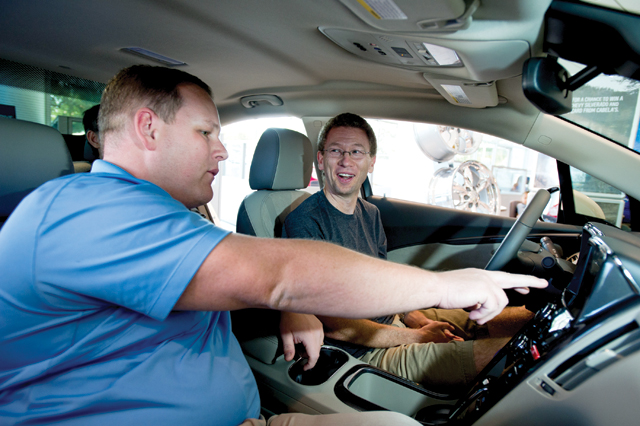
THE DANGER OF TECHNOLOGYWhen it comes to delivering on the customer experience, there’s an argument that increasingly advanced technology can prove to be both a blessing and a curse. As vehicles become more sophisticated and advanced telematics are able to link the OEM and dealer to the vehicle, as well as notifying the customer when to bring it in for service, there’s a danger that relying too much on the technology can actually negatively impact the experience. “If we abdicate the responsibility of controlling the experience towards the vehicle, we run the risk of losing that personal connection with the customer at the dealership level,” says J.D. Ney. He notes that since J.D. Power began conducting vehicle quality studies in 1987, the gap between those brands that ranked high in terms of satisfaction and quality and those that didn’t has narrowed to the point that it’s hard to distinguish between them any more. “As an OEM or a dealer, you can’t really say you should do business with us because our product is vastly superior. Today, it’s about the experience.” Ney says that one area that both OEMs and dealers can really help elevate the modern customer experience concerns vehicle delivery. “When a customer drives off the lot in their new vehicle, you want to make sure they understand the technology within it and how it operates.” He says that in looking at J.D. Power Problems Per 100 vehicle numbers over the last several years, there’s a stark contrast between problems viewed as 100 per cent mechanical and those that are a result from customers not understanding how a particular technology or feature works (perhaps because they didn’t received adequate instruction during the delivery process). “The issue, both for the OEM and the dealer,” says Ney, “is that customers don’t tend to differentiate between the two.” |