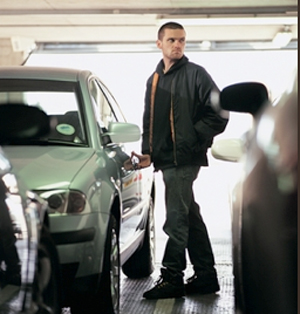
 With more than 23,000 incidents of motor vehicle theft in Ontario in 2010, according to Statistics Canada, the subject is a concern to Ontario vehicle owners. According to a recent survey conducted on behalf of LoJack Canada, more than one in three respondents are concerned about having their vehicle stolen and 10 per cent claimed that they have been victims of vehicle theft. Most also responded that they are willing to go to great lengths to avoid having their vehicle stolen. But despite the risks, only 10 per cent install an anti-theft or vehicle tracking system.
LoJack Canada, distributor of Boomerang and now LoJack brands, recently commissioned a survey by Angus Reid to learn more about vehicle theft among car owners across Ontario and Quebec. The survey results revealed that car theft isn’t taken lightly by owners.
Many respondents to the survey aren’t properly equipped to ensure the recovery of their stolen vehicle, incorrectly thinking they are fully covered by their insurance policy.
The survey found that nearly 60 per cent of Ontarians surveyed said that they consider the potential of vehicle theft in their personal car or truck purchases.
- While 81 per cent are aware that security devices and systems for tracking and recovering stolen vehicles exist, only 10 per cent of Ontario vehicle owners actually use a tracking system;
- 86 per cent of stolen vehicles in Ontario were not equipped with an anti-theft or vehicle tracking system.
“Because vehicle owners are concerned with the possibility of having their vehicle stolen, it is important they be able to install effective and reliable anti-theft vehicle tracking and recovery solutions,” said Michael Lendick, National Security Director and Law Enforcement Liaison, at LoJack Canada. “LoJack vehicle tracking and recovery systems offer the latest technology to deter theft and find stolen cars and trucks anywhere across Ontario, Quebec and the United States. They are so reliable that they can even track and recover vehicles in areas that could obstruct GPS signals such as steel containers, which is one of the reasons why LoJack is the only system to be used by many police services for their stolen vehicle tracking.”
Vehicle theft is not only stressful and terribly inconvenient, it is time-consuming and can be unexpectedly expensive. According to the survey, 64 per cent of Ontarians stated they believe their insurance company covers them entirely in the event of vehicle theft. Unfortunately, this is not the case, as theft can cost the victim an average of $2,500 in out-of-pocket expenses alone, even if they have vehicle replacement insurance. Moreover, the Insurance Bureau of Canada estimates that vehicle theft costs Canadians $1 billion annually in insurance and law enforcement costs, thereby increasing each policyholder’s insurance premium as well.
“Most victims of vehicle theft don’t realize the true financial implications for themselves and others. That’s why it is important they understand the details of their insurance policy and contact their insurer as soon as possible,” says Lendick.
The company says its vehicle tracking and recovery teams have found more than 7,200 vehicles in Canada worth approximately $351 million.
An overwhelming 90% of survey respondents take concrete actions such as parking their vehicle in well-lit locations and making sure their doors are locked to avoid theft. However, many also engage in behaviour that can lead to vehicle theft:
- 44% of Ontarians admit to having parked their car and leaving it unlocked.
- Leaving the car unattended with the keys in the ignition and the engine running is an invitation to theft. Yet, 24% of Ontarians responded that they have done just that.
LoJack Canada, distributor of Boomerang and now LoJack brands, commissioned Angus Reid to conduct an online survey from May 25 to May 29, 2012, among a sample of 808 Ontarians and Quebecers that own a car, and who are Angus Reid Forum panel members. The margin of error on the full base — which measures sampling variability — is +/- 3.4%. Discrepancies in or between totals are due to rounding.