Wholesale used-vehicle prices are falling at a faster pace in Canada, with the latest figures showing broader depreciation across the market as November progresses.
According to Canadian Black Book’s (CBB) Market Insights report for the week ending November 14, overall wholesale values declined 0.54 per cent, compared with a 0.36 per cent decrease the previous week. The latest drop was also steeper than the historical average of 0.30 per cent for the same week between 2017 and 2019.
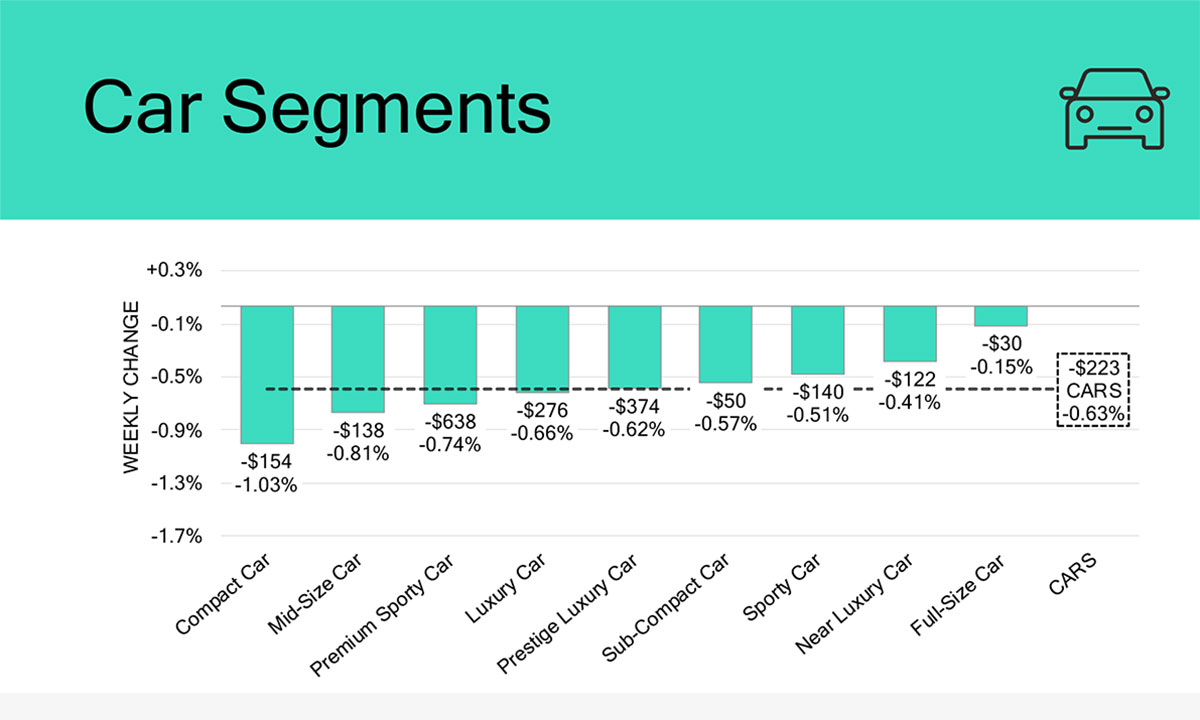
Car segments recorded a 0.63 per cent decline, up from 0.39 per cent the previous week. Compact cars led the losses at 1.03 per cent, followed by mid-size cars at 0.81 per cent. Every car segment tracked by CBB experienced negative price movement.

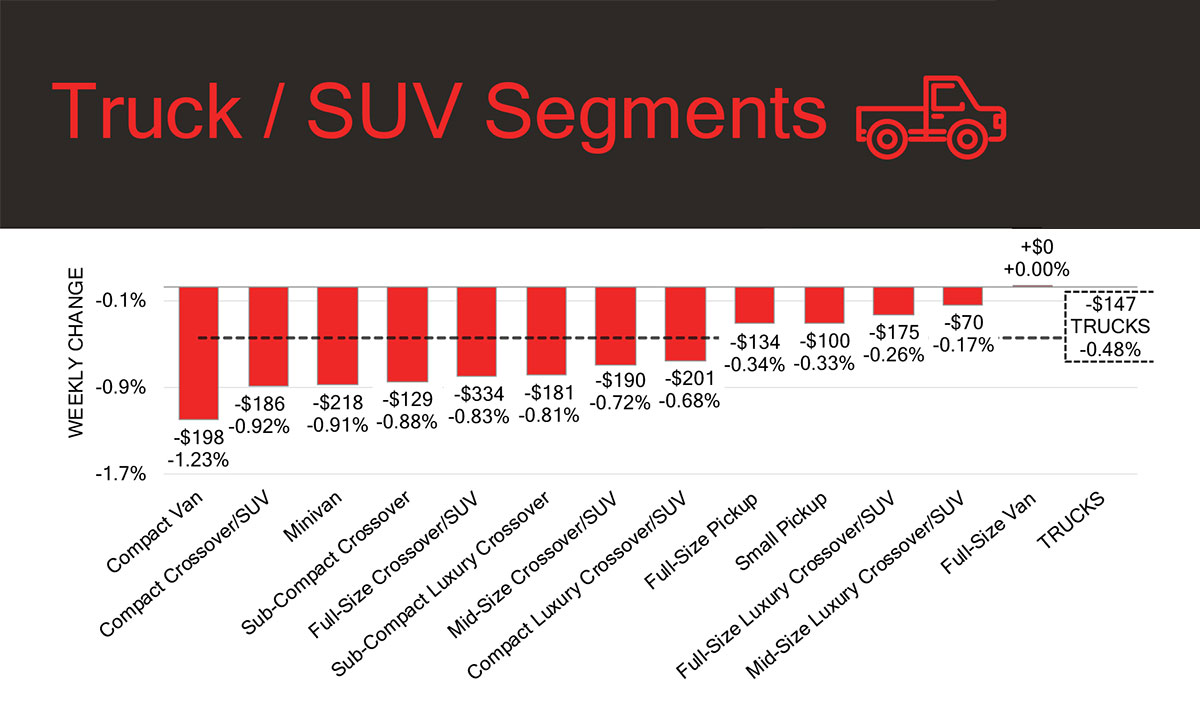
Truck and SUV values also weakened, falling 0.48 per cent compared with 0.35 per cent a week earlier. Compact vans posted the largest decline at 1.23 per cent, while compact crossovers/SUVs dropped 0.92 per cent.
The report found that slightly less than 82 per cent of market segments experienced average value movements exceeding $100 in either direction.
Auction inventory remained at normal to high levels, although upstream channels continued to receive priority access. Demand for high-quality vehicles remained strong in both Canada and the United States.
On the retail side, average used-vehicle listing prices edged lower to $37,100, based on a 14-day moving average of approximately 180,000 vehicles advertised on Canadian dealer lots.
The broader economic picture remained mixed, with Canada’s unemployment rate rising to 6.7 per cent in October from 6.5 per cent in September, according to the report.
CBB also highlighted several developments affecting Canada’s automotive industry. Stellantis signed an agreement to sell its Brampton assembly plant to defence contractor Roshel, which anticipates employing 700 to 1,000 Stellantis workers. Honda is preparing a hybrid-only next-generation CR-V for production in Ontario, while Stellantis Financial Services is expected to begin operating in Canada in the first quarter of 2027.
The report also noted stronger October sales for Japanese automakers, including a 70 per cent increase for Subaru, and a proposed increase in the federal luxury tax threshold for electric and hydrogen vehicles.