
Deepfakes and multichannel scams are making fraud harder to spot — and putting new pressure on dealership defences.
For years, dealership cyber security advice often centred on spotting the suspicious email: the strange request, the misspelled word, the link that didn’t look quite right.
Those clues are becoming less dependable as artificial intelligence gives cyber criminals the ability to make familiar scams faster, cheaper and considerably more convincing.
According to Eugene Ng, MNP’s national cyber security and privacy leader, one of the biggest changes is the use of AI to commit fraud and target users through social engineering — including impersonating people in real time.
“The rise of deepfakes through Zoom or Teams conversations is probably the greatest threat to auto dealers today,” he said.

When seeing isn’t believing
During an interview with Canadian auto dealer, Ng demonstrated just how little friction is involved.
Using readily available technology, he placed another person’s face over his own on video. A photograph found online can be enough to create the effect, which can then be used during a Zoom or Teams call.
Voice can be manipulated, too. Ng demonstrated technology he had used to reproduce the voice of an MNP executive, adding another layer of credibility that could be used in an impersonation attempt.
But deepfakes are only part of the problem.
“At the end of the day, they’re going to have to send an email, they’re going to have to communicate somehow, they’re going to have to do research on the targets, and all of that is now being enabled by AI to make it faster, cheaper and more effective and targeted,” said Ng.
AI can make business email compromise, fake invoices and other forms of social engineering more convincing. It can also make it easier for criminals to gather information about the people they are targeting.
“There is not one silver bullet or one threat” dealers need to watch, said Ng. “It’s everything.”
At the heart of the problem is trust.
“The whole concept of trust now, I would say, has eroded since COVID because everything’s done digitally,” said Ng, pointing to the amount of business now conducted through video conferencing, email and phone conversations.
Training and awareness therefore need to be priorities at both the dealership and employee level. But Ng cautioned that no single piece of technology can remove the risk.
“Unfortunately, there is no silver bullet … there is no easy button that you can push to say, ‘Okay, if I just do this thing, then the dealership’s going to be secure,’” he said.
Instead, cyber security needs to be treated as an organization-wide responsibility, with buy-in from senior leadership through to employees using dealership systems every day.
A changing threat
The Canadian Centre for Cyber Security, part of Communications Security Establishment Canada (CSE), sees a similar shift across the broader cyber threat landscape.
In responses provided to Canadian auto dealer, CSE spokesperson Janny Bender Asselin said widely available technologies, including generative AI, can help malicious actors produce convincing phishing emails, voice scams and deepfake impersonations faster and at greater scale.
They can also lower the barriers for less-skilled attackers to carry out certain cyber-enabled activities.
AI can help attackers identify and exploit weaknesses more quickly as well, potentially shortening the amount of time organizations have to respond.
The Cyber Centre’s Ransomware Threat Outlook 2025 to 2027 identifies ransomware as one of the most disruptive and persistent cyber threats facing Canadian organizations.
For auto retailers, the risks are particularly relevant because dealerships hold sensitive customer and financial information while relying on interconnected digital systems for sales, financing, payment processing, inventory management and other operations.
Third-party vendors create another layer of exposure. A compromise involving a service provider can potentially disrupt dealership operations or expose sensitive information.
Despite the emergence of AI, many of the recommended defences remain familiar.
The Cyber Centre recommends strong, unique passwords or passphrases, phishing-resistant multi-factor authentication, prompt software updates and strong identity and access controls.
Organizations should also restrict privileged access, maintain secure backups and regularly test incident response and recovery plans.
Employee training and clear reporting procedures remain important, along with reviewing the cyber security practices of key service providers.
Beyond the suspicious email
The next challenge may be recognizing that an attack no longer has to arrive through a single channel.
Stephen Gonzalez, senior sales engineer at CDK, said cyber criminals are increasingly combining different forms of communication to make an approach more credible.
“I think now more so than ever, cyber criminals are using what they call a multichannel approach where they might send out a very broad phishing email and then they might follow up with a phone call referencing that particular email that they just sent out,” said Gonzalez.
The approach can also extend to text messages and QR codes that direct victims to malicious websites.
Information gathered through social media and other public sources can make those communications increasingly targeted and believable.
That changes the challenge for employees.
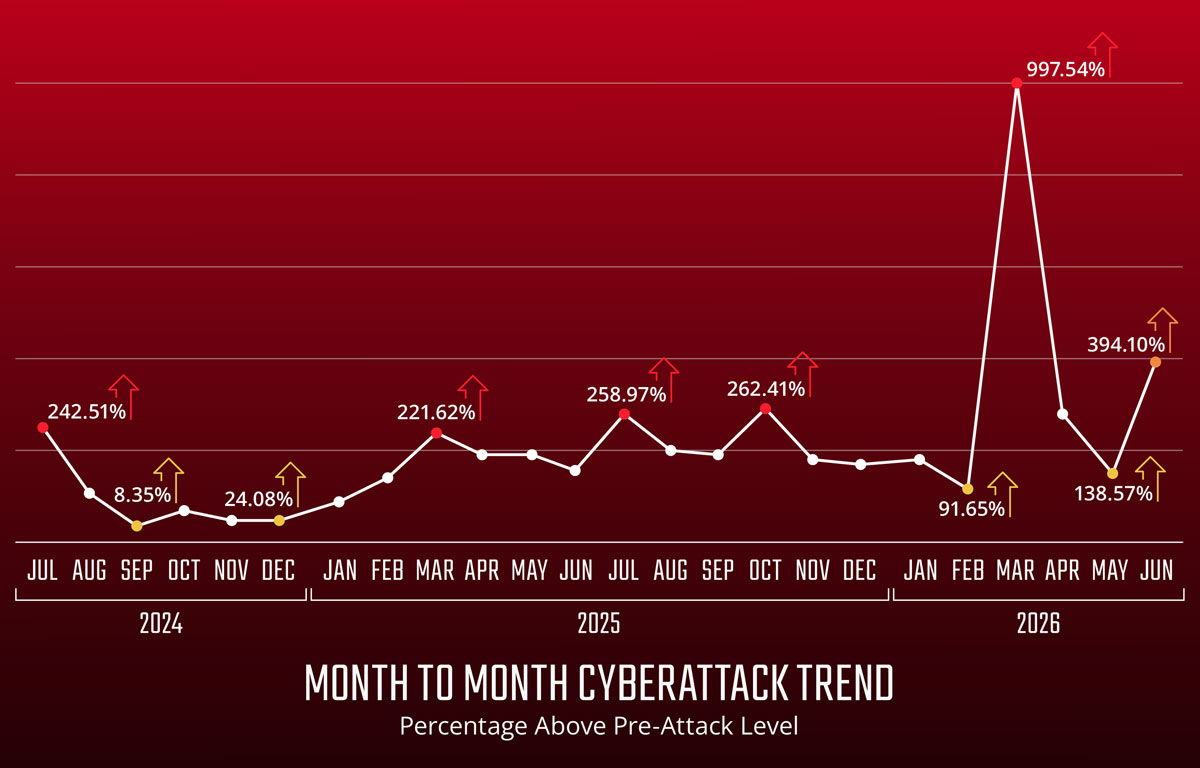
Source: Proton Dealership IT and Cybersecurity
Instead of deciding whether one email looks legitimate, they may encounter a series of communications that appear to confirm one another.
Advance findings from CDK’s 2026 State of Cybersecurity study, provided to Canadian auto dealer ahead of its planned October release, show 91 per cent of dealerships rate cyber security as very or extremely important.
Sixty-two per cent feel very or extremely confident in their preparedness, up from 48 per cent in 2025.
Yet the top three threats identified by dealers remain email phishing, lack of employee awareness and ransomware. Sixty per cent also plan to increase their cyber security budgets over the next 12 months.
For Gonzalez, the response requires technology and people to work together.
Dealerships need tools such as email authentication, spam filters, multi-factor authentication and modern firewalls, he said, “but you also have to incorporate the human element, security awareness training.”
That human layer includes giving employees a simple way to report suspected phishing and putting procedures in place that don’t depend on a single communication or individual to establish trust.
For sensitive financial transactions, Gonzalez recommends requiring a second person to independently verify the request.
“If I’m the controller or I work in the business or accounting department and I get an email asking me to do a financial transaction, I have to verify that with somebody else within my organization, and it requires two people to sign off on that transaction,” he said.
The warning signs may be changing, but the basic discipline hasn’t.
When email, phone calls and even video can all be manipulated, stopping, questioning and independently verifying sensitive requests may matter more than ever.