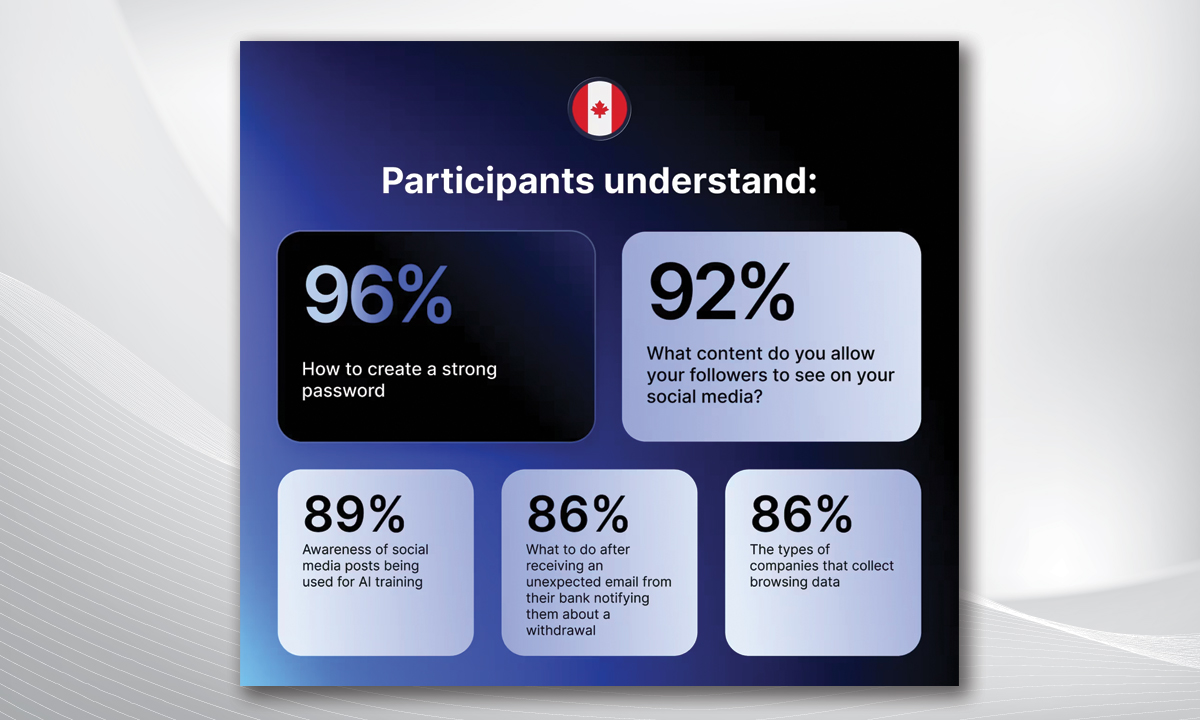
Canadians have a relatively strong understanding of cybersecurity threats, but significant gaps remain in how they protect their information online, according to NordVPN’s 2026 National Privacy Test.
Canada ranked seventh globally with a score of 45 out of 100. The annual open-access test drew 23,181 participants from 167 countries, who answered 24 questions covering online privacy, cybersecurity and responses to digital threats.
Canadian participants performed particularly well on familiar cybersecurity practices. Some 96 per cent knew how to create a strong password, while 78 per cent correctly identified common AI-powered scams. Another 54 per cent recognized key indicators of deepfake content, four percentage points above the global average.
Practical privacy knowledge was considerably weaker.
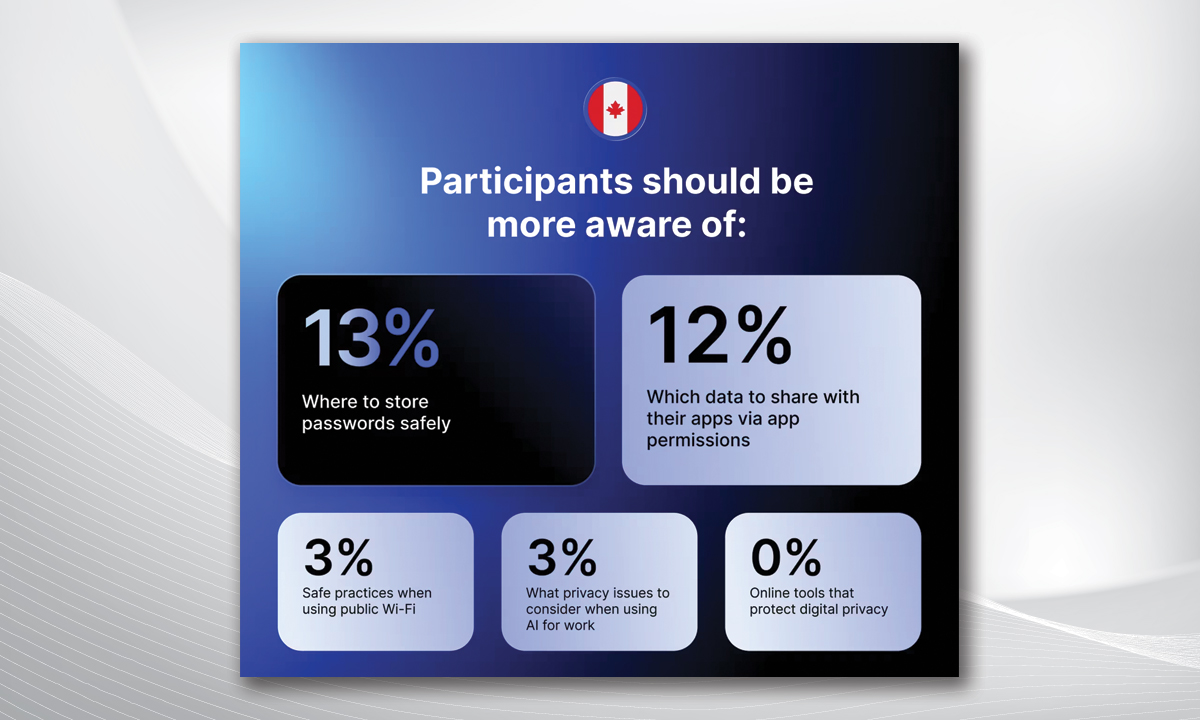
Only 12 per cent understood how to manage data shared through app permissions, while just three per cent correctly answered a question about safe public Wi-Fi use. Perhaps more relevant for businesses, only three per cent recognized privacy issues associated with using AI for work.
“Digital safety is no longer just about knowing the rules,” said Marijus Briedis, Chief Technology Officer at NordVPN, in a statement. “As AI makes scams more convincing and data collection less visible, people need to judge what information a service really needs, whether content can be trusted, and what protection a privacy tool actually provides.”
The findings underscore the growing importance of employee cybersecurity awareness as AI tools become more common in daily operations.
Dealership employees routinely handle customer, financial and business information, pointing to the importance of cybersecurity training that goes beyond passwords and phishing to address AI use, app permissions, privacy tools and newer forms of digital fraud.