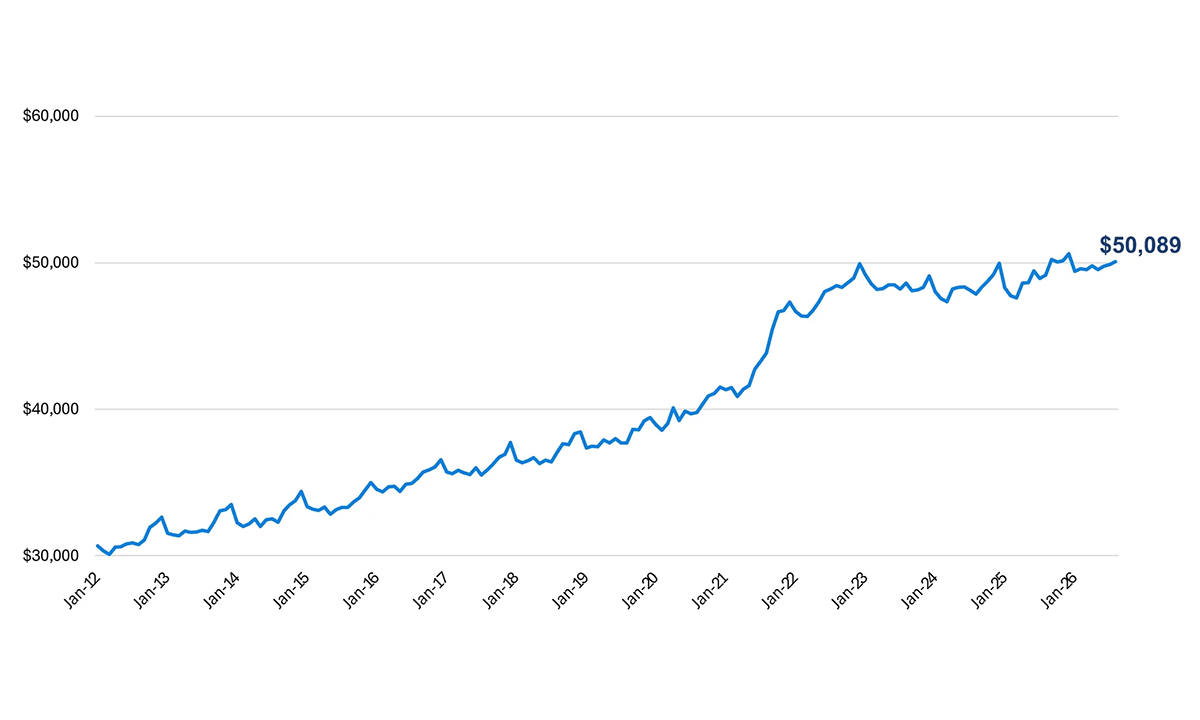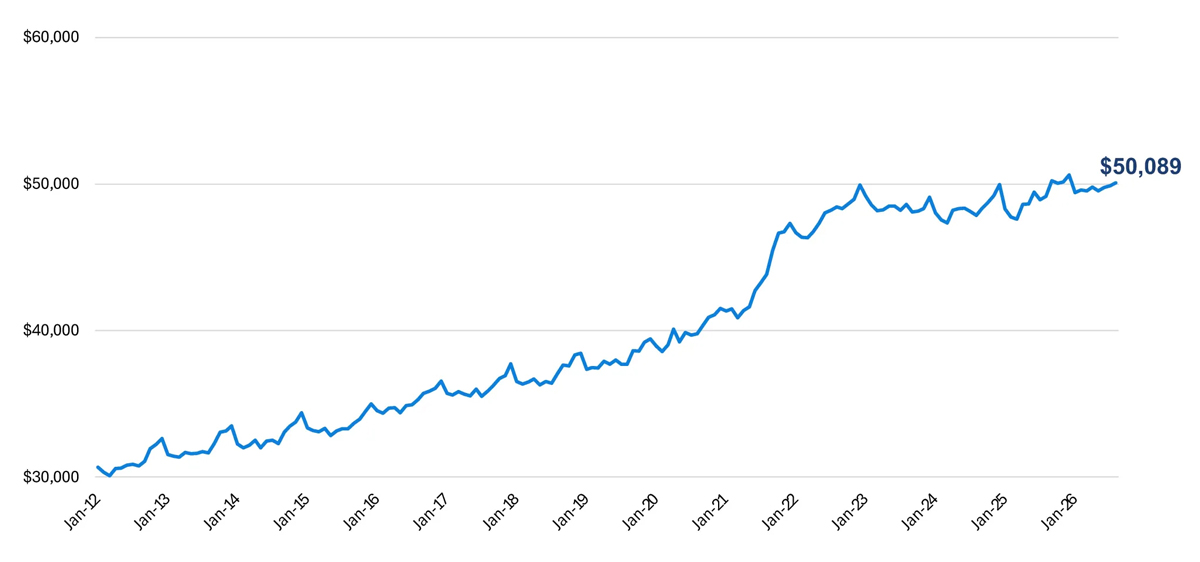
The average transaction price (ATP) for a new vehicle in the U.S. returned above US$50,000 in August, with Kelley Blue Book reporting increases across each of the market’s five highest-volume segments.
According to the Sept. 10 report, the industry ATP reached US$50,089, up 0.5 per cent from July and 1.9 per cent from August 2025. It was the first month of 2026 in which the average exceeded US$50,000.
The average manufacturer’s suggested retail price also increased, reaching US$51,852, up 2.2 per cent year over year.
Incentive spending, however, moved in the opposite direction. It averaged 6.5 per cent of ATP, compared with 6.6 per cent in July and 7.2 per cent a year earlier.
Kelley Blue Book said the five highest-volume segments represented 65.1 per cent of new-vehicle sales. Midsize SUVs led the market, with an ATP of US$50,315, followed by compact SUVs at US$37,722. Full-size pickups averaged US$67,446, while subcompact SUVs and compact cars averaged US$31,149 and US$27,997, respectively.
Affordability remained an important factor in the market.
“New-vehicle price inflation is real, but automotive price increases have been moderate in recent years and remain below the long-term average of roughly 3%,” said Erin Keating, Executive Analyst at Cox Automotive, in a statement.
EV pricing continued to move lower. The average EV transaction price fell 2.7 per cent year over year to US$54,813. That put the average EV premium at 9.4 per cent, down from more than 16 per cent in August 2025.
EV incentives remained comparatively high at 12 per cent of ATP, versus 6.5 per cent across the overall market.
For dealers in Canada, the combination of rising overall transaction prices, demand for lower-priced segments and narrowing EV price premiums offers a useful view of pricing and affordability trends developing in the neighbouring market.