Canadian wholesale used-vehicle prices continued their gradual decline during the week ending July 25, although depreciation moderated compared with the previous week, according to the latest Canadian Black Book (CBB) Market Insights report.
Overall wholesale values fell 0.32 per cent, following a 0.42 per cent decline the previous week. Car segments declined 0.31 per cent, while truck and SUV segments fell 0.33 per cent. The historical average decline for the same week between 2017 and 2019 was 0.21 per cent.
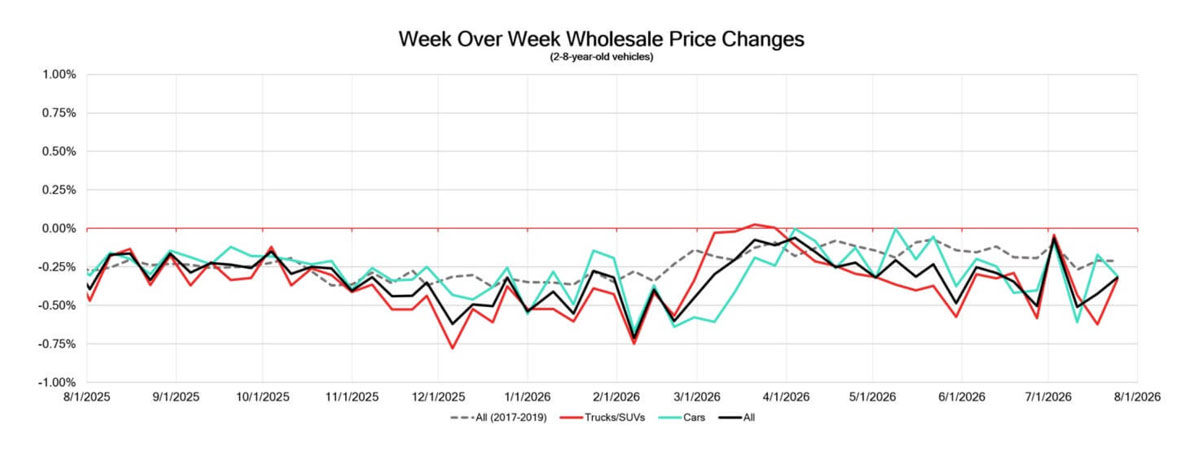
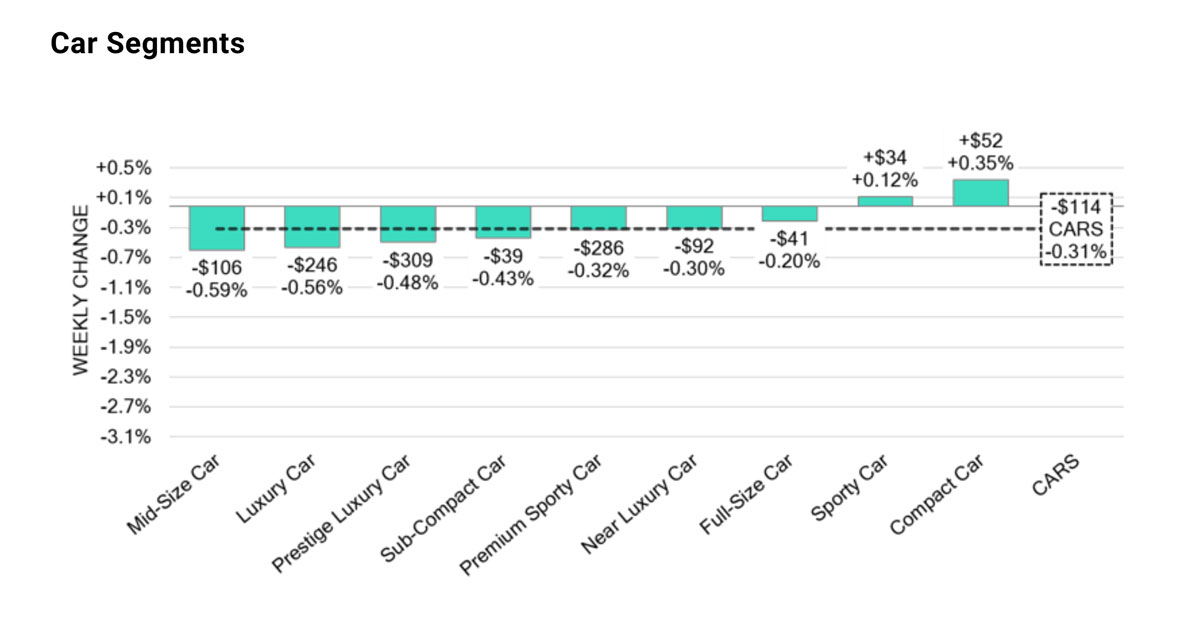
Among car segments, compact cars posted the strongest gain at 0.35 per cent, followed by sporty cars, which rose 0.12 per cent. The largest declines were recorded in mid-size cars, down 0.59 per cent, and prestige luxury cars, which fell 0.48 per cent.
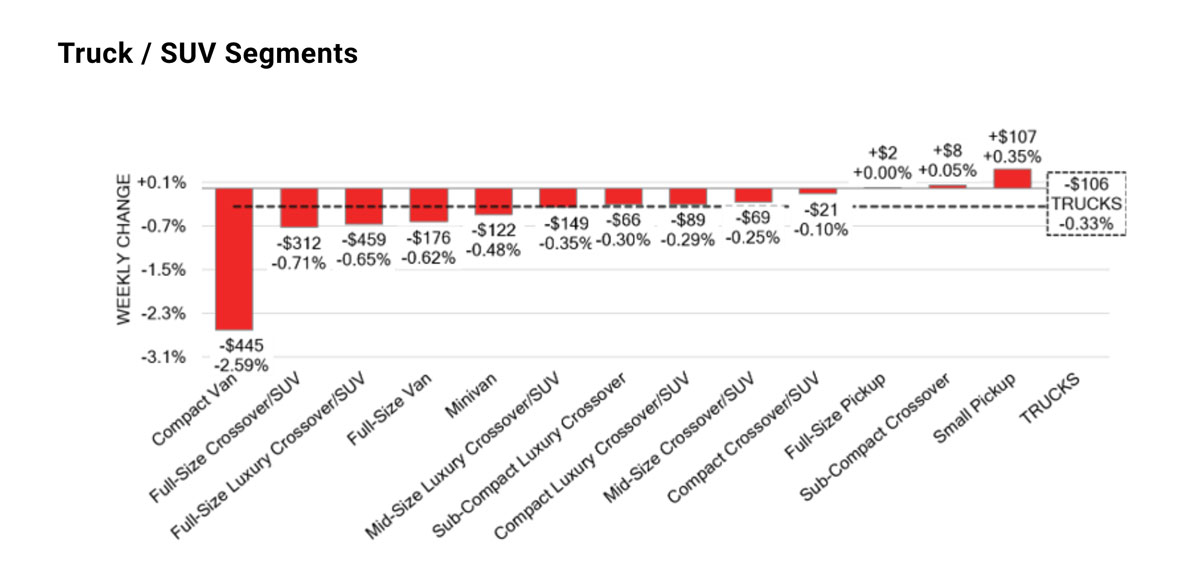
Truck and SUV values also softened, with small pickups posting the largest increase at 0.35 per cent, followed by subcompact crossovers, up 0.05 per cent. Compact vans experienced the steepest decline at 2.59 per cent, while full-size crossovers and SUVs fell 0.71 per cent.
CBB reported that half of all market segments recorded average value movements greater than $100. Auction sale rates ranged from 10.9 per cent to 56.6 per cent, averaging 35.9 per cent, as seasonal factors, political uncertainty and firm seller floor prices continued to influence market activity. Buyer demand remained strongest for clean, high-quality vehicles, while upstream sales channels continued to limit inventory reaching wholesale auctions.
The average asking price for a used vehicle listed on Canadian dealer lots edged lower to approximately $36,900, based on a 14-day moving average of roughly 169,000 listings.
In other news, CBB highlighted several developments affecting the automotive market, including more than 10,000 EVAP rebates claimed in June, nearly half of them in Quebec — with Toyota leading all brands and the Chevrolet Bolt ranking as the most-rebated model.
The report also noted that Canada’s public DC fast-charging network remains underutilized, with average usage at 9.5 per cent nationally, despite higher utilization in major centres such as Vancouver and Toronto.
Other developments included the opening of the Gordie Howe International Bridge, which is expected to improve cross-border freight movement, and future product plans from Honda, Acura and Range Rover targeting growing vehicle segments.