A fourth voice for Canada’s auto sector—needed, but not without risk
On April 15, a new Canadian automotive trade association was announced: the Pacific Manufacturing Association of Canada (PMAC).
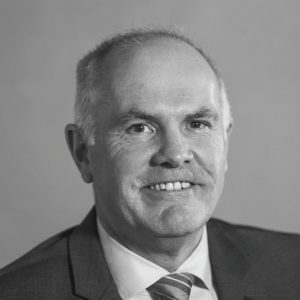
The two principal members are Honda and Toyota, and the new CEO of the organization is Brendan Sweeney, whom many readers will know from his work with the Trillium Network for Advanced Manufacturing at Western University.
Trillium also undertook an Economic Contribution Report for the members of the Global Automakers of Canada last year, which is available on our website at www.globalautomakers.ca.
A question that could be posed is: does Canada really need another automotive industry association?
For those who may not be aware, there were—until April 15—three trade associations representing automotive manufacturing, distribution, and retail in Canada: the Global Automakers of Canada (GAC), which I represent; the Canadian Automobile Dealers Association (CADA); and the Canadian Vehicle Manufacturers’ Association (CVMA).
As of April 15, however, there is now a fourth association: PMAC, representing Honda and Toyota and the Japanese parts suppliers in Canada—many of which came here in the 1980s to support their manufacturing operations.
To answer the question posed above, I believe it can be argued that yes, Canada does need another automotive industry association—particularly at this moment in time. More voices advocating before government on behalf of the industry may, in fact, be beneficial.
We face unprecedented trade and tariff challenges, alongside technological transition on multiple fronts—not just the shift from internal combustion engines to electrified transportation.
As a nation, we are also in the process of pivoting away from our largest trading partner—one that has been instrumental in fostering and growing Canada’s auto manufacturing sector for more than 60 years.
For the auto sector, that pivot—should it continue—presents significant challenges, particularly if differences with the United States cannot be resolved as part of the upcoming review of the CUSMA/USMCA trade agreement.
Together, the two companies produced approximately 76 per cent of all vehicles built in Canada last year and employ about 60 per cent of the workforce in vehicle manufacturing.
This is another reason why it makes sense for Honda and Toyota to have their own trade association, alongside their suppliers. Together, the two companies produced approximately 76 per cent of all vehicles built in Canada last year and employ about 60 per cent of the workforce in vehicle manufacturing.
Both companies have, for years, made overtures to Ottawa and Queen’s Park that their issues, needs, and concerns require serious and immediate attention.
Yet there remain civil servants, policy advisors, and elected officials who do not fully appreciate that it is no longer the Detroit-based companies driving Canada’s auto manufacturing sector, but rather the two Japanese automakers.
PMAC will provide them with a stronger, more focused collective voice to help change that perception.
As noted earlier, more voices can give the industry greater gravitas with government—provided there is alignment on the core tenets required for a successful automotive sector in Canada.
In this regard, there is much on which the various associations can agree: the need to restore unfettered, tariff-free access (or as close to it as possible) to the U.S. market, where 85 per cent of Canada’s auto production is exported; the need for better coordination between industrial and environmental policy; the importance of advancing a “one economy” approach to reduce interprovincial trade barriers—potentially adding more than $210 billion in economic activity—and the need to ensure governments understand the risks associated with opening the Canadian market to vehicles from non-market economies, to name a few.
The risk, of course, in adding another automotive trade association is that a greater number of voices may also mean a wider range of perspectives. In such cases, it becomes easier for governments to defer action.
If the industry cannot present a unified direction, governments will ultimately make decisions in the absence of clear consensus.
That said, it is also important to recognize that there are, in effect, two automotive industries in Canada: the manufacturing side, and the regulatory, distribution, sales, and service side.
PMAC is positioning itself as a strong voice for the manufacturing sector and the specific concerns of its members in that space. Honda and Toyota will continue to participate actively in the Global Automakers of Canada to address the broader range of issues facing the industry.
For all associations, collaboration and cooperation—where possible—will be key to effectively advocating for the collective benefit of Canada’s automotive sector.