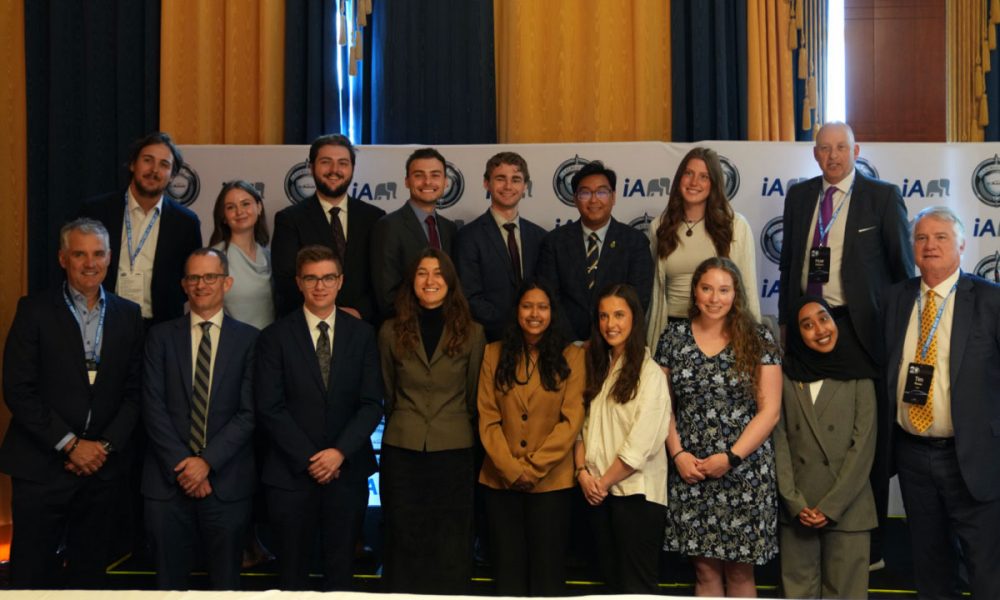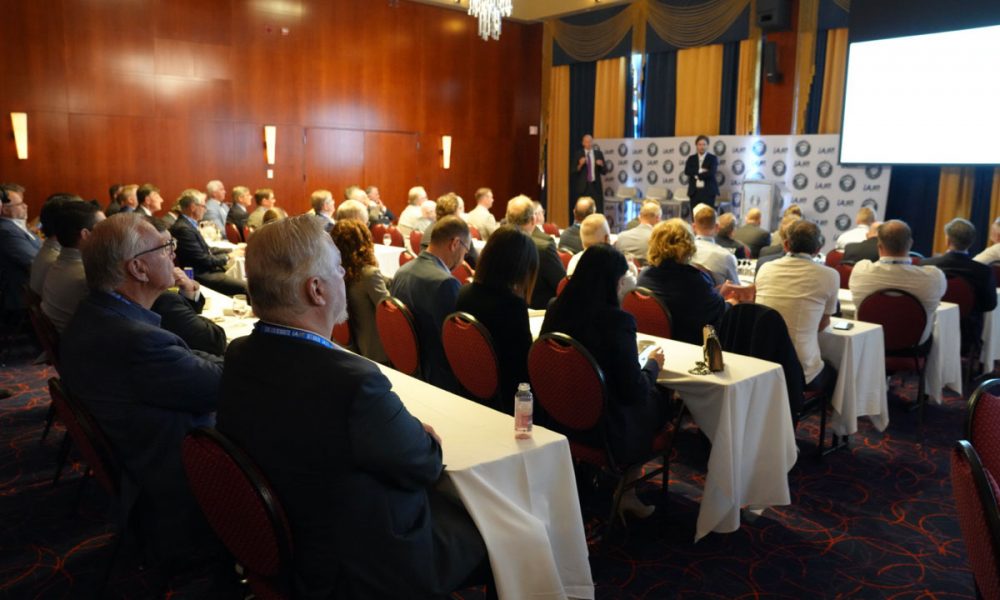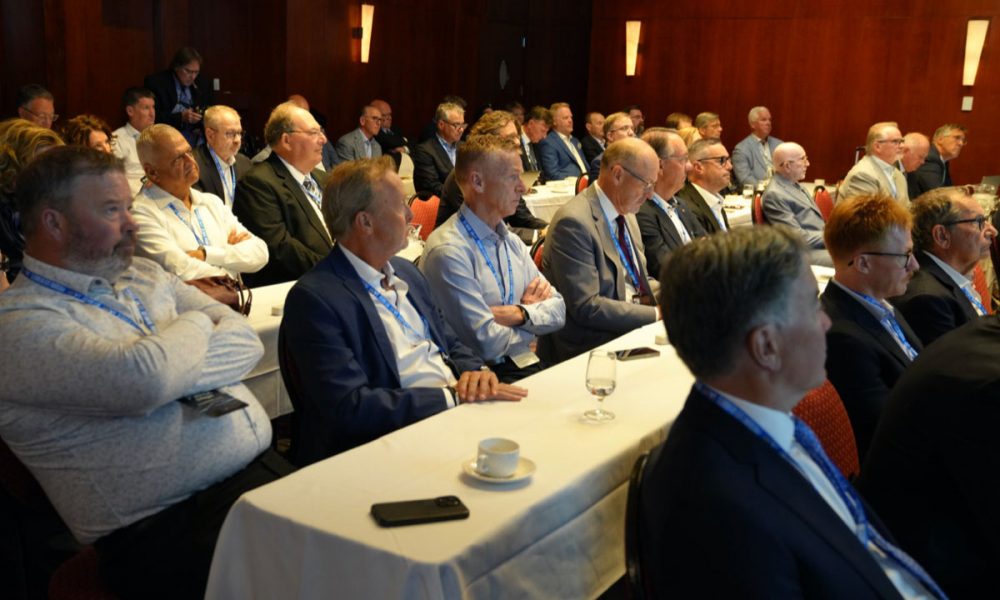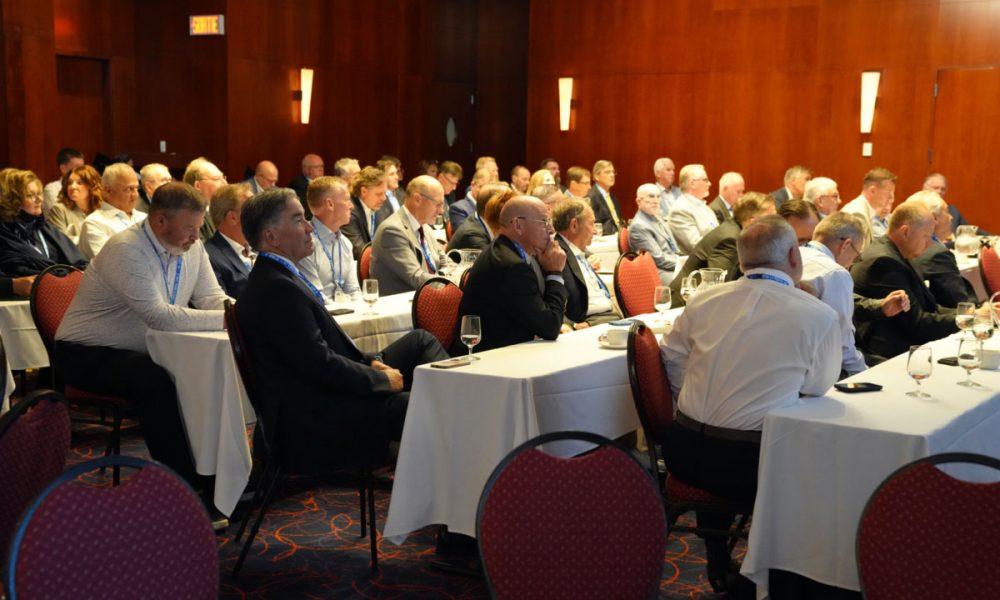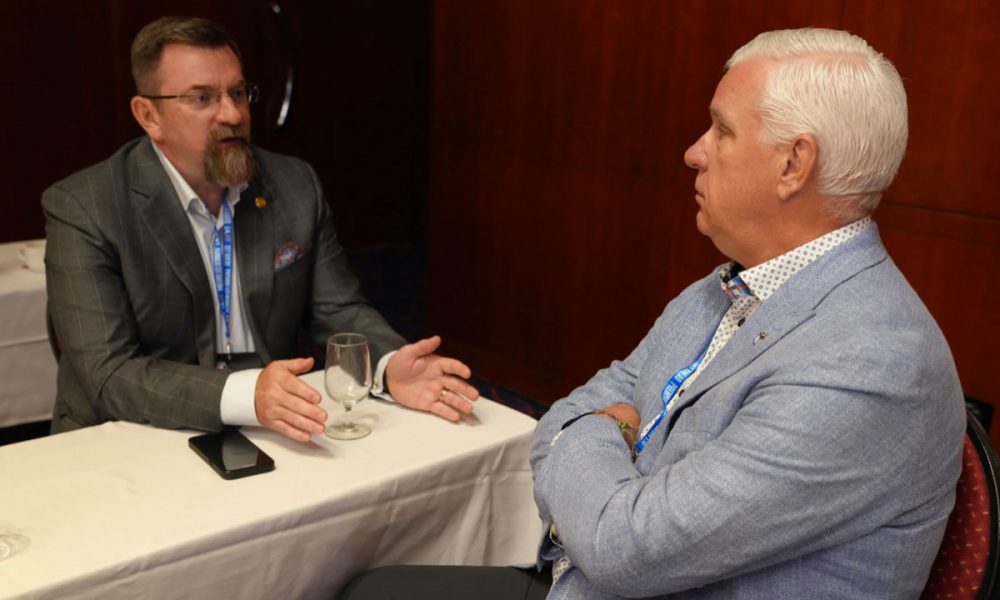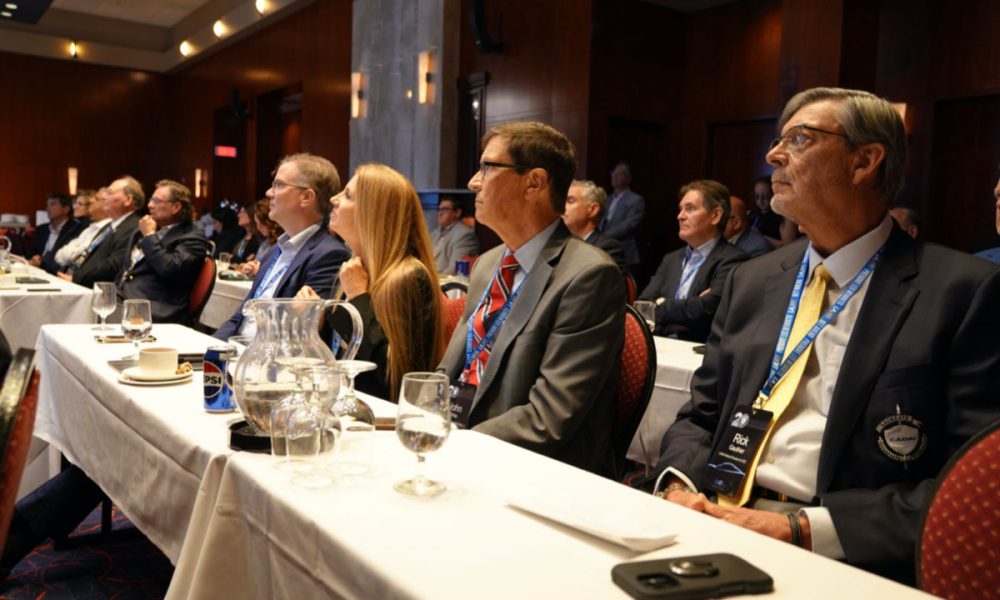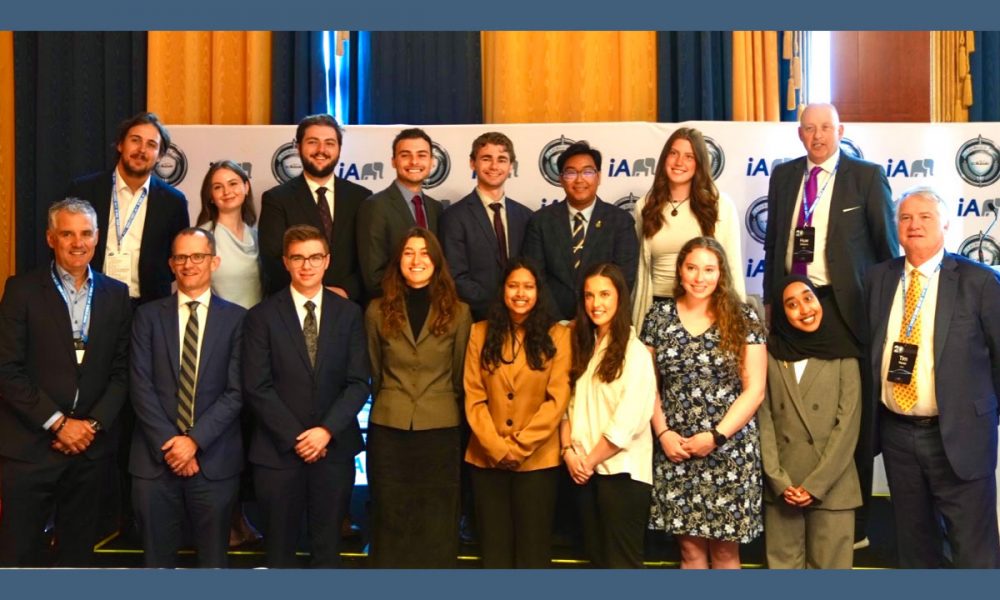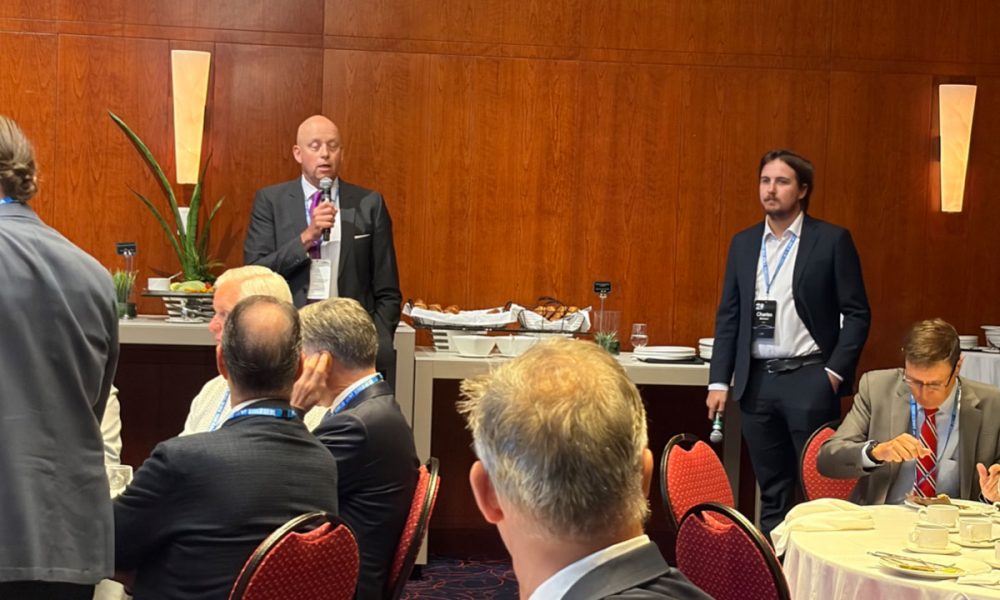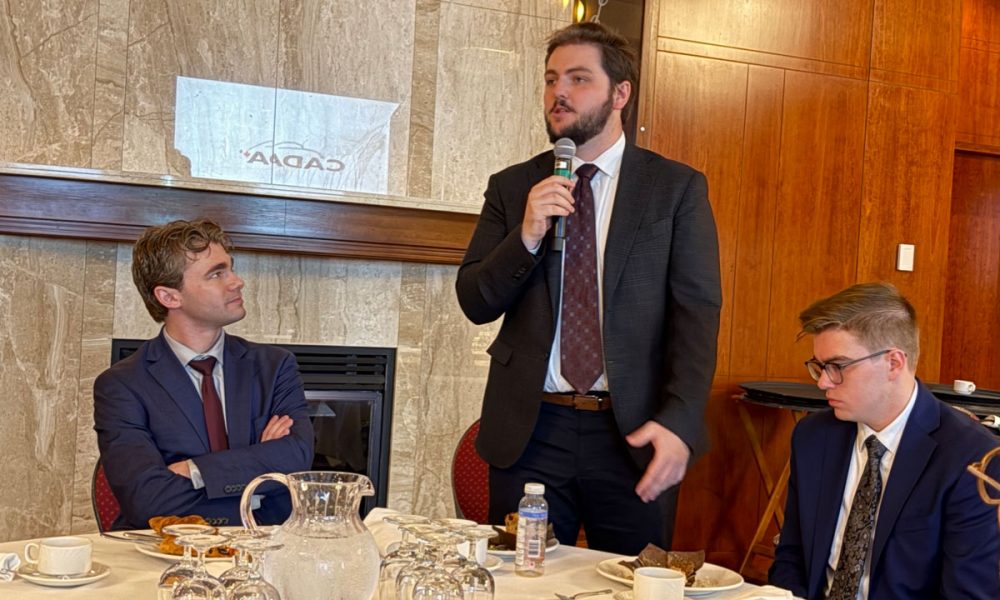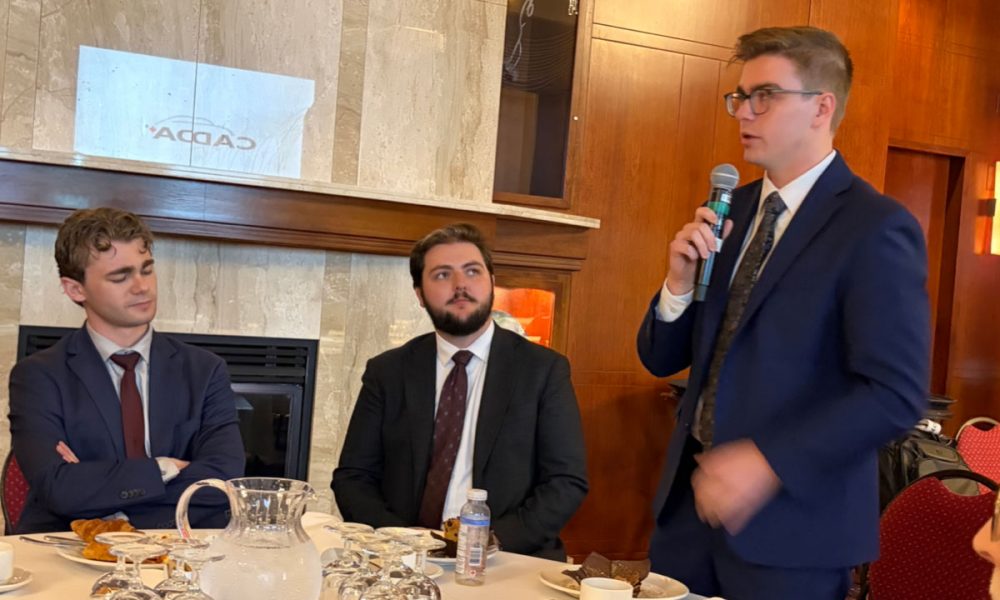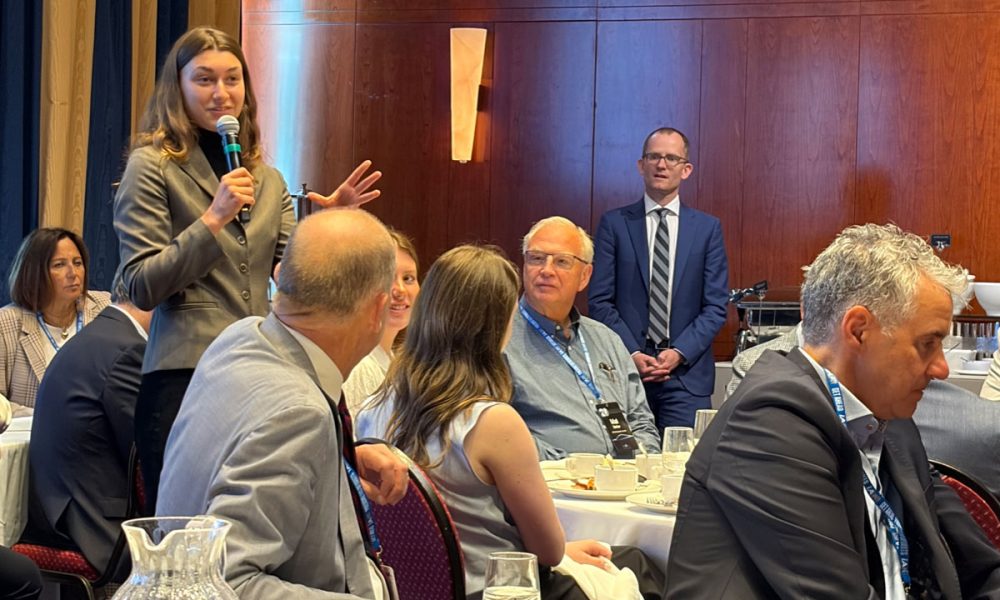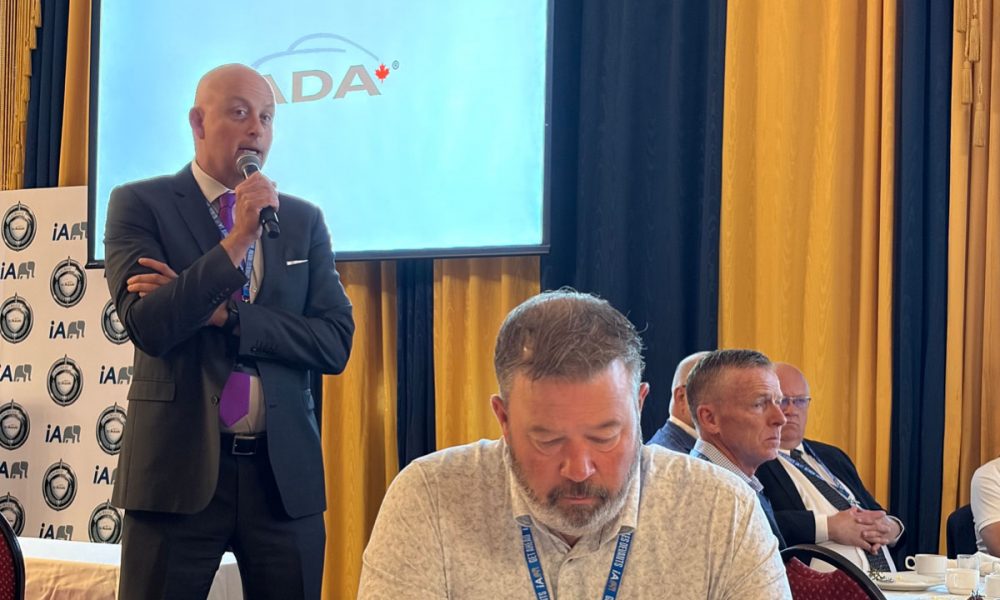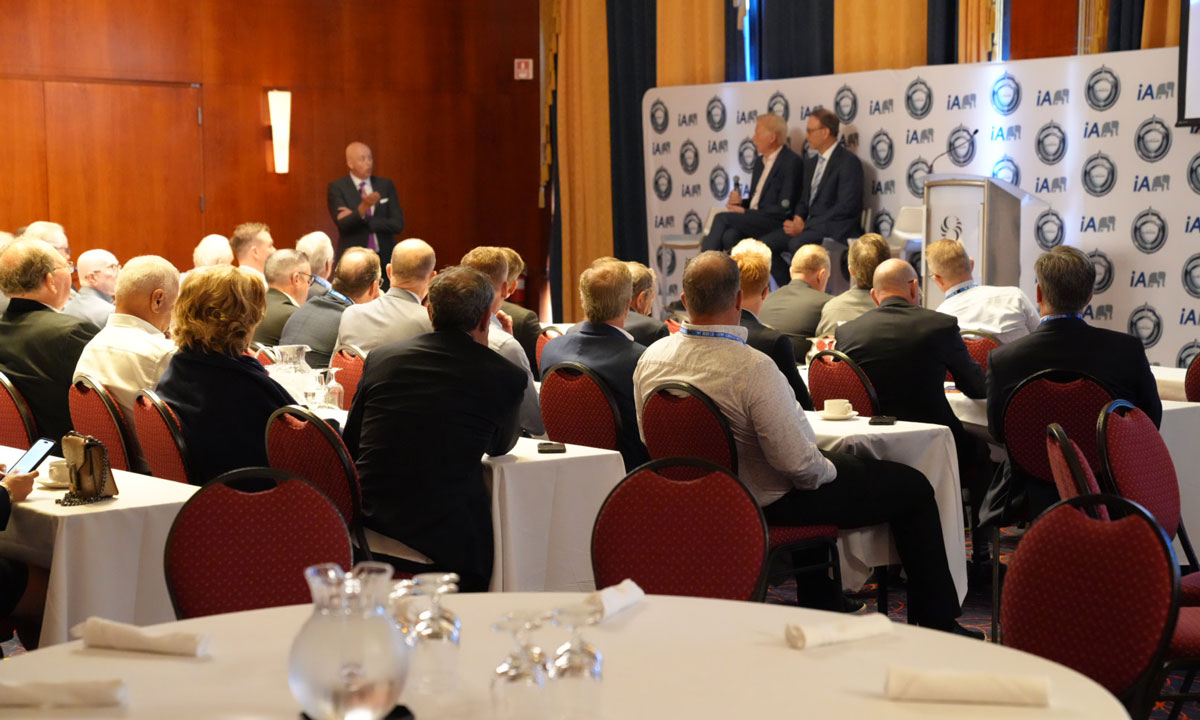
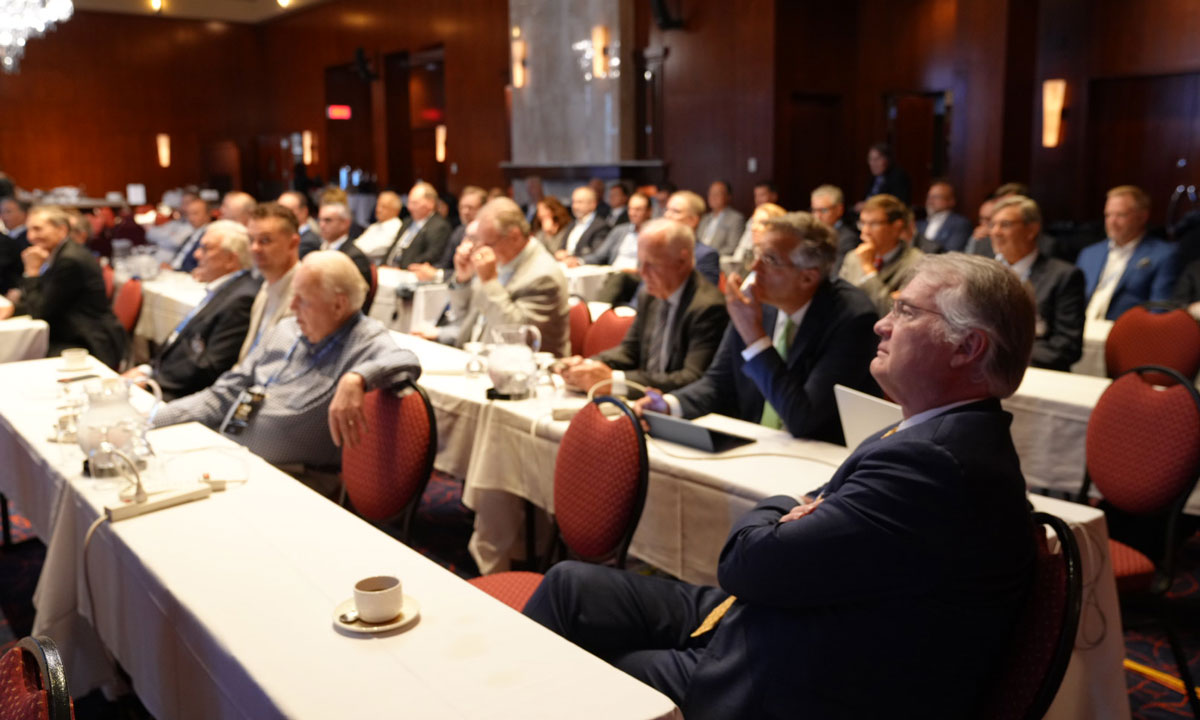
More than 30 CADA Laureates from across Canada heard a frank assessment of the political and economic challenges facing the auto retail sector during business sessions at the program’s 20th anniversary gathering in Gatineau, Que.
CADA leaders, manufacturer association executives and political journalists said tariffs, trade uncertainty, EV policy, vehicle affordability and the luxury tax are all creating an unusually volatile moment for dealers and OEMs.
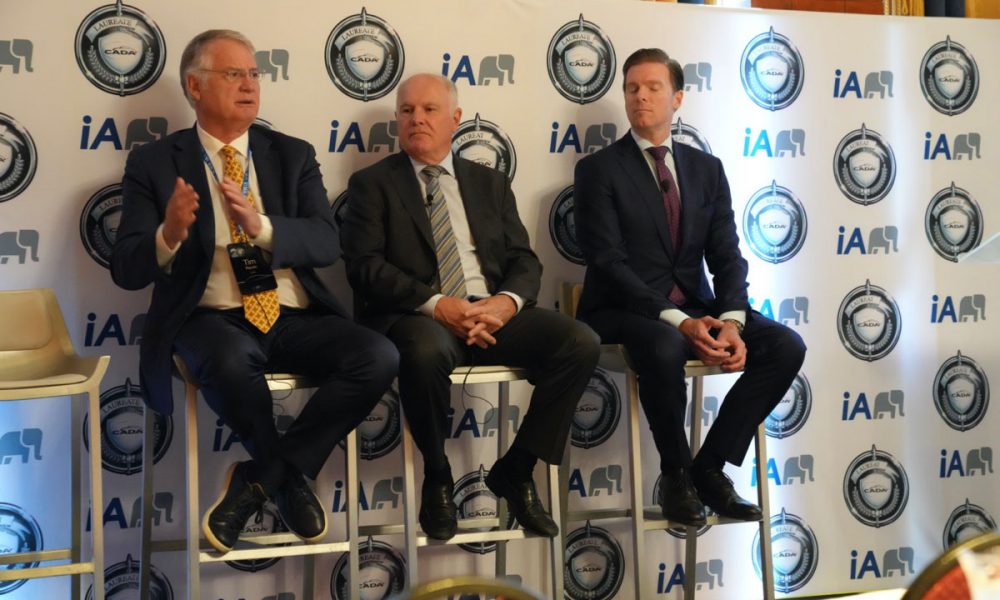
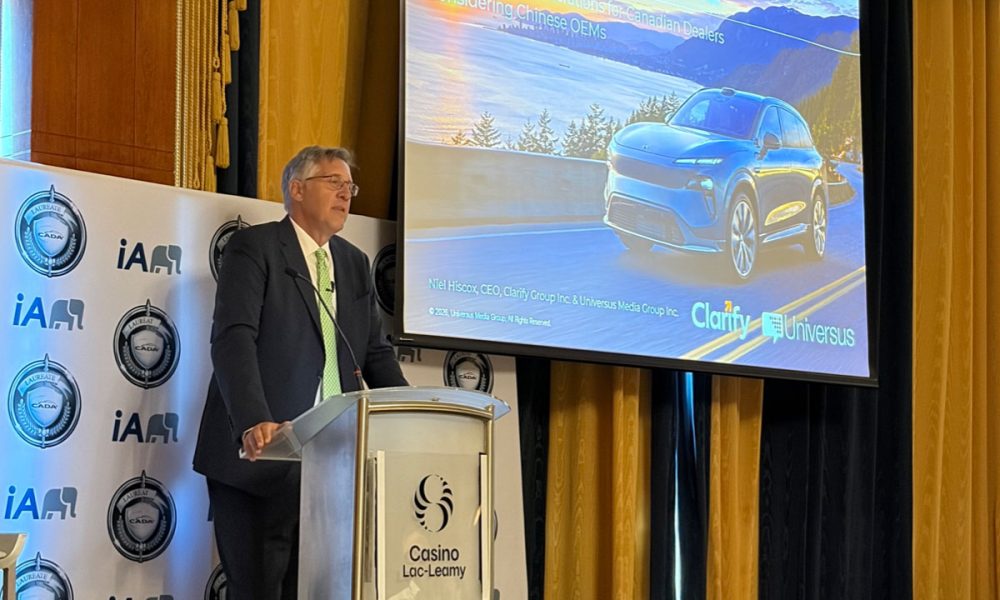
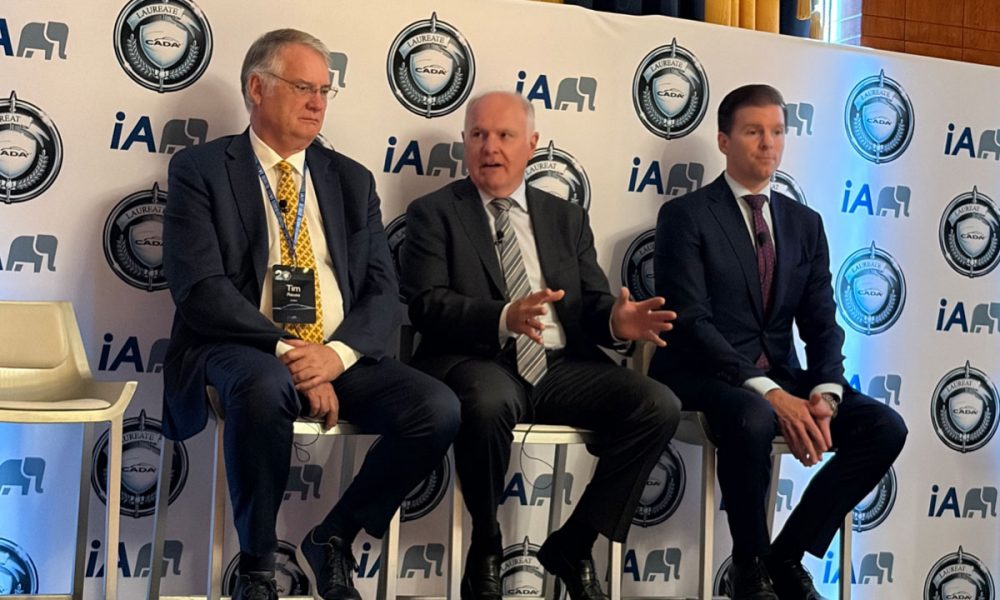
The morning business sessions at the Hilton Lac-Leamy in Gatineau, Que. included an update from CADA’s Huw Williams and Chief Economist Charles Bernard, an OEM panel featuring Brian Kingston, President and CEO of the Canadian Vehicle Manufacturers’ Association, David Adams, President and CEO of Global Automakers of Canada, and CADA President and CEO Tim Reuss, followed by a political panel with journalists Lawrence Martin and Joël-Denis Bellavance. Niel Hiscox, CEO of Clarify Group, rounded out the morning with a session on Chinese OEMs (covered in a separate story).
Williams told the room that CADA is working to keep dealer issues clearly in front of Ottawa at a time when multiple policy files are hitting the sector at once. “In the history of CADA, there’s never been as many issues coming at us as there are today,” said Williams.
He said the association has been trying to focus government attention on a competitiveness agenda that includes the federal EV mandate, regulatory reform, bank leasing, the luxury tax and other issues affecting vehicle supply and affordability.
Bernard said CADA has been deliberately framing its recommendations around policies Canadian governments can actually control, even as many of the largest pressures facing the sector are tied to the United States. “What can we propose as a roadmap for the government and also provincially that is aligned with decisions that the government can take that would help your businesses moving forward?” said Bernard. “It’s all about what could be done nationally without waiting upon an American decision.”
Kingston said the auto sector is facing one of the most difficult trade environments in years. “Very dire situation right now for the auto sector,” said Kingston.

He said tariffs were initially viewed by many in the sector as a temporary measure that would eventually push governments back to the negotiating table. Instead, he said, manufacturers are still making long-term investment decisions while trade rules continue to shift.
“The U.S. administration is doing everything possible to damage its own automotive manufacturing industry,” said Kingston. “That’s just the fact that’s happening right now.”
Kingston said the tariff structure has created circumstances where companies may be better off building vehicles outside North America and importing them into the United States than producing them within the integrated North American system.
He said the industry’s top priority is restoring stability to the North American auto sector. “It’s a very, very difficult time for the sector and our number one priority is how do we get agreement with the Americans to get this and return to an integrated North American auto industry,” said Kingston. “If we don’t have U.S. access, we don’t have an auto industry in Canada.”
Adams said he has not seen a comparable period in nearly four decades in the industry.
“I’ve been around for 38 years and I don’t think I’ve ever seen an environment such as where we are now, where there are so many different issues all in a way kind of existential,” said Adams. “I would hate to be a manufacturing CEO at this point in time trying to figure out, what’s my product plan? Where do I go? How do I do it? It’s unprecedented.”
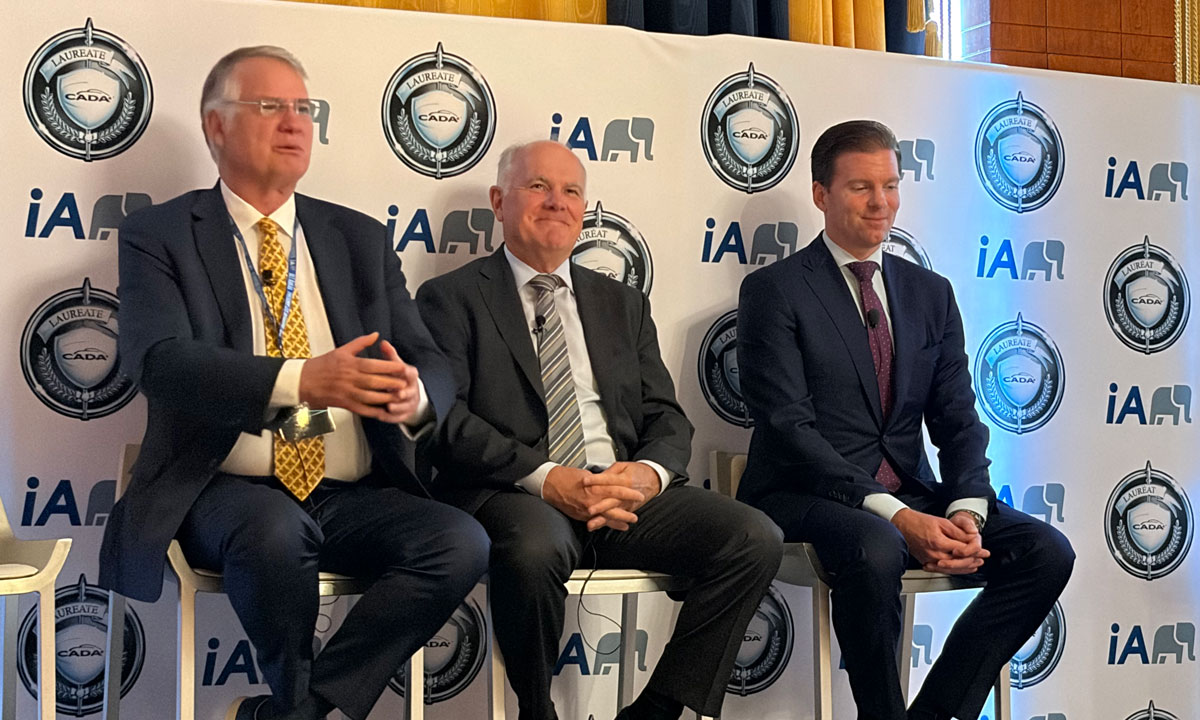
Reuss said one reason the industry has been able to make progress in Ottawa is that dealers, manufacturers and other parts of the value chain have been largely aligned on major policy issues.
“When it comes to the issues that we face as an industry, I think 98, 99 per cent of the time we’re completely aligned,” said Reuss.
He said CADA has worked to show politicians and policy-makers how national policy decisions affect local markets, individual ridings and consumer affordability. On the EV mandate, he said CADA was able to use detailed data to show government officials the gap between actual consumer demand and the targets that had been imposed.
“We broke down the EV penetration by riding and we’re presenting them with their respective figures and saying, okay, so you expect us to get to X on the national level? How do we get there?” said Reuss.
Kingston said the current federal government has become more receptive to data-driven arguments.
“I think one encouraging thing about this new government is that they do look at data and they do understand when you put numbers in front of them, they have to respond to that,” said Kingston.
He said industry representatives showed the Prime Minister a chart comparing actual EV sales trends with what would have been required to meet the 2026 model-year target.
“There was a huge delta between the two,” said Kingston.
But panelists cautioned that the EV mandate issue is not fully resolved. Kingston said future greenhouse gas regulations could effectively recreate the same pressure if they are too stringent.
“If they’re tight enough that the only way to achieve the regulatory outcome that government wants is mass electrification, we’re going to be back to square one,” said Kingston. “So stay tuned. The fight’s not over and we’re going to have to work very closely together to address this.”
Adams said the shift in Ottawa reflects broader economic realities.
“I think what we’ve all seen with the Prime Minister is a pragmatic shift in how the government is operating,” said Adams. “If the economy is good, looking at the environment, looking at social issues can be done in a little more robust, comprehensive way. When the economy becomes challenging, it’s not the primary objective.”
On trade, Kingston said Canada’s most urgent challenge is to get directly into discussions with the United States.
“First of all, we need to get to the table,” said Kingston. “We’re in a very difficult spot for the Americans.”
Despite the uncertainty, Kingston said he remains optimistic that an agreement can be reached, particularly because Canada is not the source of the automotive trade deficit the U.S. administration says it is trying to address.
“If you look at U.S. automotive trade, they do run a significant trade deficit with every part of the world. One exception: Canada,” said Kingston. “We’re part of the solution. We’re not part of the problem. We’re the biggest market for U.S. auto in the world by far.”
But he added: “Unfortunately, we’re not in the room at the moment.”
The federal luxury tax also generated discussion among panelists and dealers. Williams said the tax remains one of the policies making Canada less competitive.
“Manufacturers tell me that we are the least competitive place in the world for them to do business,” said Williams. “We have an EV mandate that has been paused but now needs to be removed. We have a luxury tax that remains on work trucks but was taken off of yachts and private planes.”
He said CADA’s message to government is that if Ottawa wants to improve the economy, it also needs to address policies that directly affect dealers, manufacturers and consumers.
“You can talk about a trade rupture, you can talk about making sure we’re cleaning up the economy, but you have to clean up the things that impact the auto industry,” said Williams.
Adams said GAC has established a working group on the luxury tax. He said potential areas of focus include removing the tax from EVs and raising thresholds to account for inflation and rising transaction prices.
Reuss said CADA has also been raising the issue with European officials, noting that the European Union pushed Australia to remove its luxury tax as part of a trade agreement.
“Europe has a free trade agreement in Canada,” said Reuss. “Why should the same rules not apply that you just applied to Australia?”
Williams said his own public position remains full repeal. “We want to scrap the whole thing because it doesn’t make sense,” said Williams.
Dealers in the room also pressed the issue. One dealer cautioned that accepting carve-outs for EVs or pickups could allow government to say it had addressed the problem while leaving the broader tax intact.
“It’s punitive, it’s wealth shaming, it’s not Canadian,” the dealer said.
Another dealer also challenged the premise of the tax, calling it “not just an irritant, but absolutely a failure.”
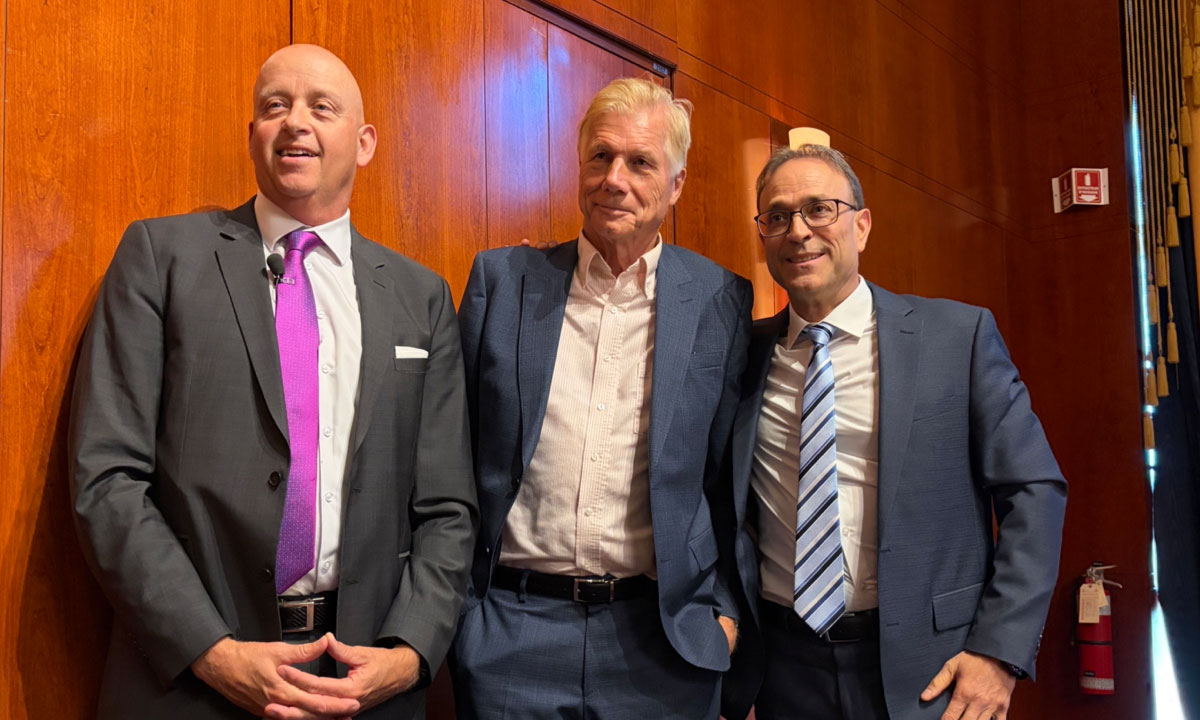
The political panel featuring leading journalists who cover national politics offered dealers a candid view of the Carney government, the Conservative opposition, western alienation and Canada-U.S. relations.
J.D. Bellavance described Prime Minister Mark Carney as “a man of few words, but a lot of content,” which is a contrast to his predecessor, and said reporters have learned to follow his remarks closely because substantive policy news can emerge unexpectedly.
Lawrence Martin said Carney has had an unusually strong start as prime minister.
“Most successful first year as a prime minister arguably than any other prime minister,” said Martin. “To establish the confidence with the Canadian public that he’s established is an extraordinary achievement.”
Bellavance said Carney has shown a different style than his predecessor, including more direct engagement on policy. “He answers questions, he gives content, gives thoughts,” said Bellavance.
But he also said the government has made a series of major announcements that will now have to be delivered through the bureaucracy, provinces and municipalities. “He’s a prime minister who is in a hurry to govern to make things happen, but there’s still no bureaucracy behind him to apply this,” said Bellavance.
Martin said Carney’s real achievement has been moving the government toward the political centre. “He’s mollified them by moving many files to the centre, such as on the military, such as on immigration, such as on energy files,” said Martin.
Western alienation and energy policy also surfaced during questions from dealers. Some said they want the government to succeed, but remain skeptical about whether announcements will translate into action.
Bellavance said the fact that Alberta’s concerns are now being discussed more openly in Ottawa is significant.
“People will not brush Alberta’s concerns off the table anymore,” said Bellavance. “Building pipelines is no longer taboo in Central Canada.”
iA Dealer Services is the exclusive sponsor of the CADA Laureate Awards program, and has been since the program’s inception more than 20 years ago.