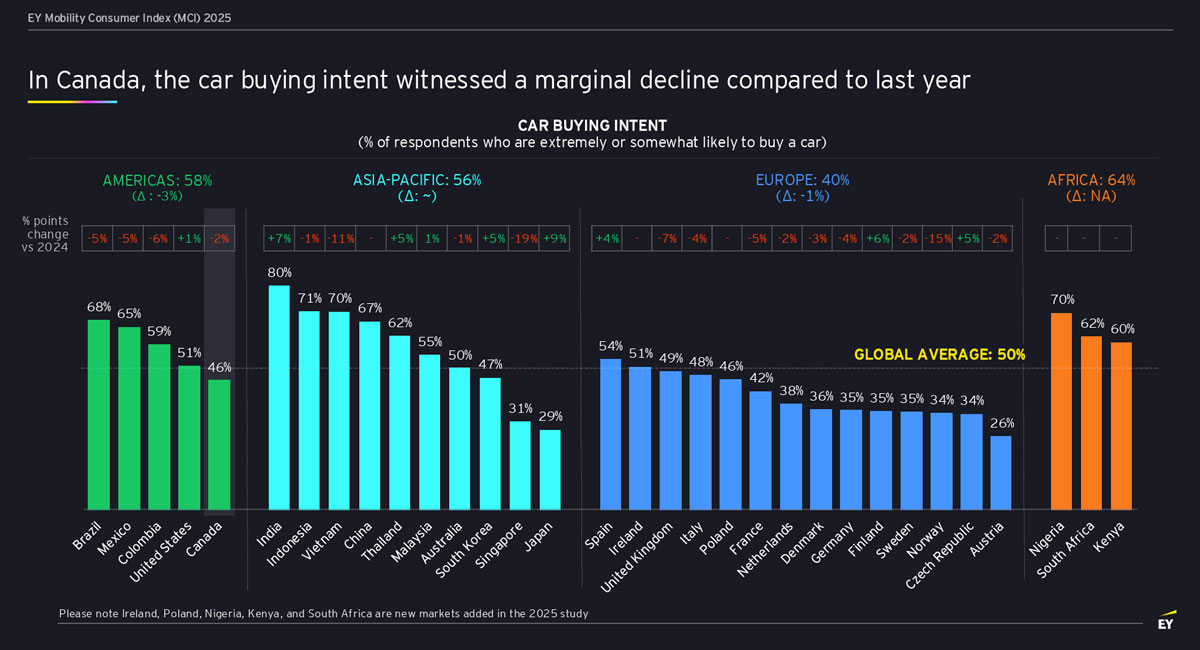
Canadian consumers are reassessing their approach to electric vehicles, with new data from EY Canada pointing to a shift toward more practical buying decisions.
According to EY’s latest Mobility Consumer Index, 30 per cent of potential EV buyers in Canada have reconsidered or postponed their purchase decisions, citing concerns around cost, charging and ownership experience. The study shows a shift back toward internal combustion engine vehicles, with preference rising to 58 per cent. Battery electric vehicle preference fell to 7 per cent, while hybrids reached 17 per cent.
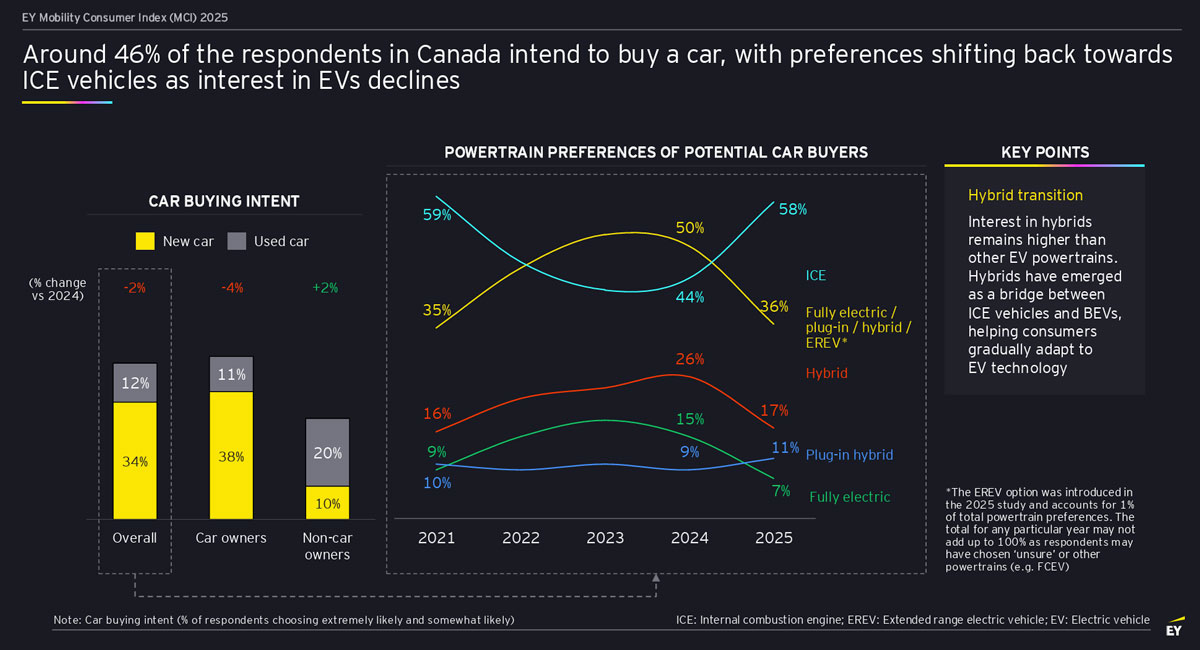
“Canada’s EV story hasn’t stalled — rather it’s becoming more pragmatic. Consumers still care about fuel costs and the environment, but they’re asking harder questions about affordability, charging reliability and the day-to-day experience,” said Jennifer Rogers, Automotive and Transportation Leader at EY Canada, in a statement.
The findings align with broader trends in EY’s Mobility Consumer Index, which has shown EV interest in Canada levelling off in recent years as concerns around charging infrastructure, costs and range continue to shape consumer sentiment.
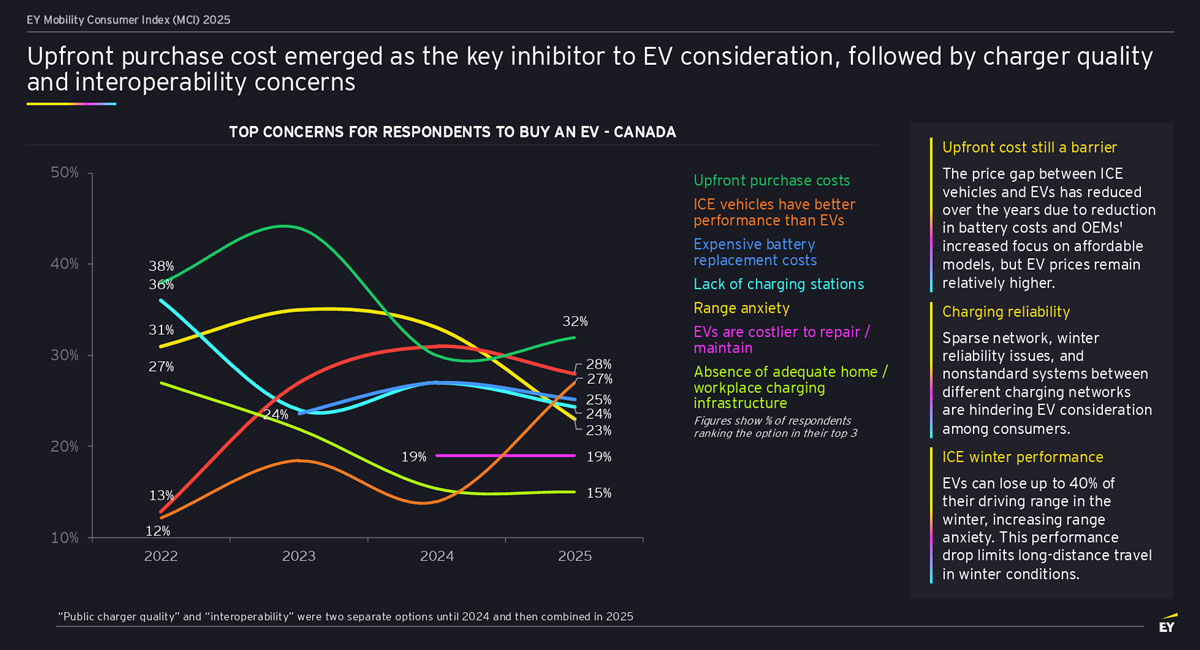
Affordability remains a key barrier, with 32 per cent of respondents citing upfront cost as a reason for choosing internal combustion vehicles. Charging challenges also persist, including difficulty locating stations, high charging costs and wait times.
“The opportunity now is to close the confidence gap with clearer pricing, more dependable charging and a purchase journey that meets Canadians where they are,” said Rogers.
Despite this, fuel prices and environmental concerns continue to influence demand, suggesting EV adoption is evolving rather than declining.