AS WE HEAD INTO THE FOURTH QUARTER OF 2015, IT’S TIME TO TAKE A CLOSE LOOK AT YOUR DIGITAL STRATEGY
 The fourth quarter is just around the corner and the push to meet our lofty 2015 sales targets is upon us. With overall industry sales at a record-setting pace, who’s really worried about the last quarter? Well, you may not be worried, but I know you’re focused. What is your strategy to reach, connect and convert more online shoppers into showroom visitors?
As we head into the last quarter of 2015 and start planning for 2016, now is the ideal time to re-evaluate your digital strategy and dive into the key areas to increase your showroom traffic and sell more vehicles.
Breaking down your strategy into the following three stages will allow you to better focus your energy in the areas that drive results and provide a healthy return on investment.
1. Reach
One thing I know for sure is that the Canadian car shopper loves the Internet. On average, more than 80 per cent of consumers use the Internet to shop for a vehicle.
Reaching and attracting these shoppers to your virtual showroom is the critical first step to improving showroom traffic.
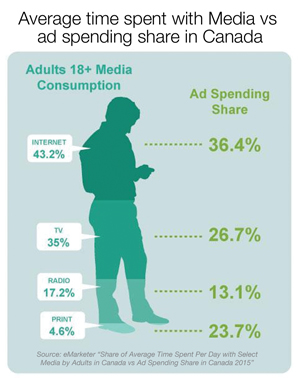
Your overall digital marketing strategy is the foundation for reaching shoppers while they are researching – it’s all about getting found in a crowded, competitive marketplace. Canadian media consumption statistics clearly outline the quick rise of the Internet, with over 43 per cent of consumers using it get their information.
Ad spending, on the other hand, is lacking with only 36.4 per cent. Here are a few areas I suggest you ramp up on to finish the year:
• Integrated search — Design your SEO and SEM strategies so you can be in front of consumers when they start their research phase. With Canadians averaging over 18 hours of online research, I think you can see why this is important.
Looking specifically at millennial behaviour, this strategy becomes even more obvious — 98 per cent are using the Internet to research and shop. The key with integrated search is to have a strategy that includes both organic SEO and paid SEM.
• Video — A huge influencer during the research phase is video. A recent report from YouTube highlighted that Canadians consume the most online video globally. There must be something about the long, cold winters that make us watch so much video!
And further, video is dynamically cross-functional as it provides a ton of value for organic search, and acts as a quality engagement tool once the consumer reaches out to your dealership.
• Mobile — Clearly no surprise here – mobile is quickly becoming the preferred way for online consumers to access the Internet.
 J.D. Power’s recent results from its 2014 study on Canadian Sales Satisfactions showed that 41 per cent of auto shoppers accessed the Internet from a smartphone or tablet while shopping at a dealership. And what were they doing on their smartphone you may ask?
Well, 61 per cent of the time they were price shopping, while 40 per cent of time was spent searching inventory at other dealerships. If your site isn’t optimized for mobile, you’re unlikely going to be found on Google. If you do somehow get found, you’ll most likely lose that customer simply because they just don’t have the patience for sites that they can’t properly access on their phones.
In fact, Google’s recent algorithm update penalizes you on mobile search if you don’t have an optimized site for mobile.
We already know you need to be where your customers are, so it’s time to get digital. Your marketing budget and allocation should match consumer behaviour.
2. Connect
The goal of all your digital marketing efforts is to reach more online consumers into your well-oiled, smooth-running connection engine. This phase starts when a consumer lands on your website.
When you look at how to connect with your customers on your website, there are three areas to focus on: real photos, vehicle descriptions and market pricing.
Real photos — When we look at factors that influence purchase decisions, there is overwhelming support that customers want to see real photos. They want to see what they are buying, and it’s just as important to showcase your new inventory how it is used.
Although it takes time and effort to do this, it’s about the “return on effort.” In the end, the effort put into merchandising properly will increase your lead submissions.
Vehicle descriptions — Your website’s Vehicle Detail Pages (VDP) are what most consumers ultimately engage with and base their decisions on. Next to real photos, the vehicle description (especially with pre-owned) is what sets the vehicle listing apart, provides relevant details, and helps it get found. Simply listing bullets about vehicle options taken from a VIN burst will no longer work.
Customers want to read a story about the vehicle, and more importantly, they want to learn about what they can’t see in the pictures, such as the car’s technology and vehicle history. A well written vehicle description will inspire more engagement and VDP lead submissions.
Market pricing — Unless you’re listing a vehicle that’s unique and in high demand with low inventory, chances are the price will play a big role. There are many tools out there to help determine appropriate pricing but what I want to highlight here is how to call out savings.
Customers love saving money so make sure you drive home the point on how much they’re saving! Remember, if you show a price online, make sure you are consistent and transparent offline.
3. Convert
All your efforts to first reach and then connect with online consumers are for naught if you can’t convert them to a showroom visitor and, ultimately, a sale.
Dealers who have a solid online lead management process convert more leads to showroom appointments and dealers who provide the optimal showroom experience for online shoppers simply have a higher appointment to close percentage. We call this a conversion trifecta.
• Website — Your goal should be to turn a website visitor into a lead. We know this conversion number is low today — on average only two-six per cent of visitors take action on a website via form submission, call or chat.
What this says to me is that the vast majority of consumers are de-selecting dealers before ever making contact. Certainly many do simply show up at your lot, but with traffic down, most are going elsewhere.
• Digital leads — Three thousand unique visitors at a three per cent conversion rate results in 90 leads a month from your website. Having an online lead management process in place to convert those leads to appointments is what sets the great dealers apart.
And if you’re not converting those to showroom appointments, you are allowing opportunities to fall through the cracks. Make sure you have a “proven process” in place to maximize your return.
All your efforts so far to reach, connect with and convert is to simply get the online consumer into the showroom. Not an easy task and it doesn’t happen without a substantial investment in people, processes and technology.
Converting to a sale is what it’s all about. To be successful, your showroom selling process must be adapted to accommodate the online shopper.
Like any prospect, it’s important to ensure you are building trust from the minute someone walks onto the lot. This transition from online to offline starts when a potential customer walks in for the appointment, and your dealership is prepared.