INDUSTRY EXPERT GIVES DEALERS AT THE ONTARIO DEALER DAY EVENT A HEADS-UP ABOUT THE FORCES CHANGING THEIR WORLD
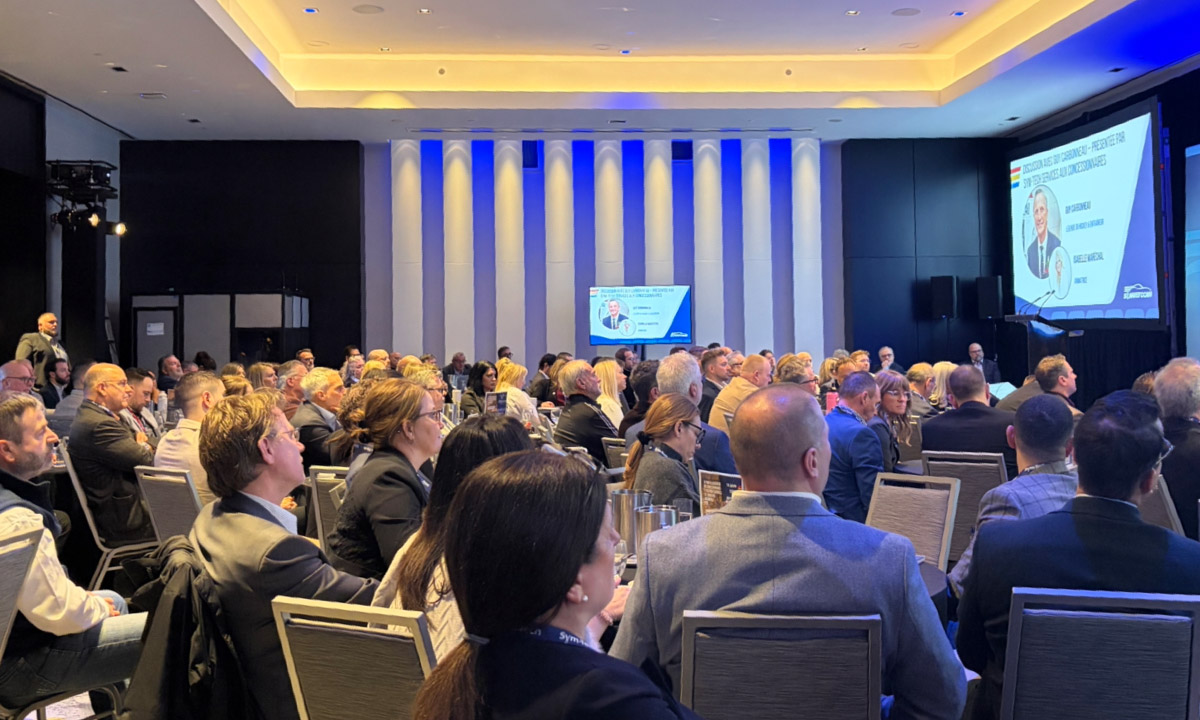
 Dealers who attended this year’s Ontario Dealer Day event gained some powerful insights about the future of their industry.
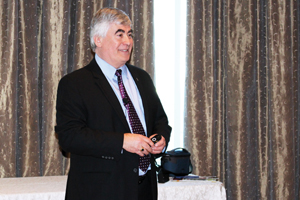
Chuck Seguin, president of Seguin Advisory Services and a regular columnist for Canadian auto dealer, delivered a much-anticipated keynote on the major trends he is seeing playing out in the auto retail industry.
“We’re living in an interesting time as dealers,” said Seguin to the roomful of dealers in the audience.
A self-proclaimed “dealer fan,” Seguin said he continues to be “bullish on dealers,” and is confident they can adapt to the challenges they face.
THE BIG WILL GET BIGGER
One of the trends Seguin addressed is increased dealer consolidation, which he believes will lead to even bigger stores.
This is especially good news for the right brands that happen to be in the right location at the right time, said Seguin.
But a lack of appropriate planning for the future is hurting some dealerships, and they end up having to sell at a discount.
“Dealerships are not positioning their businesses for sale,” said Seguin, adding that preparing their dealerships for sale is like staging a house, but on a larger scale.
SHOW ME THE MONEY
Seguin said he’s also noticed that some of the major investments recently have been from big companies or private investors.
Berkshire Hathaway, a multi-billion dollar conglomerate that’s led by investment guru Warren Buffett, recently scooped up Van Tuyl Group, the largest privately-owned auto dealership group.
Microsoft co-founder Bill Gates also has his eye on automotive retail, and owns about a 15 per cent stake in AutoNation.
These partners are seeking long-term relationships, rather than the typical short term partnerships that are often characteristic of private equity, said Seguin.
Seguin is also seeing the emergence of a new group of family investors who can help auto retailers that lack an exit strategy.
While wealthy families have traditionally sought investments in the stock or bond market, Seguin said that cash flow remains steady from car dealerships. There’s some money to be made in new and used car sales, the F&I office and in fixed ops.
Seguin predicts that the Canadian auto industry will see these types of investments in the auto retail industry gain popularity over the next five years, if not sooner by the end of 2015.
BATTLE BETWEEN OEM AND DEALER NETWORKS
All brands have put so much effort into vehicle design that it’s now no longer as big a differentiator for consumers when choosing a brand.
Customer service has now become the game changer, and he expects OEMs to get more involved in the way their dealer networks handle customers and processes, from the dealership’s imaging to social media usage.
What OEMs are looking for, said Seguin, is replicating an experience at say, McDonald’s, where customers can expect the same level of service.
Many restaurants or hotels already change their image every five-to-10 years, and Seguin said it’s likely dealers will follow suit.
Dealers are facing pressure to modify their stores according to new colours and shapes as part of wider factory imaging programs put in place by OEMs. “When the customer leaves their domain and enters yours, they want to make sure that they are treated properly,” said Seguin. “The battle is not about the car, it’s not about the durability — it’s about the customer. We have to be very careful as an industry that we become relevant in these conversations,” said Seguin.
To win the retail war, Seguin said dealerships need to look for engaged employees to wow their customers and have them come back for repeat business. “That’s a big shift for a lot of us… we can’t grind through people anymore,” said Seguin.
NEW THREATS
Dealers are also swimming in shark infested waters.
Some of those sharks ate into some of their profits years ago, like independent dealerships and auto body shops.
But other sharks that were lurking near the bottom are quickly starting to surface, disrupting the car buying and customer process.
One market disruptor is Tesla, which Seguin said is coming out with a software upgrade that has some autonomous driving capabilities.
Another is AutoNation, which is investing heavily in online sales.
“One of the things as an outsider that drives me crazy is that the dealer world has not taken on the responsibility for the social demand for car sharing,” said Seguin, adding OEMs moving into the fleet space will be up in unit volume but dealerships will be cut out of the game. “That scares me,” he said.
PRODUCTS ABOUND
There are many vendors who exist to serve dealerships, offering new and advanced DMS systems to tire storage solutions, and just about anything else under the sun. “Just take a look downstairs,” said Seguin, referring to the wide range of suppliers exhibiting at Ontario Dealer Day.
But one of the big questions in Seguin’s mind is whether dealerships have the human resources capability to implement these new software tools or solutions. “One of the biggest frustrations that dealer principals feel is that you spend $250-$500,000 on a product and you use 10 per cent of it. You don’t get the full benefit out of the systems.”
Even though the auto retail industry continues to face disruptions and challenges that are being thrown at it, car sales continue to soar.
Seguin expects to see more strong sales as we move more into 2015.
After all, he said: “there are more people who want to be in the business then get out of it.”