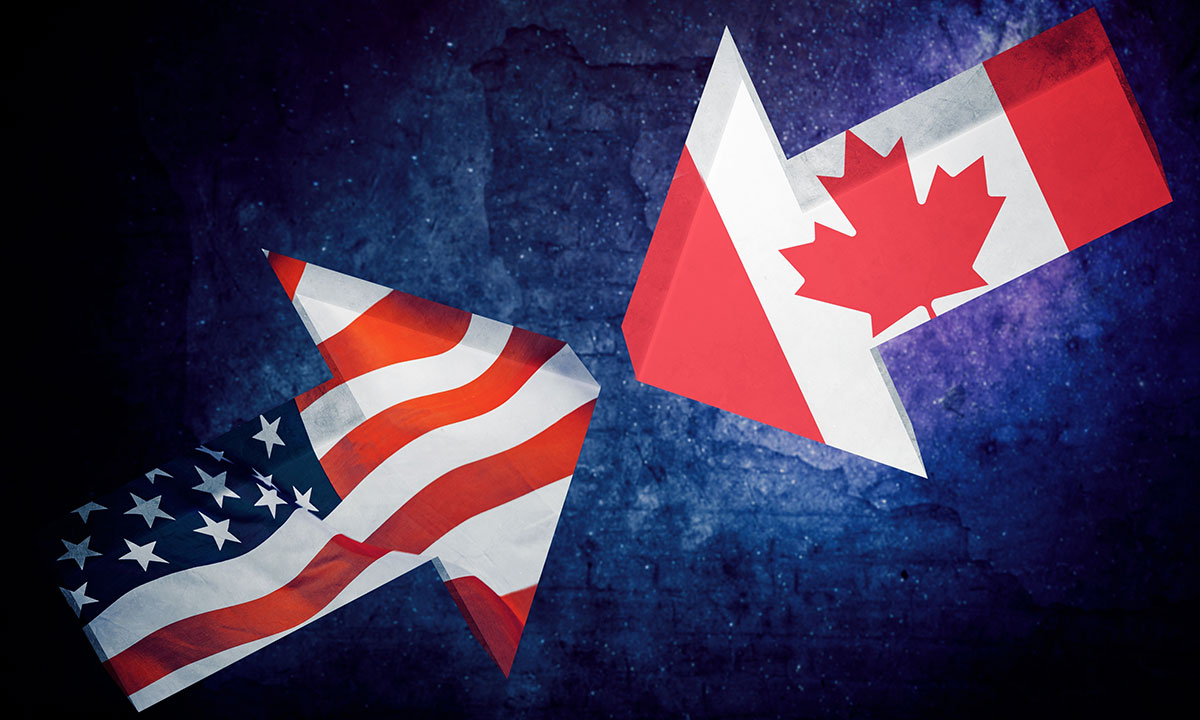
Trade uncertainty is making long-term investment decisions harder for dealers.
As I write this column, Canada has imposed retaliatory tariffs against the United States and we appear to be entering uncharted trade-war waters.
The effects could last for some time before any kind of resolution is reached. Even then, will there really be a clear outcome?
The constant back-and-forth, public sparring and lack of clear direction don’t give automobile and truck dealers much of a foundation on which to plan their future.
Companies throughout the automotive value chain are affected on both sides of the border. No one knows what the next move will be or, if a resolution does emerge, how long it will last.

That matters because businesses need to reinvest capital to maintain and grow their operations. How does a dealer make those decisions when the rules keep changing and there is little certainty about what comes next?
Automobile dealers are franchisees. As franchisees, we have obligations to our franchisors.
But — and it’s a very big but — what happens when those requirements no longer make sense in the current business environment?
Your franchisor may want you to move ahead with facility or image upgrades. But if your local market is being hurt by tariffs and economic uncertainty, does it make sense to commit hard-earned capital without a reasonable idea of what the next several years will look like?
You could argue that the longer the investment horizon, the lower the risk. You could also argue that this trade dispute is fundamentally different from the challenges we’ve dealt with before.
We may be watching the business environment change in ways that could reshape the foundations on which our dealerships — and the brands we represent — have been built.
The U.S. administration clearly has a very different view of the Canada-U.S. relationship than Canadians are accustomed to.
President Donald Trump has repeatedly talked about Canada becoming part of the United States while using economic pressure as a negotiating tool. Whether that is rhetoric, negotiating strategy or something more, the impact on Canadian businesses is the same: more uncertainty.
The challenge is that Canada and the United States cannot easily separate their economies.
Decades of trade have created highly interconnected supply chains, investments and businesses. Add Mexico and you have a North American economy in which companies, workers, products and capital regularly cross borders.
Think about Canadian companies such as Magna, Couche-Tard, RBC, TD, CPKC, GFL, Brookfield and Bombardier. They have major operations, investments, employees and suppliers in the United States.
These aren’t simply Canadian companies selling products into the U.S. They are part of the U.S. economy as well.
That makes it difficult to understand how damaging that relationship ultimately benefits either side.
But the uncertainty is already affecting business decisions.
A July 2026 KPMG survey found that 42 per cent of Canadian manufacturers surveyed had either moved some production to the United States or were planning to do so. Of those planning a move, 77 per cent expected to make it within two years.
That doesn’t necessarily mean companies are packing up their Canadian operations. In many cases, the bigger question is where they put their next investment dollar.
And right now, Canada can look like the riskier choice.
I could go on and on about the trade situation, and there are plenty of economists and trade experts who understand the details far better than I do.
What I do know is that this feels different from many of the economic challenges we have faced before. I don’t see a clear landing spot in the short term.
For dealers, that has significant implications.
We depend on our manufacturers for vehicles and parts. At the same time, our customers are worried about their own finances. Some are concerned about job security. Others are simply dealing with higher costs and trying to stretch their household budgets further.
Cash could get tight.
Communication with employees is also critical.
They are watching the same news you are. They may be wondering what all of this means for the dealership — and for their jobs.
Our employees are consumers too. They are paying higher prices and worrying about their own household finances.
That uncertainty comes through the showroom door as well.
In most parts of this country, consumers still need a vehicle to get to work and manage their daily lives. But they don’t necessarily need a new one.
That means dealers need to pay attention to every part of the business: new and used retail, fixed operations, financing and everything else that contributes to the bottom line.
Stay in your lane. Focus on the things you can control and do what you do best.
At some point, hopefully, we will get more clarity.
In the short term, however, I’m afraid more pain lies ahead.