Electric vehicles were among the biggest losers in Canadian Black Book’s latest residual value outlook, with several models recording declines well beyond the broader market.
According to CBB’s November 2026 Residual Value Newsletter, the Porsche Cayenne EV recorded the steepest reduction at six per cent, followed by the Ford Transit EV at four per cent. The Lucid Air, Ford F-150 and Nissan Armada each declined three per cent.
Most vehicles, however, experienced much smaller adjustments of between zero and one per cent compared with the September publication, reflecting what CBB described as normal depreciation.
Among car segments, premium sports vehicles recorded the largest average decline at 0.74 per cent over a 48-month term, followed by sports cars at 0.64 per cent and compact cars at 0.61 per cent.
For truck segments, large vans experienced the steepest decline at 0.91 per cent, followed by small pickups at 0.76 per cent and large pickups at 0.72 per cent.
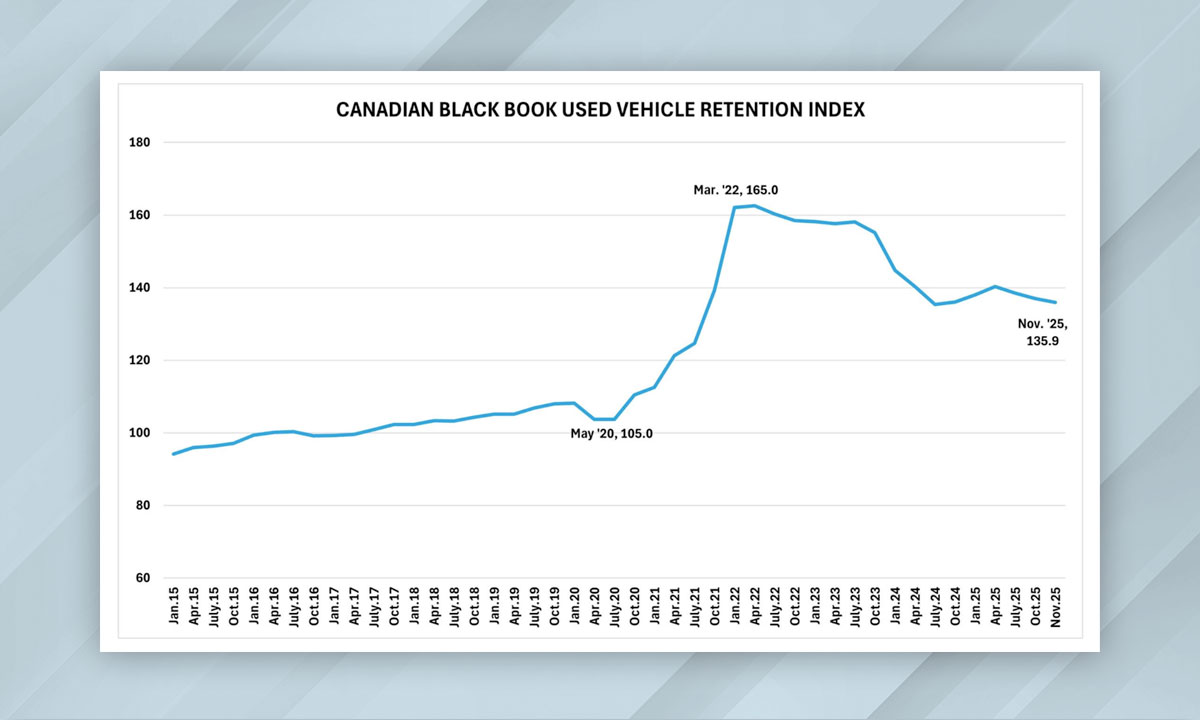
The report also highlighted continued weakness in wholesale vehicle prices, with depreciation increasing for vehicles between two and six years old.
CBB described overall market sentiment as negative, although it noted renewed optimism surrounding new-vehicle sales and greater stability in automotive and economic indicators.
Economic challenges remain, including stalled trade negotiations with the U.S., elevated energy prices and inflationary pressures. Higher bond yields and inflation could also put pressure on the Bank of Canada to raise interest rates.
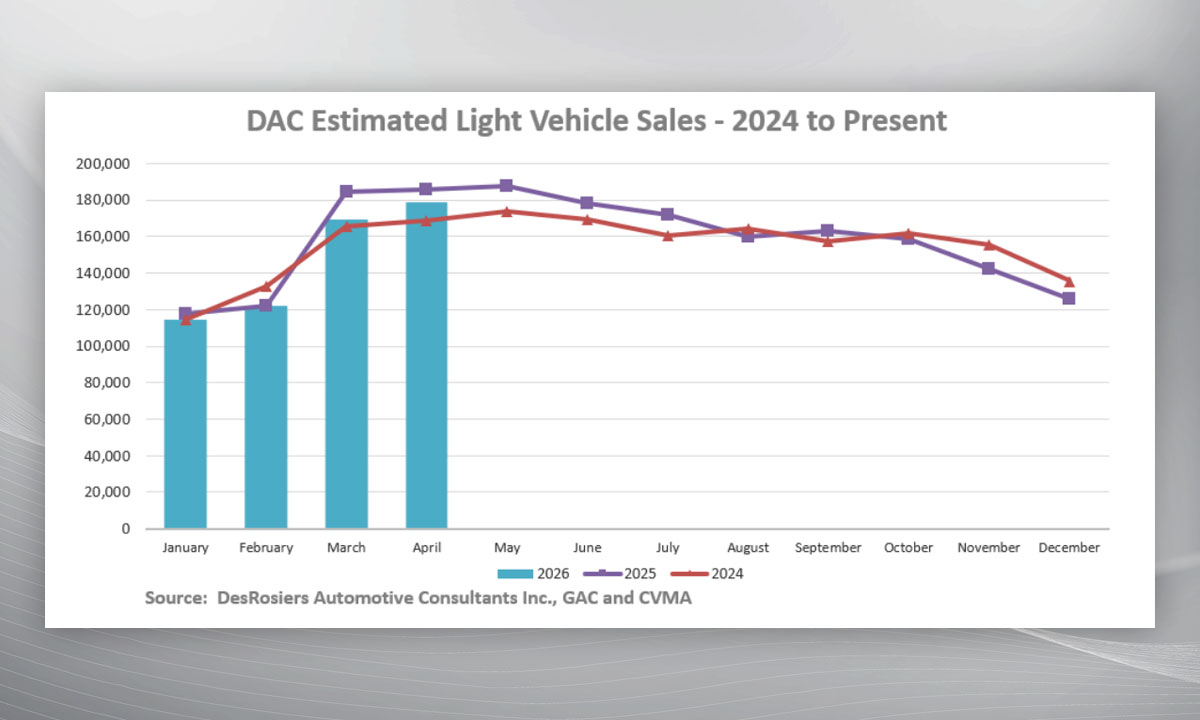
Looking ahead, CBB forecasts Canadian light-duty vehicle sales reaching approximately two million units annually from 2028 through 2030. Used-vehicle supply is also expected to recover gradually, rising from approximately 1.53 million vehicles in 2026 to 1.8 million by 2031.