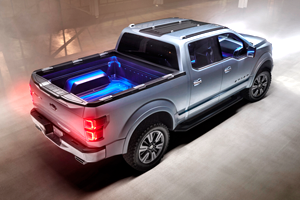
 For dealers, perhaps the idea of dyed-in-the-wool truck customers buying fullsize pickups powered by four-cylinder engines in droves, might seem a stretch at present, yet in order for light trucks to meet upcoming Corporate Average Fuel Economy standards, combined with transmissions that boast nine and even 10 speeds, it might be the only option in the future.
CAFE rules require automakers who sell cars and trucks in the U.S. to achieve a fleet average of 54.5 miles per gallon (4.3L/100 km) by 2025 or risk hefty fines. The Canadian government has said that it is implementing standards that mirror those in the U.S.
Of course the engines in question will be turbocharged and the trucks arguably lighter (rumours continue to surface that the next generation Ford F-150 will be significantly lighter than the current model, with greater use of aluminum and other materials).
Edward Nam, Director of the Environmental Protection Agency’s Light Duty Vehicles and Small Engines Center in Ann Arbor, Michigan, said at the recent Society of Automotive Engineers World Congress that advancements in turbocharging technology will enable much higher pressure systems (up to 348 psi, compared with today’s turbos which run around 260 psi). As a result, much smaller displacement engines will be able to generate comparable power to today’s relatively large capacity six and eight-cylinder motors. “A vehicle like a Ford F-150 or Chevy Silverado could be run with a four-cylinder engine,” Nam said during a recent interview with WardsAuto.
With fullsize trucks representing a significant portion of profits for both OEMs and dealers in this country, the adoption of such technology could go a long way to ensure Canadians continue to enjoy their mass market love affair with pickup trucks, even if both fuel economy standards and gas prices increase significantly.