New anti-spam legislation could cause headaches for dealers if they aren’t aware of the rules and regulations
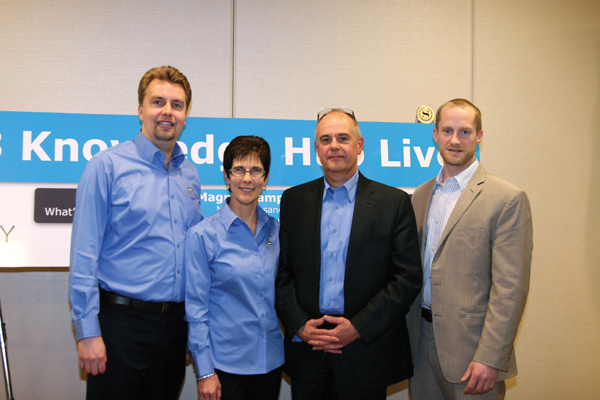
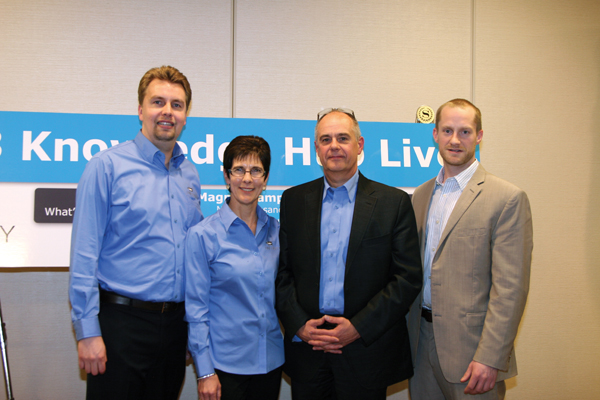
(Left to right) ONE-EIGHTY’s Kristian Nielsen, Kerry Mueller, AJ Mueller and nNovation’s Shaun Brown at the Knowledge Hub Live event
It might not be something that’s on every dealer’s radar but it should be. The Canadian federal government has proposed anti-spam, anti-malware and hacking legislation that could seriously impact businesses in this country, especially if they aren’t prepared for the changes and legal requirements it will bring.
Although the idea of clamping down on spam is a good one in theory, in practice it can potentially generate all kinds of problems. In Ottawa, the Canadian Automobile Dealers Association has been actively working with government to ensure that, when the new regulations are implemented (likely sometime in 2014), dealers get a fair shake.
RESTRICTIVE PROVISIONS
“Most of the business community, including us, agrees that CASL (Canadian Anti-Spam Law) is a move in the right direction,” says CADA’s Director of Public Affairs, Huw Williams. “The issue is that some of the provisions could be very restrictive. For example, one is the prohibition of email referrals to certain individuals such as extended family members or former colleagues or classmates. For example if you’re a salesperson at a dealership, then you could contact your brother about selling a car but you couldn’t do it with your second cousin, uncle or your friend from college. The definition is restrictive and fails to take into account how families or relationships work.”
Williams says there needs to be a common sense approach and he points to the fact that unscrupulous operators will still find a way around the rules, meaning that the legislation could end up harming the very people it was designed to protect. “When the national Do Not Call list was introduced, shady telemarketers still continued with fraudulent practices, they simply ignored the list and found ways to circumvent it. If we aren’t careful with CASL, the rules and penalties could be very cost prohibitive for business, especially for small and medium-sized operations.”
Luckily, with groups like CADA, the Canadian Marketing Association and chambers of commerce taking an active role, spreading the word and getting involved in the consultation process, federal officials are listening. Furthermore, there are companies out there that are introducing programs to help dealers cope with the new regulations and ensure they don’t get caught out and face hefty fines.
One of them is CRM supplier ONE-EIGHTY Corp., which recently put on a Knowledge Hub Live Event in Toronto. At this conference, special guest speaker, Shaun Brown of legal firm nNovation LLP in Ottawa, provided a general overview of CASL and outlined some of the steps dealers need to take to ensure they are in compliance with the law.
CONSENT IS KEY
Brown said there are three primary rules senders need to consider: Consent (whether implied or expressed), identification (which includes a request for consent and in every CEM) and unsubscribe features. When it comes to implied consent, the notion of an existing relationship, whether or not it is business focused is key, with disclosure of information by the recipient, to the sender. “The gold plated approach is to get the consent,” he said. Brown also pointed out that when it comes to third-party referrals, the message needs to identify the person making that referral. Additionally, third party exemption applies only to individuals (not corporations) and sales staff can only send one message at a time.
He also said that when it comes to express consent, the notice must contain clear, prescribed information and needs to identify both the sender and the individual on whose behalf it was sent. Brown also said that no pre-checked boxes can be used with the legislation, the box has to remain unchecked. When it comes to legacy data, he said that dealers need to do their homework, by reconfirming subscribers before sending out new messages. “If you just keep sending messages to existing lists,” there’s a chance that you could be in violation of the law,” says Brown.
ONE-EIGHTY Corp. President, Kerry Muller noted that consent was the key and that while such a form “has always been part of the ONE-EIGHTY Corp. portfolio; until now, there wasn’t much of a need to use it.” She said that having the Knowledge Hub Live event before CASL was implemented provided dealers with the opportunity “to develop a strategy before the rules are enforced.” Definitely a good move.