
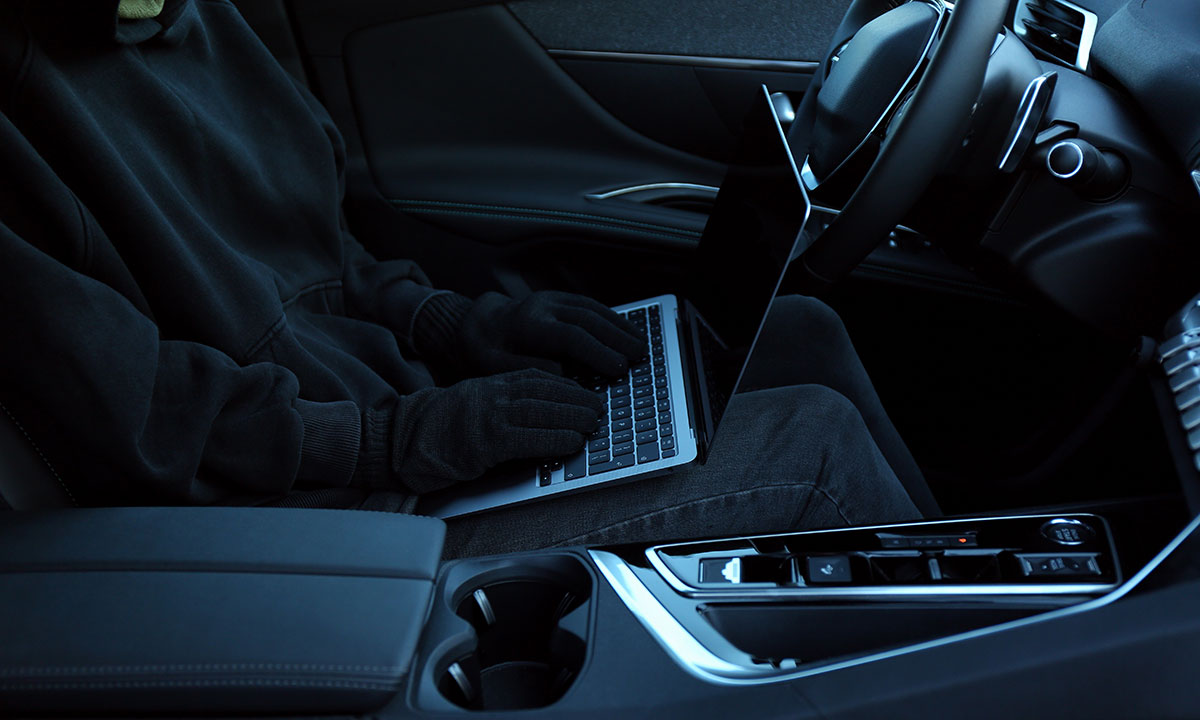
Canada is making measurable progress against vehicle theft, but falling recovery rates and changing criminal tactics mean dealers can’t afford to relax their defences.
Canada’s battle against auto theft appears to be gaining ground.
Vehicle thefts fell another 10.1 per cent nationally during the first half of 2026, continuing a decline that has gathered momentum over the past several years. Police-reported motor vehicle theft incidents had already fallen 16 per cent in both 2024 and 2025.
The latest numbers provide encouraging evidence that increased enforcement, government action and greater attention from the automotive and insurance industries are having an impact.
Fewer vehicles are being stolen, but recovering those that disappear remains a significant challenge.

But they also come with an important caveat for dealers: fewer vehicles are being stolen, but recovering those that disappear remains a significant challenge.
Équité Association reported that 20,759 private passenger vehicles were stolen during the first six months of 2026, compared with 23,093 during the same period a year earlier.
Ontario recorded 8,796 thefts, down 8.4 per cent, while Quebec fell 6.4 per cent to 3,641. Western Canada posted the largest regional improvement, declining 14.3 per cent.
The national recovery rate, however, slipped to 53.9 per cent from 56.5 per cent. Recovery rates were even lower in Ontario, at 44.8 per cent, and Quebec, at 43.9 per cent.
That distinction matters, according to Todd Kendrick, Director of Sales and Products at RGC Automotive, which sells the CarRX by Elo GPS connected vehicle tracking and stolen-vehicle recovery system in Canada.
In an interview with Canadian auto dealer, Kendrick said the improving theft statistics should not create a false sense that the problem has been solved.
“The criminals are evolving faster than anybody else predicted or suspected they would,” he said.
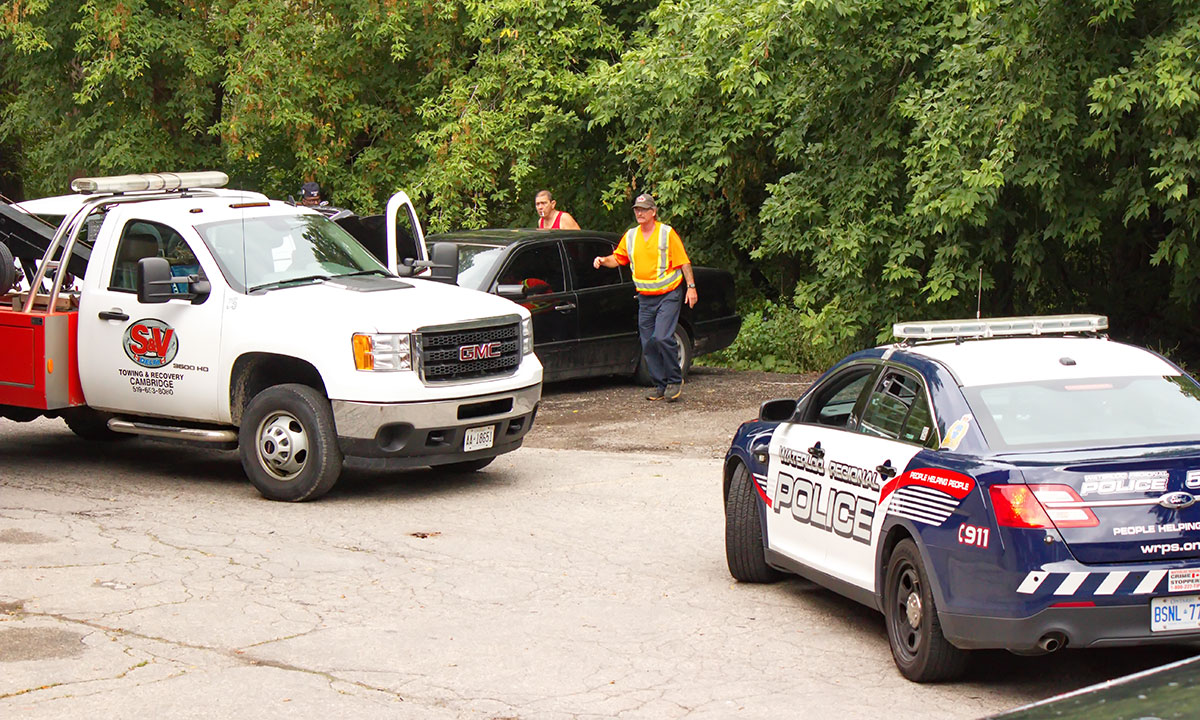
Kendrick said thieves are increasingly adapting to the security technology being installed in vehicles. He cited recent cases involving a Ford Expedition and F-150 in which factory communications hardware had been disconnected, preventing the vehicles’ OEM systems from locating them.
That experience has made Kendrick an advocate for a layered approach to dealership security — combining factory technology with dealership procedures, physical security and an independent recovery system rather than relying on any single line of defence.
“There’s no layer that’s perfect, but together the layers work,” he said. “We teach our dealers to treat it like a medieval castle.”
Governments step up efforts
Governments and law enforcement agencies have also been adding layers.
In a Sept. 21 update on its National Action Plan on Combatting Auto Theft, the federal government pointed to increased detection capabilities at ports and railyards, stronger export controls and investments in theft-prevention technology.
More than 2,800 containers had been scanned using vehicle-detection technology so far in 2026, including through an RCMP-operated mobile X-ray scanner in the Greater Toronto Area.
Kendrick said thieves are increasingly adapting to the security technology being installed in vehicles. He cited recent cases involving a Ford Expedition and F-150 in which factory communications hardware had been disconnected, preventing the vehicles’ OEM systems from locating them.
The Canada Border Services Agency intercepted 1,590 stolen vehicles at ports and railyards during 2025 and another 830 from the beginning of 2026 through the September update.
Ottawa has also provided $1.6 million for three Canadian projects developing vehicle anti-theft technologies and amended the Customs Act to strengthen CBSA authority to examine goods destined for export.
Project NoCargo, an RCMP-led pilot involving several federal agencies and Canadian financial institutions, has meanwhile recovered 392 vehicles valued at approximately $28 million that authorities say were obtained through fraudulent means.
Another potentially significant change is being considered further upstream. The federal government has proposed updating Canadian motor vehicle safety standards to modernize vehicle immobilization requirements and align them with newer international theft-prevention standards.
Équité has repeatedly pushed for that modernization. When releasing its first-half theft figures in August, the association said maintaining the downward trend will require stronger anti-theft requirements built into vehicles.
Dealers remain part of the equation
For dealers, Kendrick said security also requires looking beyond the traditional image of a vehicle being stolen from a consumer’s driveway in Toronto or Montreal.
He said his company is seeing activity in smaller communities, where quieter lots and fewer people around dealerships overnight can create opportunities for thieves.
Criminals are also targeting vehicles earlier in the dealership process.
In one case Kendrick described, a newly delivered vehicle was stolen before its pre-delivery inspection had been completed. The dealership subsequently changed its procedures so recovery devices were installed shortly after vehicles arrived from the transporter.
Speed after a theft can also be crucial.
Kendrick said stolen vehicles have traditionally been left in parking lots or other locations during a “cooling-off” period while thieves determine whether they are being tracked. More recently, his company has located stolen vehicles left on ordinary residential streets.
Those cases suggest dealers may sometimes have only an eight- to 12-hour window before criminals return for a vehicle, he said, putting a premium on rapid detection and communication with police.