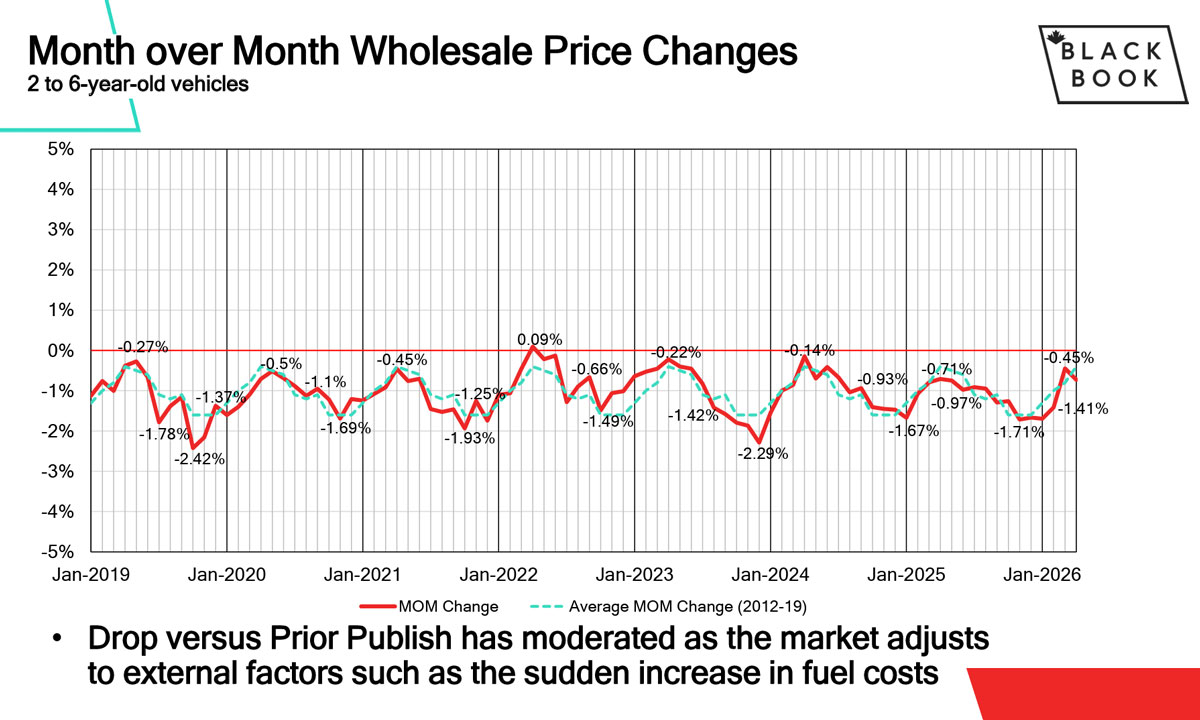
Canadian used vehicle wholesale prices for two- to six-year-old vehicles declined by an average of 0.5 per cent in recent tracking, according to the May Residual Value Newsletter from Canadian Black Book.
The report noted that while values are still trending downward, the rate of decline has slowed compared with earlier periods, suggesting the market is beginning to adjust to external pressures, including a sharp increase in fuel costs.
Economic indicators continue to reflect a mixed environment. Inflation rose to 2.4 per cent in March, up from 1.8 per cent in February, while food prices increased 4.4 per cent year over year. Employment showed modest improvement, with 14,100 jobs added in March, although total job losses for 2026 have reached 94,900, reversing gains seen late last year.
Canada’s trade deficit also widened to $3.65 billion, driven largely by a 21.2 per cent drop in exports of motor vehicles and parts. Meanwhile, retail sales rose 1.1 per cent in January, supported by gains in motor vehicle and parts sales.
The Bank of Canada held its benchmark interest rate at 2.25 per cent and signalled it is prepared to respond if inflation pressures persist.
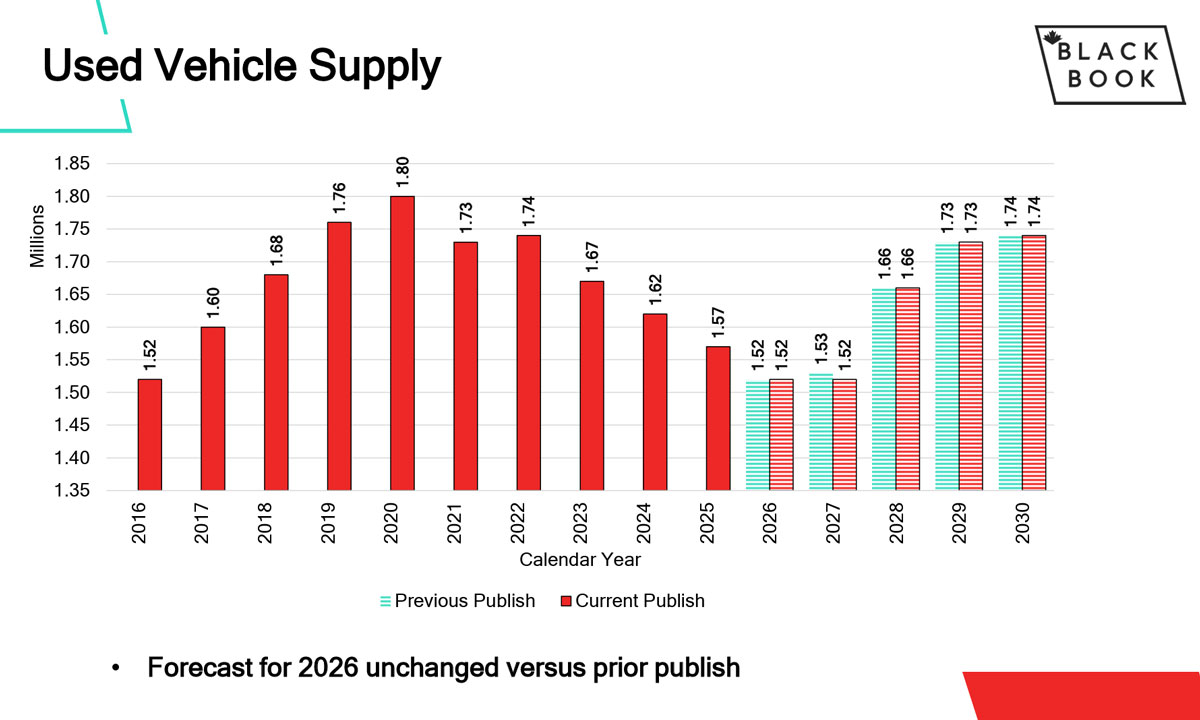
Looking ahead, Canadian Black Book forecasts no change in its 2026 outlook for new vehicle sales or used supply levels, pointing to relative stability in overall volumes. However, retention rates for four-year-old vehicles are expected to decline below pre-pandemic levels within the next four years.
For dealers, slowing declines in wholesale prices may offer some stability in used inventory valuations, but macroeconomic pressures — particularly fuel costs and trade disruptions — remain key risks.