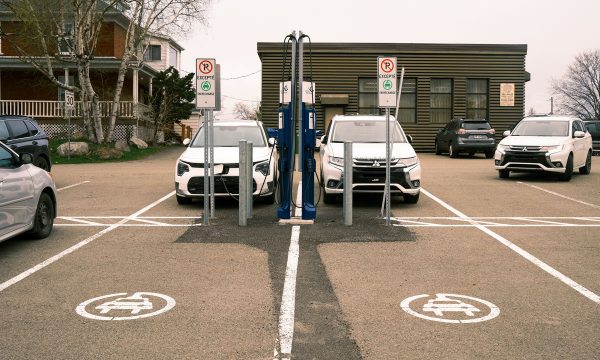
Canada’s new Automotive Strategy moved from framework to funding this week, with Natural Resources Canada announcing more than $97 million for 155 clean transportation projects nationwide.
This week’s announcement follows the federal government’s Feb. 5 launch of its broader Auto Strategy, aimed at protecting the industry while building a globally competitive next-generation vehicle manufacturing base. The latest funding includes $84.4 million for 122 projects to install more than 8,000 electric vehicle chargers through Natural Resources Canada’s Zero Emission Vehicle Infrastructure Program.
“We know range anxiety makes it harder to choose an EV, which is why Canada is investing in our infrastructure — and with new EV chargers opening every month, we are seeing results,” said Tim Hodgson, Minister of Energy and Natural Resources, in a statement.
He added that Canada’s new Auto Strategy, including our National Charging Infrastructure Strategy, “will build on this progress by injecting a major federal investment and catalyzing private investment in EV charging.”
Another $5.7 million in funding will support three Green Freight Program projects, while $7.2 million will fund 30 education and awareness initiatives, including 11 Indigenous-led projects.
Canada has already installed more than 30,000 EV chargers nationwide through the federal infrastructure program. The strategy also includes development of a National Charging Infrastructure Strategy and enhancements to the Canada Infrastructure Bank’s $1.5-billion Charging and Hydrogen Refuelling Infrastructure Initiative. The bank said it is increasing that allocation by an additional $1 billion.
While infrastructure buildout may help with showroom conversion, affordability remains the gating issue. The five-year EV Affordability Program promises incentives of up to $5,000, alongside charging expansion intended to reduce hesitation at the retail level.
The broader question now is pace: whether infrastructure growth, incentives and policy clarity can align with consumer demand and inventory realities on the ground.