The closure of the Strait of Hormuz is exposing how vulnerable fuel prices and global supply chains remain to geopolitical conflict
People could be forgiven for not being familiar with the Strait of Hormuz until the beginning of March.
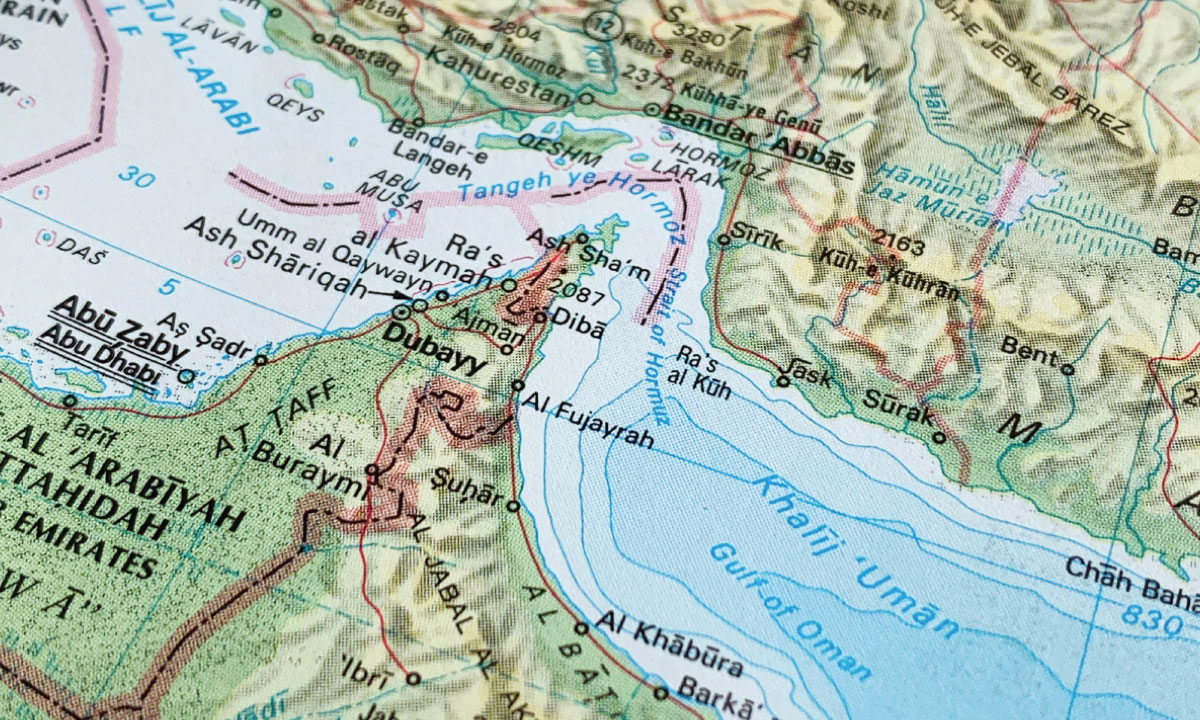
For decades, the Strait of Hormuz has been a pivotal passage for Middle Eastern oil. More than 20 per cent of the world’s oil — approximately 15–20 million barrels per day — flows through that narrow body of water separating the Persian Gulf from the Gulf of Oman in the Arabian Sea.
And it is narrow.
At its tightest point, the strait is just 33 km wide, with two shipping lanes — one in each direction — that are only 3 km wide. The significance of that bottleneck became clear when the United States began bombing Iran and Iran vowed to close the strait through military intervention, using it as leverage as the conflict continues.
We are all paying the price.
Anecdotally, I have seen gasoline rise from about $1.16 per litre locally to roughly $1.59 in a matter of days. The traditional rule of thumb suggests that for every $10 increase in a barrel of oil, gasoline rises by about 25¢ per gallon. Roger McKnight, chief petroleum analyst at En-Pro, has suggested that at $100 per barrel, gasoline prices in Canada could increase by 20¢ per litre.
On March 19, Brent crude hit $119 per barrel before easing back to $112. At the beginning of the year, it was around $60.
But it’s not just the cost of driving that will rise: it’s the cost of everything.
Roughly one-third of the world’s fertilizer and helium also pass through Hormuz. As we learned during COVID-related supply shocks, helium is essential for semiconductor production.
Our global supply chain depends on petrochemical fuels to move goods of all kinds to supermarkets and retailers. If this conflict persists, it will have a significant inflationary impact at a time when Canadians and Americans are already grappling with affordability. Moody’s estimates that every $10 increase in oil adds roughly 0.2 to 0.4 percentage points to consumer price inflation.
It’s also not just oil moving through the Strait of Hormuz.
Liquefied natural gas (LNG) does as well. Qatar, one of the world’s largest LNG producers, ships about 20 per cent of global supply through the strait.
And then there are less obvious commodities.
Roughly one-third of the world’s fertilizer and helium also pass through Hormuz. As we learned during COVID-related supply shocks, helium is essential for semiconductor production. As Yogi Berra might say, it’s déjà vu all over again.
This has real implications for the automotive industry, which is already under pressure. Semiconductor production is being strained by surging demand for AI and data centre infrastructure. With limited global capacity, chipmakers are prioritizing higher-margin chips for AI over lower-margin Dynamic Random Access Memory (DRAM) chips used in vehicles.
According to S&P Global, this could drive automotive chip prices up by 70 to 100 per cent starting in the second quarter. Layer on the potential for helium shortages tied to the Iran conflict, and the industry could be facing another significant disruption.
All of this underscores the urgency of reopening and securing the Strait of Hormuz. Experts suggest this needs to happen in days, not weeks or months, to avoid major global price and supply shocks.
Some argue there is a silver lining and that this situation could accelerate efforts to reduce reliance on such chokepoints. Perhaps. But those shifts take time.
Others suggest higher fuel prices could push more consumers toward electric vehicles. That may happen, but typically it requires sustained price increases over time to materially shift behaviour.
A more immediate factor appears to be policy. The reinstatement of the federal EV incentive, now called the Electric Vehicle Affordability Program, coincided with a notable increase in BEV sales across most provinces in February.
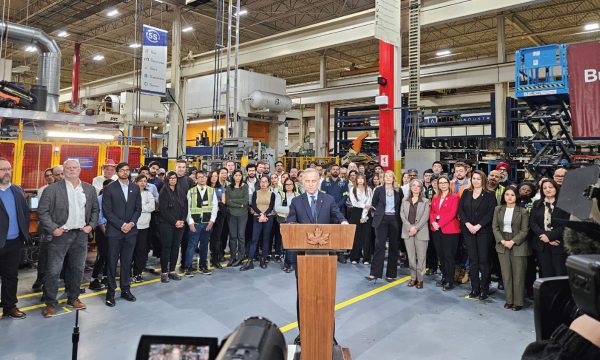
While the program officially launched in March, the Prime Minister signalled on February 5 that it would effectively begin February 16 to prevent consumers from delaying purchases. Whether that momentum continues remains to be seen.
At the end of the day, the already complex and uncertain automotive landscape in 2026 just became more complicated with the U.S./Israeli attack on Iran. Even if the conflict ends soon, it will likely take months to return to anything resembling normal.