With a protectionist U.S. administration on one side and the potential for a second COVID-19 wave on the other, Canada needs to pursue a national strategy to attract global talents and enhance business investment.
Vehicle sales in Canada have made a dazzling recovery from the COVID-19 crisis so far. July marked the third consecutive month of recovery in the market and sales recovered to pre-COVID-19 levels.
With dealerships fully reopened and the pandemic contained in most parts of the country, the rebound in the auto market was mainly driven by pent-up demand as consumers slowly returned to the market.
Overall, the Canadian economy is also recovering at a relatively strong pace. Consumer confidence continues to trend upward and the job market is gradually rebounding as more businesses reopen. Further job gains are forecasted in the next couple of months. However, it is expected that unemployment will remain above the pre-pandemic levels over the next couple of years.
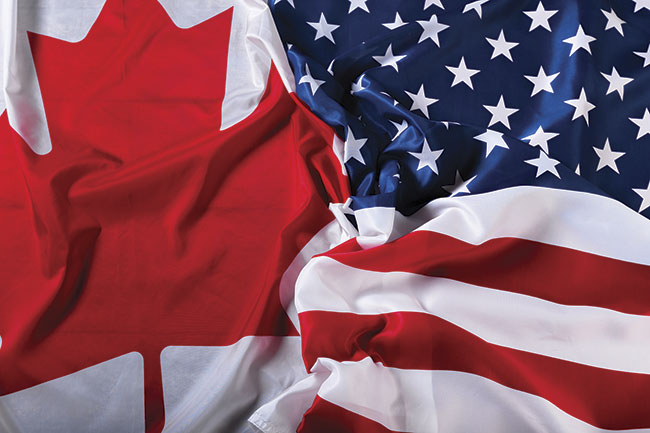
While this is good news for the Canadian economy and the auto sector, the recent re-escalation of trade tensions between Canada and the United States, as well as uncertainty around a potential second wave, will create headwinds to growth.
Just a few weeks after NAFTA 2.0 went into force, U.S. President Donald Trump slapped a 10 per cent national security tariff on Canadian aluminum on the unproven and rather absurd premise that Canada was taking advantage of the U.S. by flooding their market.
The move was perhaps motivated by the desire to appear “tough” ahead of November’s election, when Trump is trailing Joe Biden in the polls and is heavily criticized for his mishandling of the coronavirus crisis. Or maybe he really believes that Canada, one of the United States’ closest allies, in the world, is really the enemy and that for decades we’ve been taking the Americans to the cleaners with unfair trade practices.
Whatever the reason may be, the renewed trade tensions come in an economic environment where both countries are still reeling from the crisis.
Those tariffs and the dollar-for-dollar retaliation from Canada will increase costs in the U.S. and Canada and hurt our integrated economies. Now is not the time to get into a trade dispute with your allies.
That said, we should not expect any better from a president that is growing increasingly frustrated at his terrible record on the pandemic response and his odds at being re-elected this fall.
Trump trade’s narrative has propelled him to the White House and once again he is reverting to his old tactics in an aim to win a second mandate.
We need to face the hard reality that “Trumpism” has brought the United States to an era of protectionism that even more liberal-leaning administrations will have a hard time reversing.
Canada needs to take the appropriate measures in the years and decades to come to diversify our trade, increase our local production, and reduce our reliance on the U.S.
The pandemic has highlighted the fact that Canada needs to build capacity and strengthen its own ability to effectively respond to global crises, whether it would be a pandemic, financial crisis, climate change, or security issues. While global problems require global solutions, COVID-19 has shown that national and local responses remain vital.
Though economic recovery remains fragile and our relationship with our main trading partner is not at its peak, Canada can still come out of this crisis strong. Measures such as the introduction of a sliding scale to the wage subsidy program will facilitate business recovery and strengthen the job market. However, more is to be done.
Many key sectors, including the hospitality, travel, and tourism sectors are still reeling from the crisis. The federal government needs to quickly introduce a robust stimulus plan to support Canadian businesses and protect our economy against protectionism growing around the world.
Beyond the crisis, Canada should pursue the development of a national strategy to attract global talents, take advantage of economic clustering as we have successfully done with the auto sector in Ontario, and most importantly, become a desirable location for business investment.