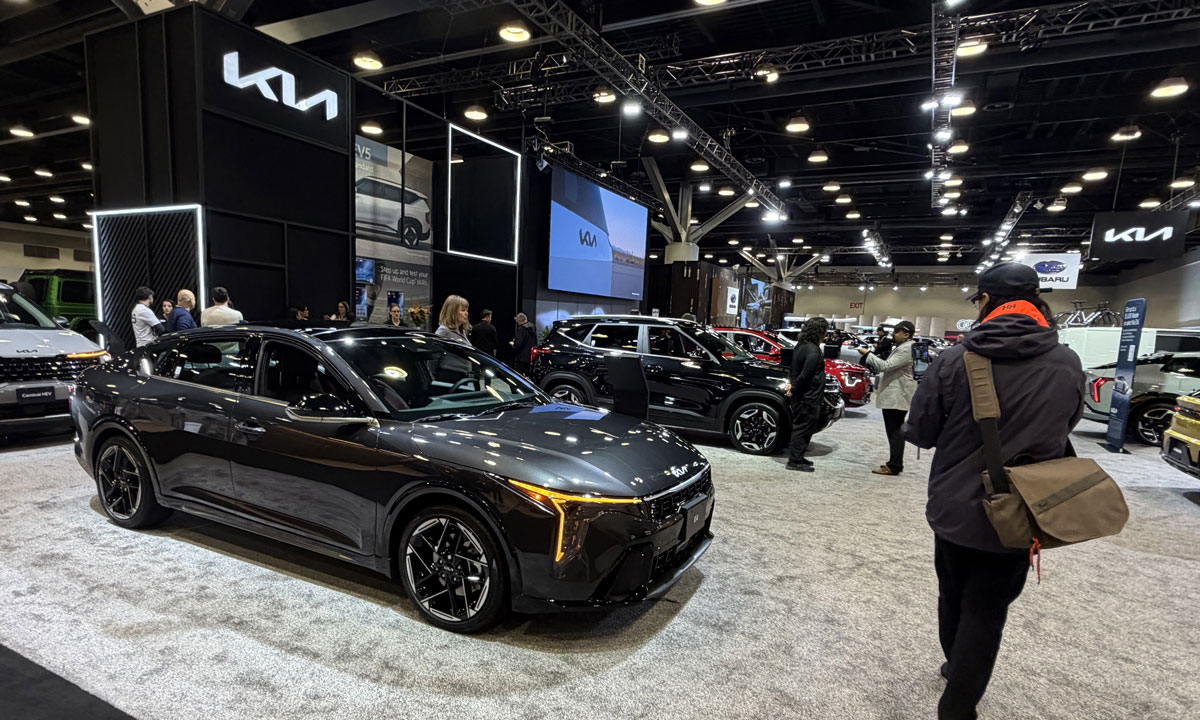
The Vancouver International Auto Show opened March 25 at the Vancouver Convention Centre with a sold-out floor, full OEM participation and strong early attendance, as industry leaders used the media preview to highlight growing concerns around affordability and B.C.’s zero-emission vehicle mandate.
Running through March 29, the 2026 show spans more than 300,000 square feet and features more than 200 vehicles from more than 30 brands and dealer groups, making it one of the largest editions in the event’s more than 100-year history. The show floor is fully sold out, with organizers telling the media there is now a waiting list of exhibitors.
Media preview day opened with coordinated remarks from the heads of Canada’s national auto associations, including the Global Automakers of Canada (GAC), the Canadian Vehicle Manufacturers’ Association (CVMA) and the Canadian Automobile Dealers Association (CADA).
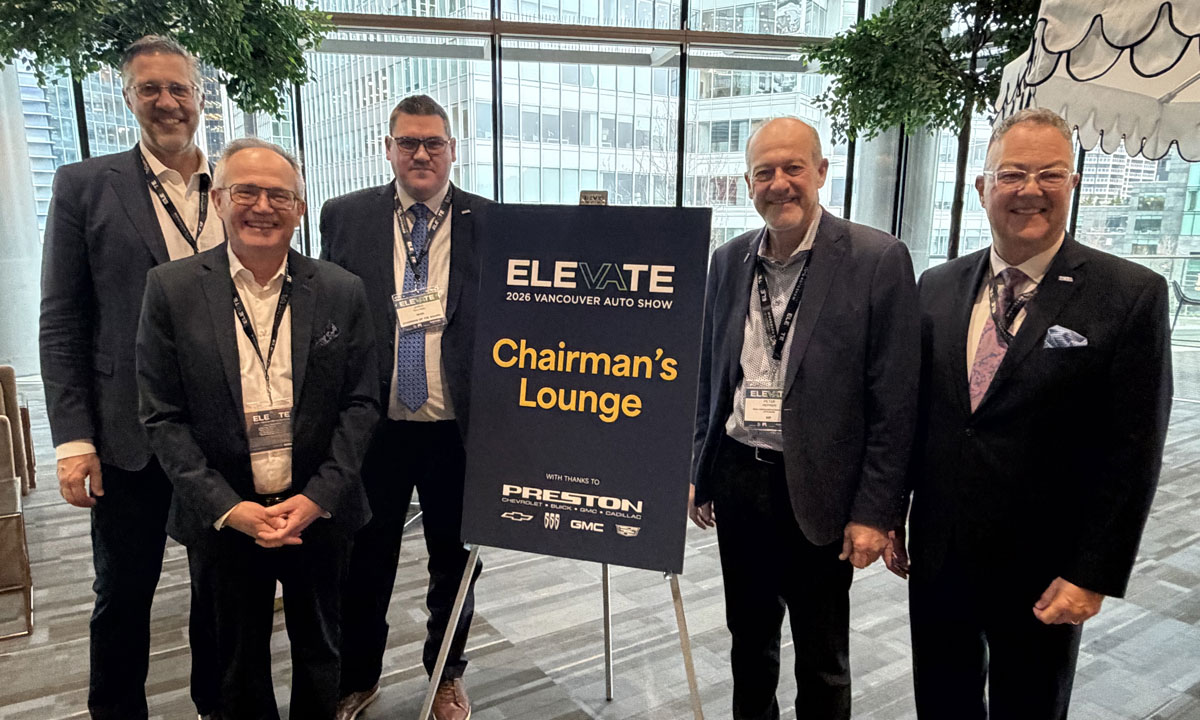
Their message was consistent: while the industry supports emissions reduction, current provincial zero-emission vehicle (ZEV) mandates, particularly in British Columbia, are out of step with market demand and federal policy direction.
David Adams, GAC President and CEO, said the industry is aligned on reducing emissions but raised concerns about “technology-forcing” mandates, advocating instead for a broader greenhouse gas–focused approach that allows manufacturers flexibility in how targets are achieved.
CVMA President Brian Kingston pointed to declining ZEV sales in the province, noting they reached about 18 per cent in 2025, well below mandated targets, and warned that current policy risks limiting vehicle availability and increasing costs for consumers.
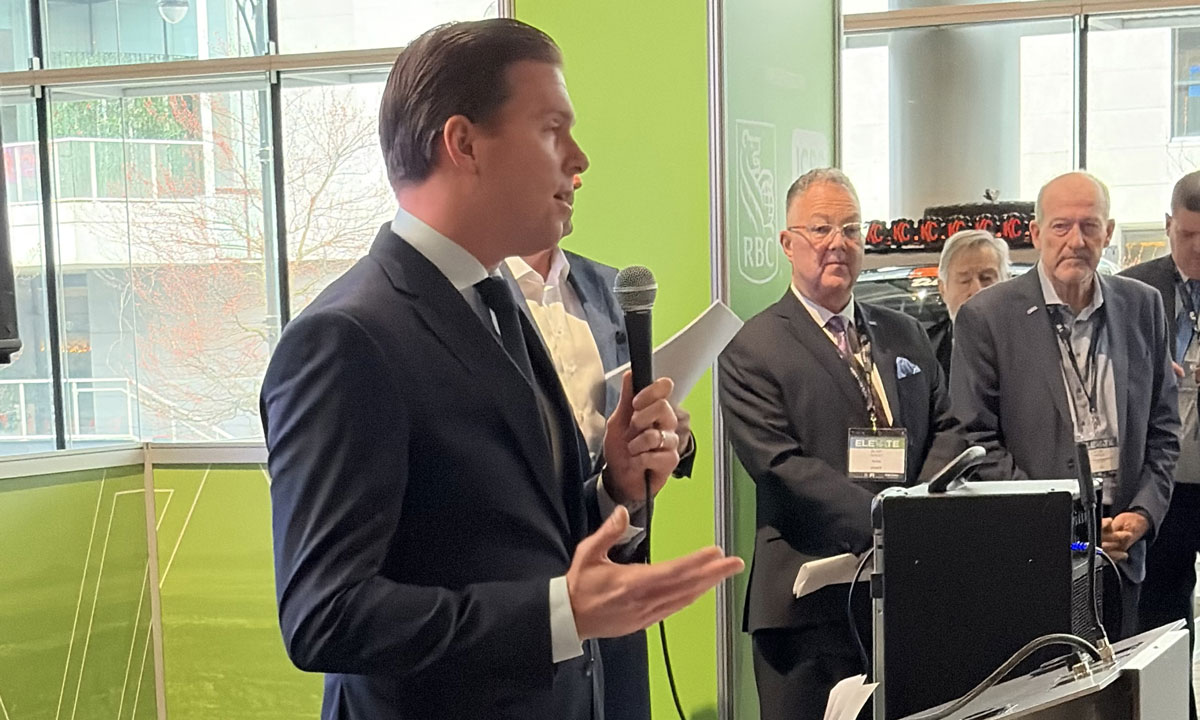
Brian Kingston
From the dealer perspective, CADA’s Chief Economist Charles Bernard emphasized affordability and consumer demand, noting that supply is not the primary issue. Instead, he said, policy misalignment risks increasing prices and limiting product diversity without meaningfully accelerating adoption.
The policy discussion set the tone for a show that, while consumer-facing, remains closely tied to the realities dealers are managing on the ground.
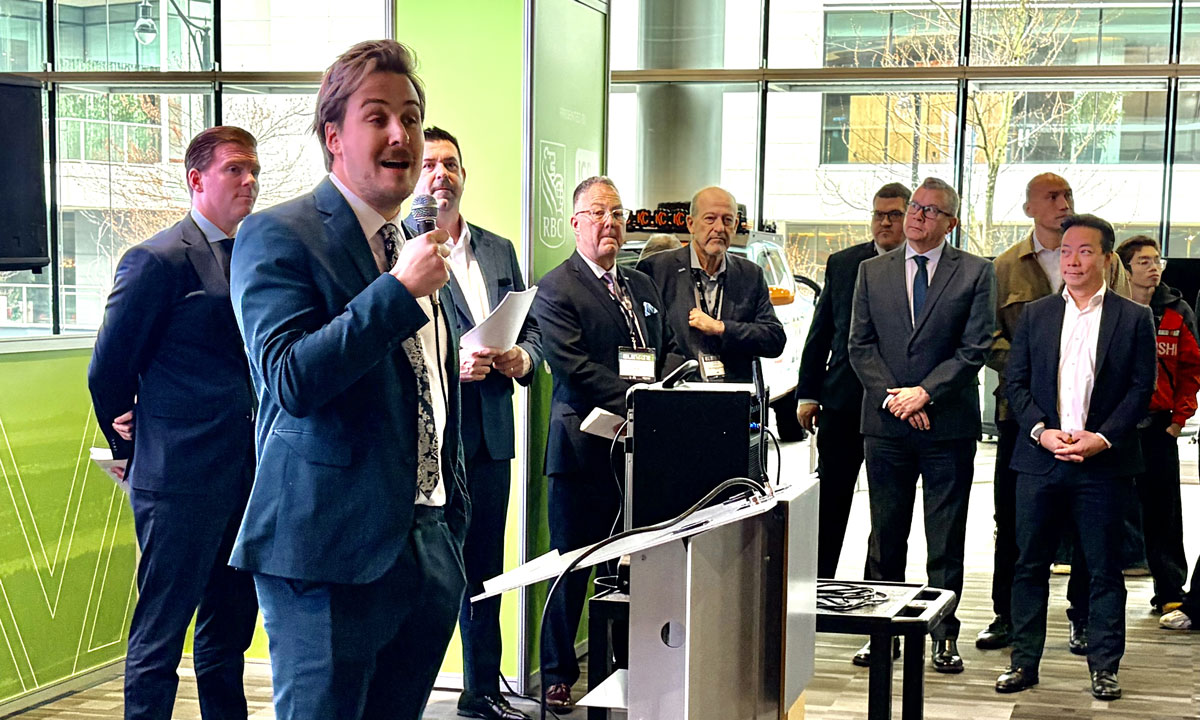
Charles Bernard
Jared Williams, chair of the New Car Dealers Association of B.C. (NCDA), highlighted the role dealerships play in helping consumers navigate the industry’s transition, particularly around electrification. He noted that front-line dealership staff are guiding purchasing decisions while also managing affordability concerns and evolving technology.
He also pointed to workforce development as a growing priority, with dealerships offering skilled career paths in areas such as technician training, sales and management.
NCDA President and CEO Blair Qualey positioned the show as both a consumer experience and an industry platform, reinforcing its importance as a touchpoint between dealers, manufacturers and buyers.

Blair Qualey
From an operational standpoint, organizers stressed that the 2026 event reflects a shift toward a more immersive and interactive experience. Expanded ride-and-drive programs and hands-on exhibits are designed to help consumers move beyond browsing to making informed purchase decisions.
Several major brands have returned to the Vancouver show, including BMW and Audi, while Honda is making its first major consumer auto show appearance in more than a decade through the B.C. Honda Dealers Association, another sign of increased OEM engagement.
Show highlights include Formula 1 display vehicles from Audi and Cadillac, hypercar debuts and concept vehicles, alongside expanded EV and plug-in hybrid test drive programs.
But it was a Hollywood connection that drove some of the most visible early traffic.
Fast & Furious actor Sung Kang, on site to promote his upcoming film Drifter, drew large crowds on opening day. Attendees lined up for hours — many arriving well before doors opened — for a chance to secure a wristband from the Toyota booth and meet the actor.
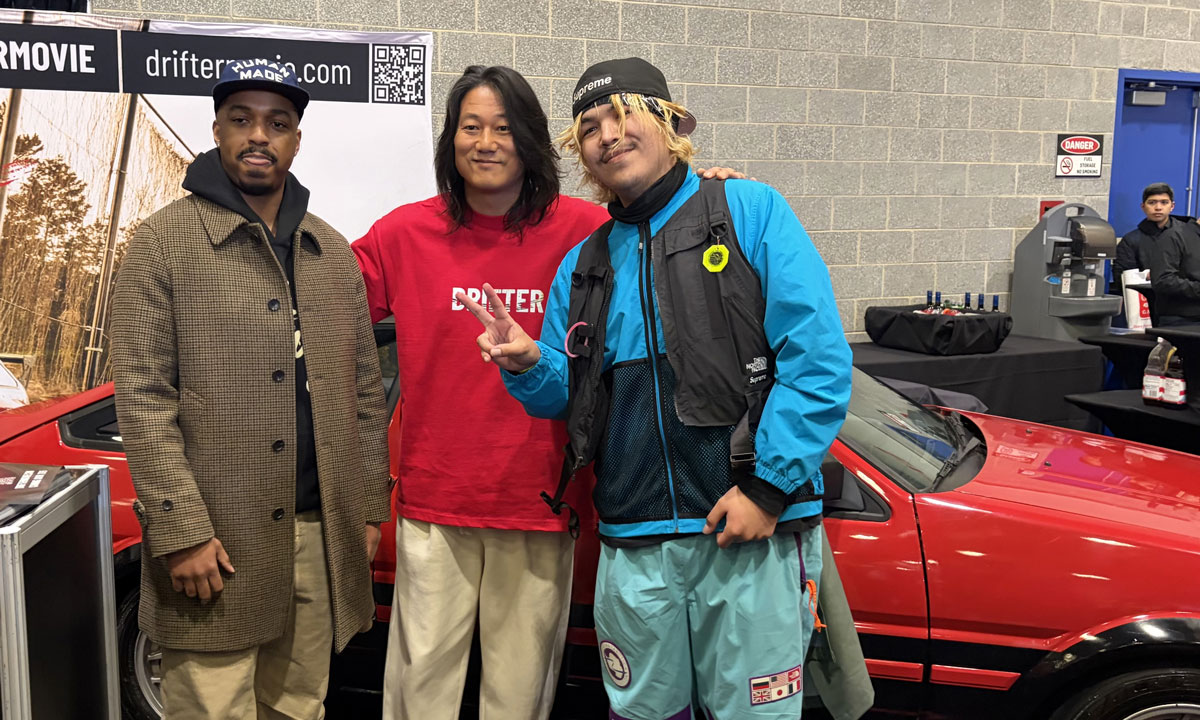
The lineup wrapped around the convention centre, underscoring both the draw of the appearance and the broader appetite for the event. “We were quite frankly stunned,” Qualey said of the turnout, noting the lines continued to grow throughout the morning.
The response highlights a broader strategy for shows like Vancouver: attracting new and younger audiences through experiential elements that extend beyond the traditional product display.
For dealers, that matters. While celebrity appearances may bring consumers in for one reason, the goal is to have them engage with vehicles, brands and retail options once inside.
With more than 170 media outlets attending preview day and strong early attendance, the 2026 Vancouver International Auto Show is off to a solid start.