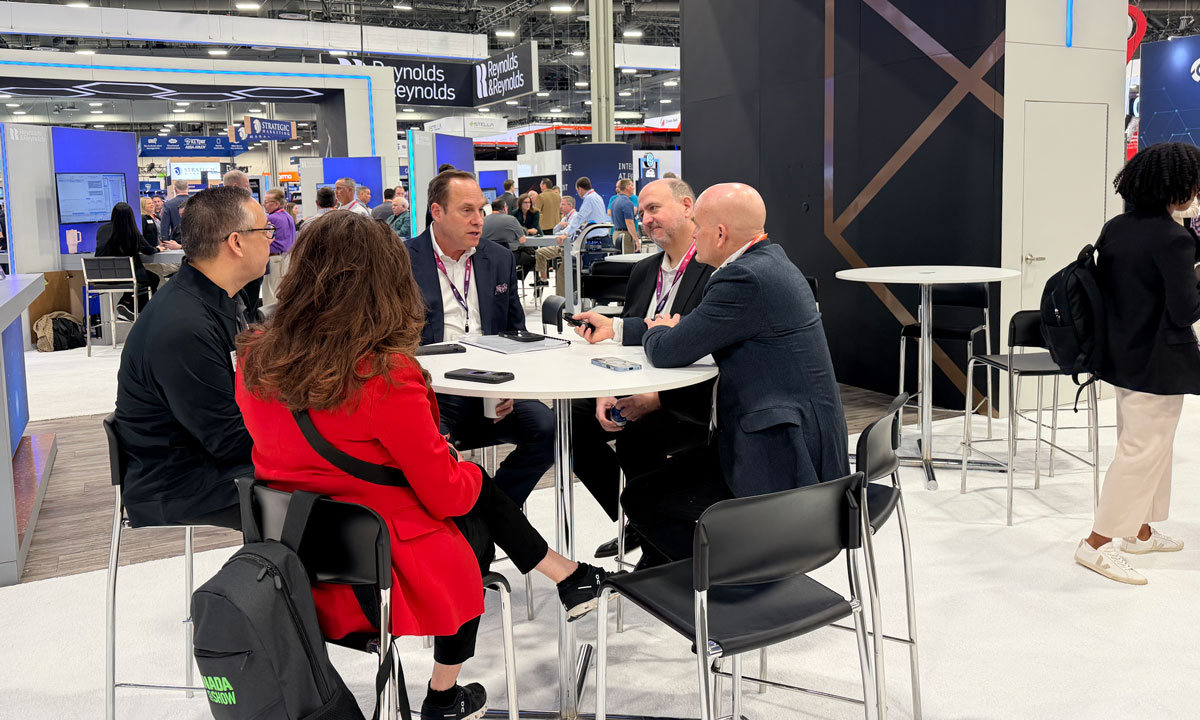
The Canadian auto dealer team logged plenty of kilometres at this year’s NADA Show in Las Vegas, speaking with dealers, suppliers and technology companies on the show floor and at events across the city. Here are condensed takeaways from those conversations — and yes, AI was part of almost every one.
Alphabetical list of interviewees:
Autograph Analytics
CarAi
CARFAX Canada
CDK
DAS Technology
Garantie Avantage Plus
Hunter Engineering
Lyteflo
PBS Systems
Podium
Reynolds & Reynolds
Rhino Linings
Ribit AI
Rousseau Metal
RouteOne
Tekion
Vehlo
Yooz
Autograph Analytics
Steve Barker, Co-Founder & CEO
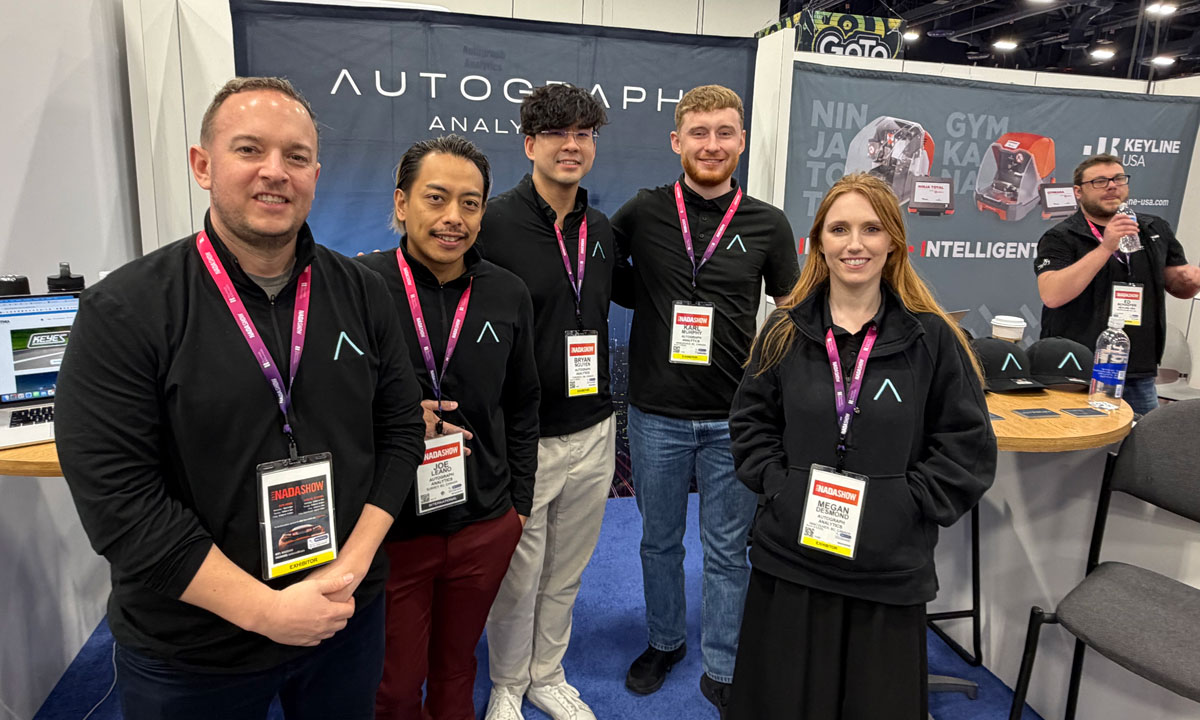
The Autograph Analytics team
Autograph Analytics is positioning itself as a response to one of the dealership industry’s most persistent operational challenges: fragmented data spread across too many disconnected systems. Steve Barker, Co-Founder & CEO, said the platform is designed to consolidate dealership reporting into a single, unified view by pulling together marketing and advertising sources, GA4, CRM and DMS data, inventory performance and other inputs that are often difficult to align in real time. The pitch is especially aimed at dealer groups, where complexity increases quickly once leaders need consistent visibility across multiple rooftops. Barker noted that even well-run organizations can struggle to answer basic performance questions — which marketing is actually driving results, where conversion is slipping, which stores are outperforming, or which vehicles in inventory may need attention. Autograph’s goal is to make those insights easier to access without relying on spreadsheet work or a dedicated analytics team. A core feature is an AI-enabled “data analyst” layer that allows staff to ask plain-language questions and receive immediate answers. Use cases range from GMs identifying marketing waste and lead performance, to used-vehicle managers spotting units that may require pricing or merchandising changes based on VDP behaviour, to executives benchmarking stores and departments against group averages. Barker also emphasized role-based access controls, allowing dealer groups to restrict reporting visibility by store, region or function depending on internal governance needs. The value proposition is speed and prioritization: insights that might take weeks to surface through traditional reporting processes — or never get addressed at all — can be delivered instantly, helping teams move faster, reduce manual analysis and uncover blind spots before they become bigger problems. This was Autograph’s first year exhibiting at NADA, reflecting a growing footprint beyond its Canada-first base and into the U.S. market as dealer groups look for clearer, AI-assisted ways to turn data into decisions.
CarAi
Benjamin Wenger, AI Partnership Manager

Benjamin Wenger, AI Partnership Manager
CarAi is positioning itself as a Canadian-built voice AI designed to solve a very practical dealership problem: missed phone calls and lost opportunities when staff are busy, understaffed or unavailable. Benjamin Wenger, AI Partnership Manager, said the platform answers incoming dealership calls in real time, integrates directly with the dealer’s DMS and CRM, and is able to recognize existing customers, respond to common questions, and book service or sales appointments directly into the dealer’s systems. Rather than presenting itself as a generic call-handling tool, CarAi emphasizes customization at the store level. Each deployment is tailored to a dealership’s rules, capacity and operating style — for example, limiting certain job types on Saturdays, capping the number of diagnostics per day, or adjusting scripts for finance-heavy used-car operations versus fixed-ops-driven stores. Wenger stressed that CarAi is intentionally constrained to the dealership’s workflows and language, avoiding overly open-ended behaviour that can lead to errors or “hallucinations.” The system can operate in multiple languages, but it avoids switching languages mid-call to maintain accuracy and consistency. A key part of CarAi’s positioning is that it does not introduce yet another dashboard for staff to monitor. Wenger argued that dashboard fatigue is one of the industry’s biggest adoption barriers, so CarAi pushes outcomes — call summaries, appointments, customer interactions — back into the systems dealers already use every day. Early results shared at NADA included a B.C. Honda store that deployed the solution and immediately converted previously missed calls into booked service appointments, framing the product as a source of fast, measurable ROI rather than a long-term experiment. Wenger also positioned CarAi as an augmentation tool rather than a pure headcount replacement, particularly for smaller or rural dealerships where hiring and retaining reception or BDC staff is difficult. The goal, he said, is to reduce missed opportunities, improve customer responsiveness, and allow dealership staff to focus on higher-value interactions while the AI handles the volume and consistency that are hardest to maintain manually.
CARFAX Canada
Bryan Bota, Director, Dealer Sales
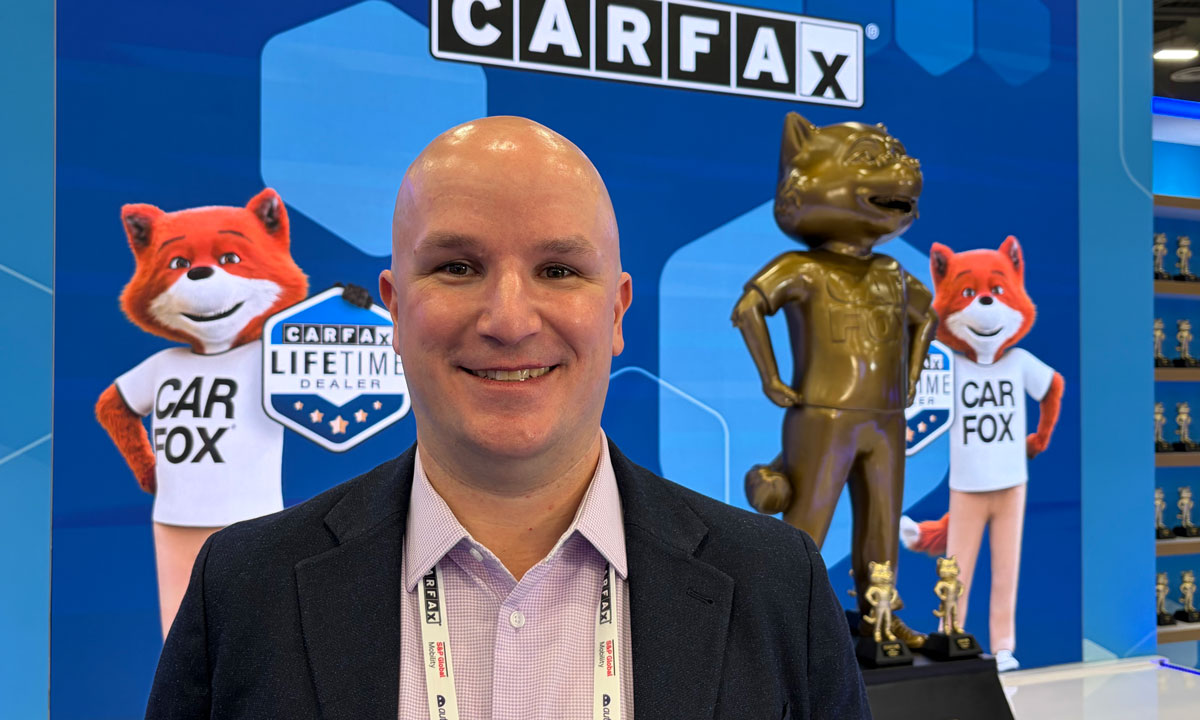
Bryan Bota, Director, Dealer Sales
CARFAX Canada’s message at NADA remained firmly anchored in trust, transparency and risk reduction in used-vehicle retail, while also reflecting how the company’s role continues to expand beyond basic vehicle history reporting. Bryan Bota, Director, Dealer Sales, said CARFAX’s core value proposition for dealers is still about helping create more confident transactions — for both retailers and consumers — by surfacing critical vehicle information early in the buying process. At the same time, valuation and pricing support are becoming increasingly important use cases, particularly as dealers work to appraise trades accurately and justify pricing decisions in conversations with more informed customers. Bota noted that fraud prevention and risk signals are also receiving greater attention, as dealers face more sophisticated attempts at misrepresentation and data manipulation across the used-vehicle lifecycle. From a product strategy standpoint, CARFAX Canada is leaning into deeper collaboration with its U.S. counterparts and related businesses under its new parent company, Mobility Global. The intent, Bota said, is to accelerate product development and share capabilities across markets while maintaining consistency in the dealer-facing experience and the CARFAX brand dealers and consumers already recognize. On the show floor, Bota said conversations reflected a broader sense of vendor fatigue among dealers, who are being presented with more tools and platforms than ever. In that environment, CARFAX is positioning itself not as an add-on, but as foundational infrastructure that fits naturally into dealer workflows. That includes tighter integrations with listing platforms and marketplaces, ensuring CARFAX reports and insights are embedded where consumers are shopping and where dealers are merchandising inventory — rather than living in standalone systems. Bota said dealers are increasingly focused on efficiency and workflow improvement, looking for partners that help them “win” by reducing friction and supporting better decision-making rather than adding complexity. CARFAX’s long-standing presence in the market, combined with its expanded focus on valuation, fraud signals and cross-border collaboration, is intended to reinforce its role as a trusted utility in a crowded and rapidly evolving automotive technology landscape.
CDK
Leigh Ann Conver, Senior Director, Product Marketing
Marleen De Winter, Senior Manager, Product Marketing
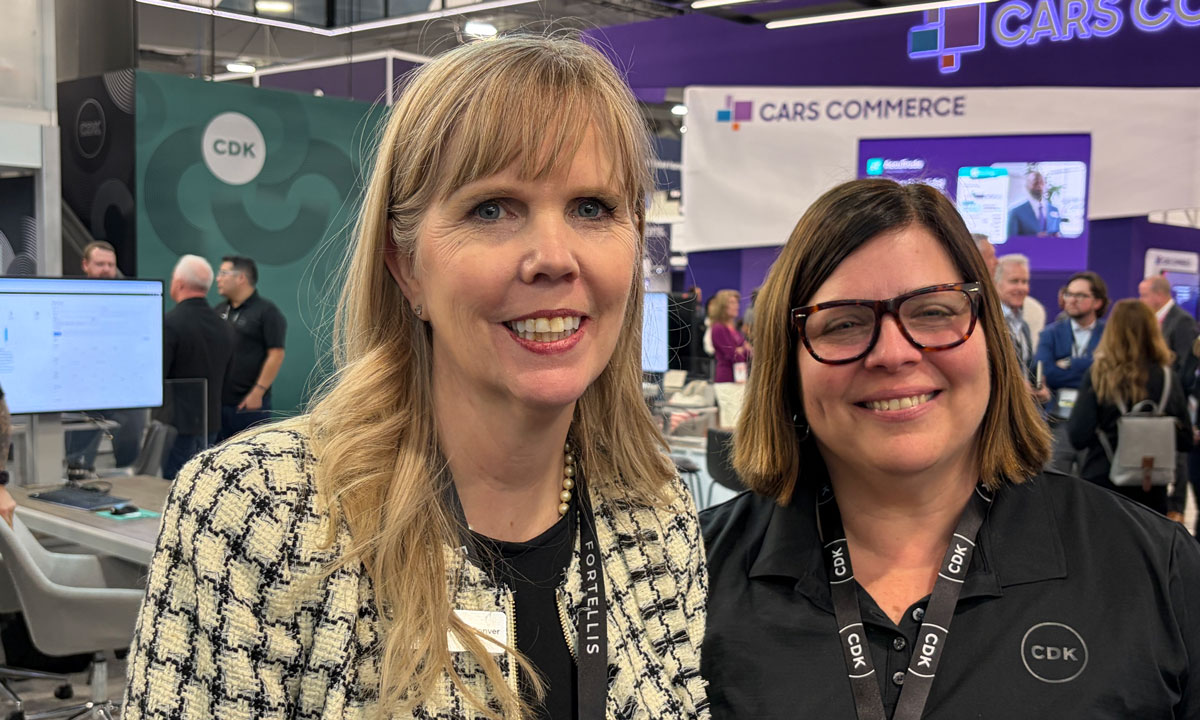
Leigh Ann Conver, Senior Director, Product Marketing, and Marleen De Winter, Senior Manager, Product Marketing
CDK is framing its NADA 2026 strategy around what it calls “hybrid intelligence” — combining AI capabilities with decades of dealership domain expertise and one of the industry’s largest data foundations. Leigh Ann Conver, Senior Director, Product Marketing, said CDK’s approach begins with clean, connected data, then applies automotive-specific knowledge to ensure AI is solving practical dealership problems rather than being layered in as a novelty. A third pillar is adoption: CDK is focused on embedding AI directly into existing dealership workflows so employees don’t have to log into separate tools or learn yet another interface — a critical issue given turnover, training limitations, and the sheer volume of disconnected vendor solutions dealers face. On the product side, CDK is highlighting AIVA, its virtual assistant, and expanding its role beyond customer-facing engagement. AIVA has already supported after-hours lead handling and appointment scheduling in multiple languages, and CDK’s newer push is AIVA for DXP, aimed at the dealer’s internal experience. The goal is to let users pull quick operational answers, such as inventory snapshots, recent gross performance, or other key metrics, directly inside the system without hunting through reports. De Winter also pointed to CDK’s Customer Data Platform work, using identity resolution to unify duplicate customer records across variations in names, phone numbers, and household relationships, then allowing dealers to confirm the correct “primary” record. CDK is layering AI on top of that foundation to surface deeper customer insights, including predictive indicators like customer lifetime value, helping dealers prioritize outreach and marketing investment more effectively. Both executives emphasized that dealer conversations are shifting beyond basic AI curiosity toward more grounded evaluation: does the technology solve a clear operational problem, does it integrate smoothly, and can staff actually use it day to day. They also positioned “agentic AI” as the next evolution — moving beyond generating answers to automating tasks based on dealership rules, with human approval where needed, such as preparing routine accounting actions or streamlining reporting workflows. Across the booth, the recurring theme was simplification: dealers want fewer disconnected solutions, better data flow between departments, and infrastructure that helps employees get answers quickly. CDK said its investments in modernized workflows, AI-enabled support tools, and future-proof platform design are aimed at reducing friction, improving retention, and ensuring dealers can adopt new capabilities without constant system disruption.
DAS Technology
Alexi Venneri, Co-Founder & CEO
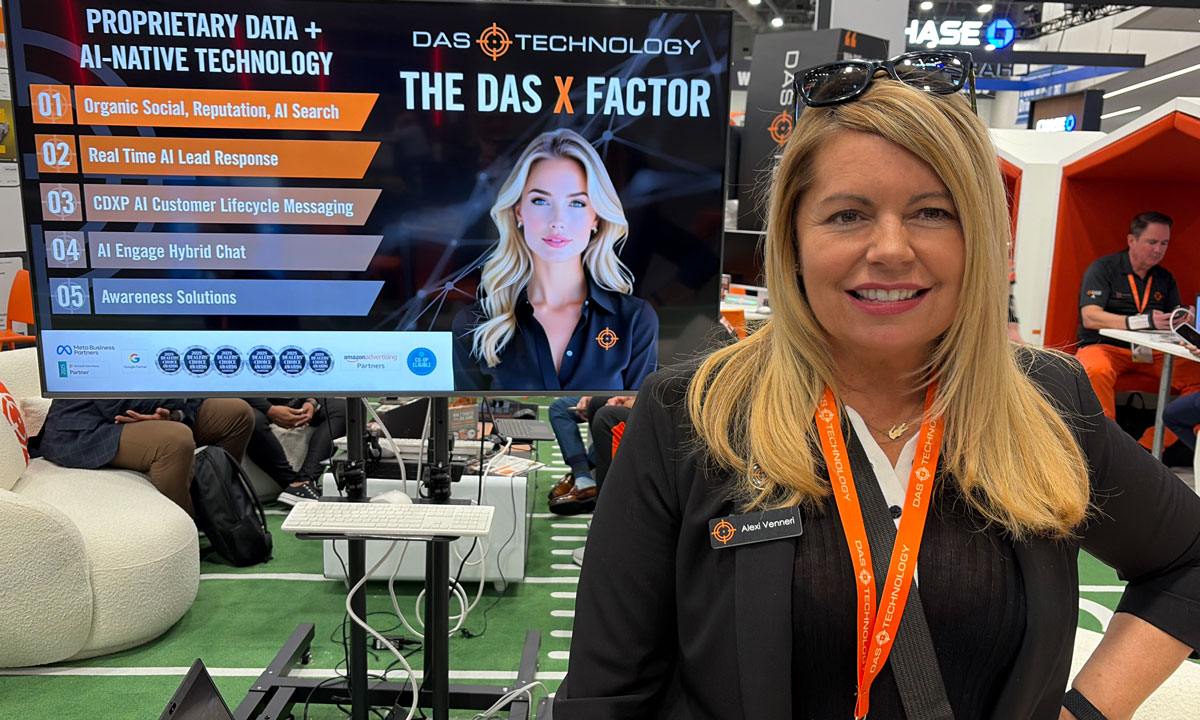
Alexi Venneri, Co-Founder & CEO
DAS Technology is leaning into the idea that modern consumer decision-making, and increasingly AI-driven search, is shaped heavily by reputation signals such as star ratings, review volume, recency, and whether a business responds. Alexi Venneri, Co-Founder & CEO said DAS is positioning its newest releases as tools that strengthen the full customer experience loop, helping dealers close follow-up gaps while generating stronger public trust signals. She noted DAS won NADA’s pitch competition this year and framed the company’s evolution as a long-term effort to map the customer journey, identify where dealers lose customers through missed engagement, and use automation that still feels personal to prevent those drop-offs. The headline new product at the show is an AI agent that delivers personalized post-purchase or post-service video messages using the customer’s name and vehicle information, then routes them either toward private feedback through a survey or toward a public review request. Venneri said the goal is to generate significantly more positive reviews while also capturing structured feedback dealers can act on internally. She also described how survey and review content can be used to create and optimize website pages for AI-powered discovery, positioning this as a way for dealers to improve visibility as more consumers use tools like ChatGPT and other copilots for research. Beyond reputation, DAS is expanding AI inside lead follow-up workflows, including responding when dealership teams miss OEM or internal response-time standards, generating AI-enabled comparisons of similar vehicles, and alerting staff when a specific customer is actively shopping. Venneri highlighted a compliance dimension as well, noting DAS is pitching tools that help dealers monitor how employees use external AI systems, with a focus on protecting customer data and aligning with privacy expectations that can be especially stringent in Canada. She also previewed a consumer-facing initiative called Vehicle SmartScore, described as a monthly statement-style report sent on behalf of the dealer that consolidates service history, recall and warranty status, protection products, accessories, and — where available — payment and equity context into one score-based vehicle care snapshot. Venneri positioned it as a retention tool designed to keep customers tied to the dealer ecosystem and create triggers for future service and trade conversations, with bilingual capability and a Canada launch planned after the initial rollout window.
Garantie Avantage Plus
Eric Lindquist, Senior Executive Vice-President
Eric Lindquist, Senior Executive Vice-President
Garantie Avantage Plus used NADA primarily as a market-scanning and relationship-building opportunity, with Eric Lindquist, Senior Executive Vice-President describing the show as a way to evaluate ideas, technologies, and potential partnerships that could be relevant for the Canadian market — particularly Quebec, which he noted continues to require a more tailored approach for suppliers. He said the event provides valuable context by allowing the company to engage with Canadian dealers, connect with U.S. operators, and assess how operational trends in warranty, claims management, and dealership workflows are evolving across North America. On the show floor, Lindquist said much of the conversation centred on efficiency and process improvement, with a heavy concentration of solutions aimed at streamlining administrative and back-office functions through automation. AI, he noted, is increasingly being positioned as a way to reduce friction in routine tasks while improving response times and consistency, rather than as a wholesale replacement for human decision-making. From Garantie Avantage Plus’ perspective, AI’s most relevant applications are those that support claims administration, enhance communication between internal teams and distribution partners, and improve the accuracy and speed of information flow without compromising oversight. Lindquist emphasized that warranty administration requires a careful balance between automation and control, particularly given the financial and customer-experience implications involved. Verification remains a central theme, including checks tied to vehicle identification data, privacy safeguards, and processes designed to detect duplication, inconsistencies, or anomalies within claims workflows. Those controls, he said, are essential for protecting both dealers and consumers while maintaining trust in the warranty process. Lindquist also noted that NADA serves as an important checkpoint rather than a sales-driven event for Garantie Avantage Plus — a place to validate assumptions, pressure-test new ideas, and ensure that any tools or practices brought back to Canada are grounded in real dealership needs and regulatory realities. Overall, he framed the company’s approach as deliberately measured: adopting technology where it meaningfully improves efficiency and service quality, while maintaining the human oversight and verification required in warranty and claims operations.
Hunter Engineering
Pete Liebetreu, VP, Product Management & Marketing
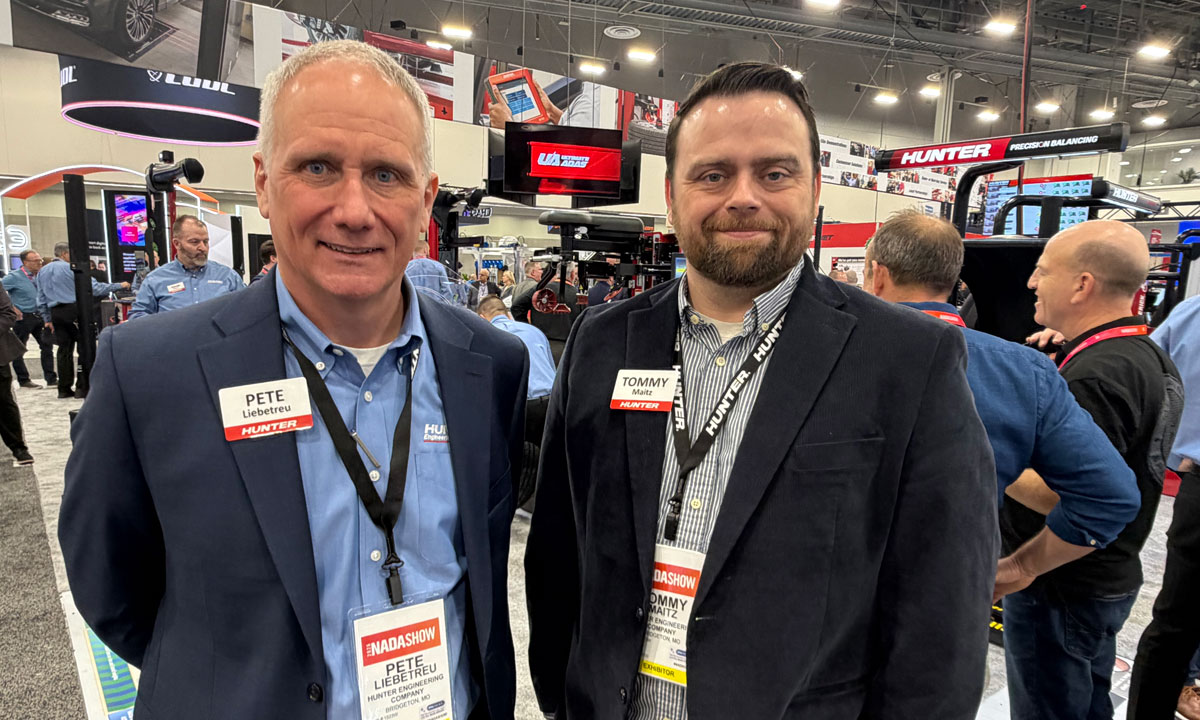
Pete Liebetreu, VP, Product Management & Marketing
Hunter’s NADA message this year centred on practical automation in the service lane, not full robotics, but “walkaway” systems designed to reduce cycle time, technician strain, and skill dependency while improving throughput in fixed operations. Pete Liebetreu, VP, Product Management & Marketing, said Hunter’s focus is on adding autonomy to tasks technicians already perform, allowing equipment to operate independently while staff move on to higher-value work. A major highlight at the booth was Hunter’s Ultimate ADAS calibration system, which automates OEM-defined calibration procedures by eliminating much of the manual measurement and positioning that can introduce error. The system identifies the vehicle through alignment targets, verifies the correct fixtures, guides placement automatically, and produces documented proof that calibrations were completed properly, an increasingly important requirement as ADAS complexity grows. Hunter said expanding OEM approvals remains a key priority, with the system applicable across dealership service departments, collision centres, and dedicated calibration operations. Hunter also showcased its walkaway tire service solutions, pairing an automated tire changer with a balancer capable of road-force testing and autonomous operation. Liebetreu said this setup can reduce a four-tire changeover from roughly 34 minutes to about 18 minutes, addressing technician shortages and fatigue while improving consistency and training outcomes. Importantly, dealers can often add automation through modular upgrades and software enhancements without needing a full shop redesign. Another product drawing strong attention was Inspection Live, Hunter’s next-generation drive-through inspection platform. Now built as a connected IoT system, Inspection Live continuously updates vehicle specifications and licence plate data without relying on traditional software release cycles, helping dealers stay current as vehicle configurations evolve. Hardware improvements also allow multiple inspection lanes to run off a single console, lowering the cost of expanding inspection coverage across busy service drives. Liebetreu said dealers often see immediate ROI by identifying alignment and tire issues early, increasing transparency for customers who can view results as they exit the vehicle, and driving additional service and tire sales through objective, visual inspection data. Overall, Hunter positioned its latest innovations as workflow-focused automation that helps dealers move more vehicles through the shop efficiently while maintaining accuracy, documentation, and customer trust.
Lyteflo
Ryan Osten, Co-Founder & CEO
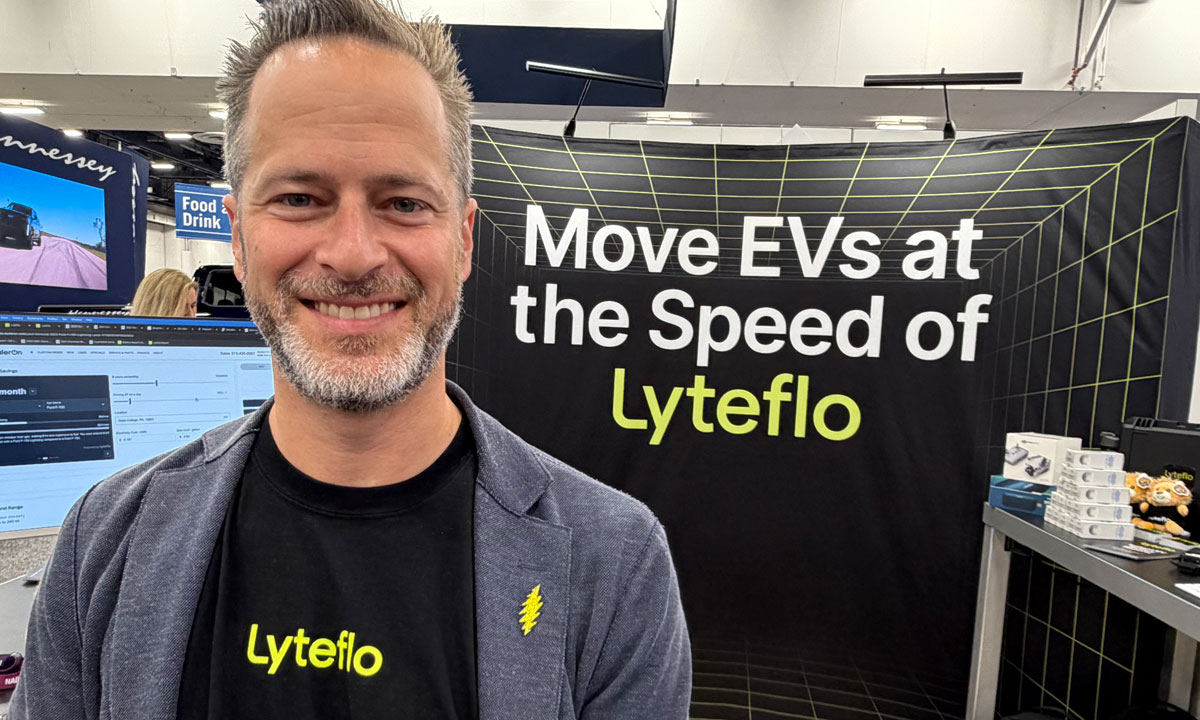
Ryan Osten, Co-Founder & CEO
Lyteflo is positioning itself as an EV revenue platform designed to address a growing disconnect in dealership operations: while EV inventory continues to increase, most retail, marketing, and appraisal tools are still built around internal combustion vehicles. Ryan Osten, Co-Founder & CEO, said Lyteflo’s focus is on helping dealers sell EVs faster and with greater confidence by filling in the information gaps that slow down both online shoppers and in-store sales conversations. On the retail side, Lyteflo enhances vehicle detail pages with EV-specific data consumers actually care about, including real-world driving range, charging times, estimated fuel and maintenance savings compared with gas vehicles, and applicable federal and provincial incentives. Osten noted that many dealership websites still lack this information or present it inconsistently, forcing customers and sales staff to guess or search elsewhere. By surfacing this data directly on listings, Lyteflo aims to improve website conversion while also giving salespeople a practical in-store tool to answer common EV questions and move deals forward more confidently. The second major pillar of the platform focuses on used EVs, where Osten described battery health as “the new odometer.” Lyteflo’s battery health assessment tool plugs directly into a vehicle’s OBD port at the point of appraisal, instantly generating a report that shows degradation levels, cell health, and potential issues. That data allows dealers to price used EVs more accurately, identify recon or warranty needs earlier, and reduce uncertainty in valuation. When results are positive, the battery health report can be published directly on the vehicle’s online listing — similar to a CARFAX report — giving shoppers added confidence and helping standardize transparency in the used EV market. Lyteflo operates out of Toronto and Montreal and works with dealer groups across Canada and the U.S. This was the company’s first year exhibiting at NADA, following the launch of its sales and merchandising tools and the debut of its battery health reports at the show. Osten also pointed to the return of federal EV incentives in Canada as a tailwind for demand, noting that Lyteflo automatically identifies and displays qualifying incentives on listings so dealers and consumers can clearly see eligibility without guesswork.
PBS Systems
Kevin Preston, Vice-President Sales
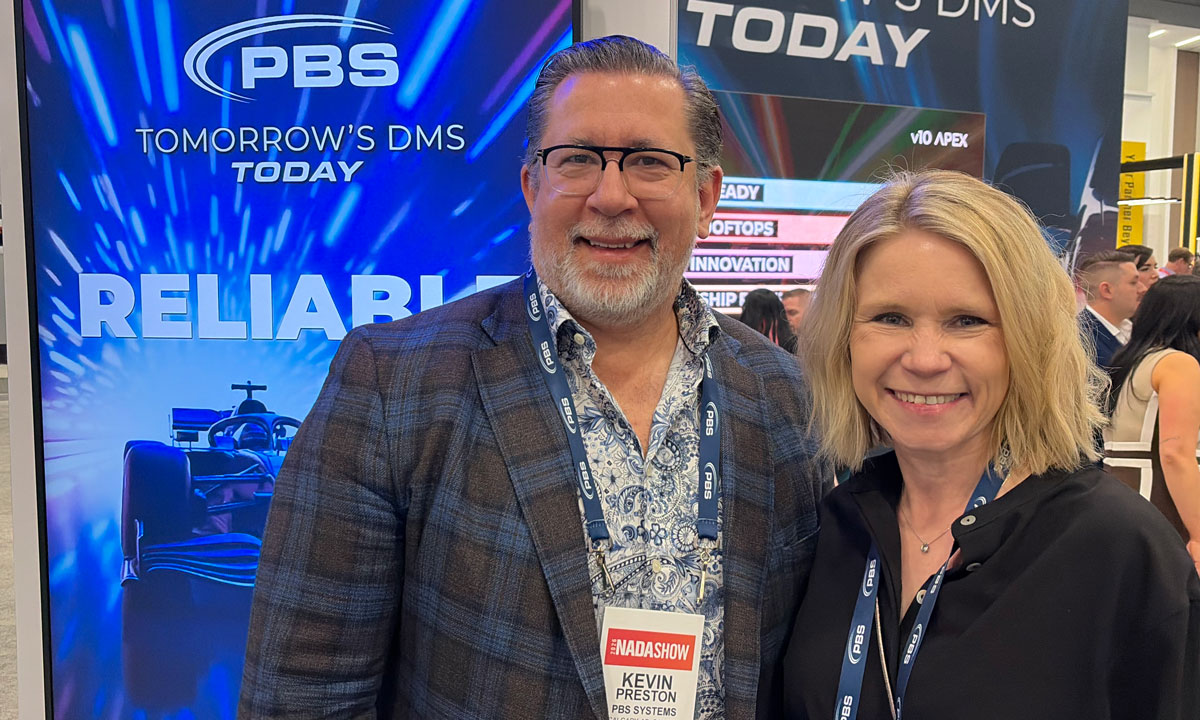
Kevin Preston, Vice-President Sales
PBS Systems used NADA to formally introduce V10 Apex, a rebuilt platform designed to rethink how dealers interact with data, analytics and AI inside the DMS. Kevin Preston, Vice-President Sales, said the core philosophy is to eliminate the traditional “middle layer” where data is extracted from the system, processed by a separate AI engine, and then pushed back in as a report or dashboard. Instead, PBS is engineering outcomes directly within the data itself, so insights surface in real time inside the workflow while staff are actively working with customers. A key differentiator Preston highlighted is PBS’s single-database architecture. Rather than maintaining separate databases for CRM, DMS, analytics and AI tools, PBS operates in one unified data environment, which allows live insights to appear contextually at the point of action. Examples include prompting staff during a transaction when a customer may be more likely to purchase an extended warranty, or flagging when activity in fixed operations should trigger a sales opportunity, without relying on delayed reporting or external add-on platforms. PBS is also moving away from static dashboards toward what it calls “workspaces,” where insights update continuously as data changes and staff engage customers in real time. Preston said dealer response has been strong, particularly among stores that are sceptical of AI hype and looking for practical outcomes rather than buzzwords. Many dealers, he noted, are realizing there is no silver bullet, and are instead prioritizing clean data structures, embedded decision support, and tools that improve performance in the moment. PBS is positioning V10 Apex as an AI-ready platform where many of the outcomes dealers associate with AI are simply built into the software logic itself, rather than treated as an external overlay. The company is rolling out the new experience with hands-on previews and training at the show, encouraging dealers to rethink how they query information and interact with the system. While updates are delivered automatically, PBS is recommending targeted training because the user experience and engagement model represent a shift in how staff navigate the platform. Preston emphasized that PBS has rebuilt its core system from the ground up multiple times over its history, allowing it to remain nimble, modern, and responsive to dealer feedback. The focus, he said, is on real-time, in-context insights that help dealers act immediately, not after the opportunity has passed.
Podium
Liam Golightley, Vice-President, Automotive & Enterprise
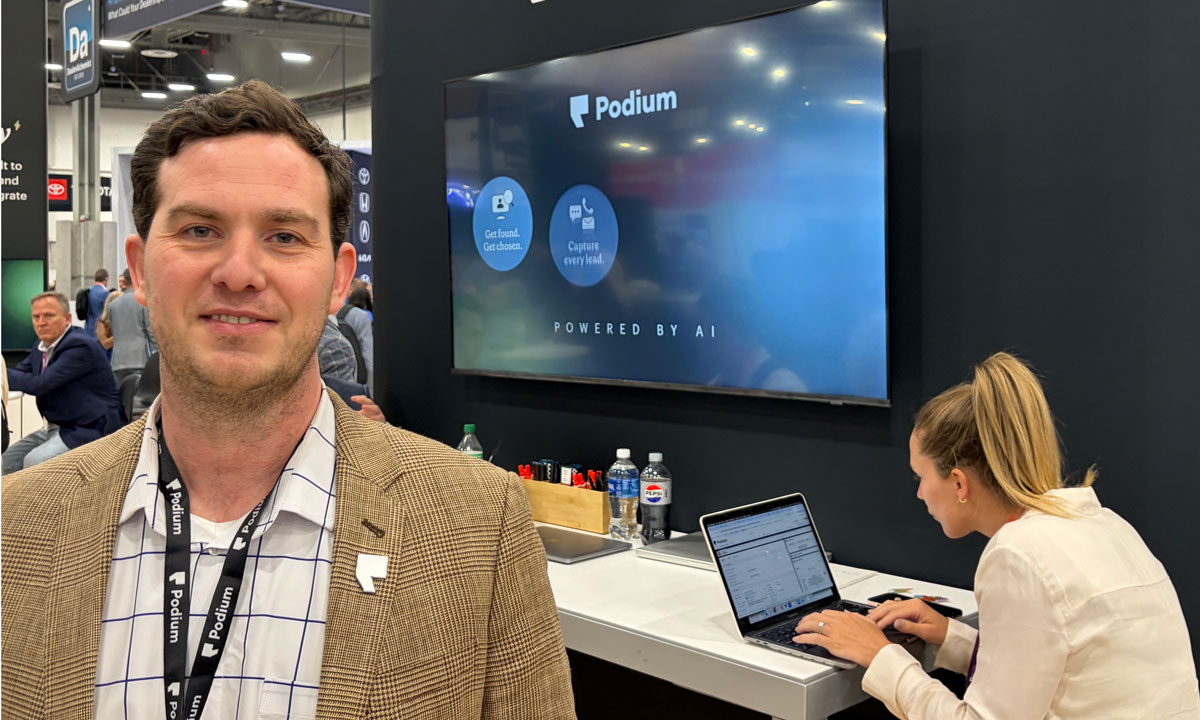
Liam Golightley, Vice-President, Automotive & Enterprise
Podium’s presence at NADA reflected how far the company has evolved from its origins in online reputation management into a broader customer communication platform, and now, increasingly, an AI-driven one. Liam Golightley, Vice-President, Automotive & Enterprise said Podium’s shift happened organically: once dealers began using the platform to manage reviews, customers started replying via text, calling back, and expecting real-time conversations. That demand pushed Podium to expand into full texting, email and phone capabilities, turning it into a central engagement hub for dealerships. The next challenge, he said, was staffing. Dealers liked the increased volume of communication, but many didn’t have enough people to handle it consistently, leading to missed leads and service opportunities. Initially, Podium explored partnerships with external BDCs, but advances in AI opened another path. Over the past two and a half years, Podium has invested heavily in sales, service and communications AI, culminating at this year’s show with the launch of its full voice AI solution. Golightley framed the value proposition simply: dealerships leak opportunities every day. Leads and inquiries fall through the cracks not just in the first hour, but days later when human follow-up drops off. Podium’s AI is designed to ensure those engagements don’t get missed — responding, nurturing and booking appointments before handing customers back to staff for closing and relationship-building. Rather than replacing people, he described the system as a “personal assistant” for every employee, allowing staff to focus on higher-value tasks. Podium’s AI capabilities are increasingly conversational and multilingual, with deployments tailored by geography, store culture and business model. Golightley noted that dealership personas can be customized — from urban to rural markets, or from U.S. regions to Canadian provinces — and that Podium runs extensive A/B testing to improve conversion rates and build what he described as a “superhuman employee” that reflects each dealership’s unique approach. Dealer sentiment around AI has shifted noticeably, he said. Where stores were once hesitant, many now view AI as essential to keeping up, especially as consumers increasingly use AI tools themselves to shop multiple dealerships simultaneously. That urgency has driven strong demand at the show, with Podium expanding its on-site team to keep pace with booth traffic. Golightley emphasized that technology alone isn’t enough: dealers need to rethink workflows and adoption, which is why Podium prioritizes hands-on, in-store implementation. The company sees voice AI as the next major frontier, and dealer interest suggests AI-driven engagement is quickly moving from optional to expected.
Reynolds & Reynolds
Chris Walsh, President & Acting CEO
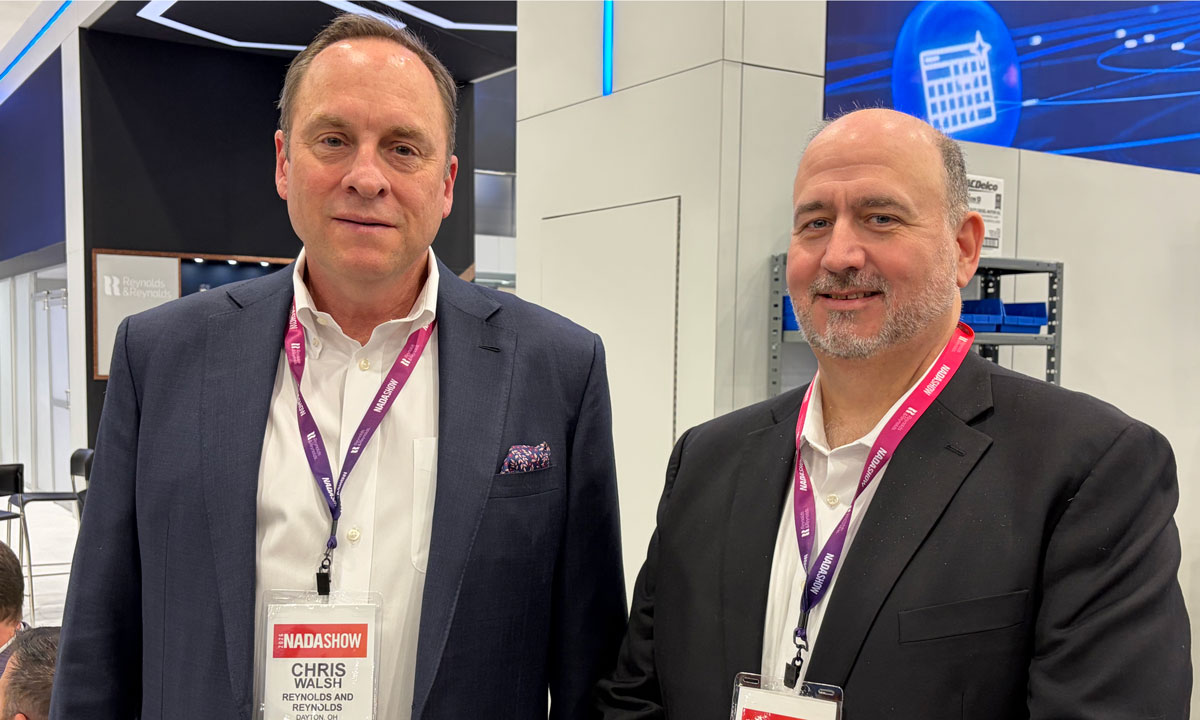
Chris Walsh, President & Acting CEO
Reynolds & Reynolds used NADA to position itself as a practical guide for dealers navigating uneven AI adoption, from stores eager to move quickly to others still defining what AI should realistically do inside a dealership. Chris Walsh, President & Acting CEO, said the company’s approach starts with meeting dealers where they are, identifying specific processes they want to improve, and then embedding AI directly into day-to-day workflows rather than pitching a broad “AI everywhere” strategy. A consistent theme was the importance of clean, unified data. Reynolds pointed to its Spark data layer as foundational, arguing that fragmented or outdated customer and vehicle records can undermine AI-driven outreach and damage customer relationships. Building on that foundation, Reynolds is focused on integrating AI across sales, service, parts and accounting workflows so staff don’t need to log into separate tools or manage disconnected systems. On the product side, Walsh highlighted AI capabilities within FOCUS CRM, including a “CRM advisor” that consolidates ownership, service history, communications and value indicators into a single customer view, helping staff engage more intelligently. In fixed operations, Reynolds is emphasizing appointment AI and call-routing tools that reduce phone-tree friction, streamline booking, and allow customers to self-serve without pulling advisors away from in-lane customers. In used-vehicle operations, Reynolds is applying AI to merchandising, analyzing which descriptions, images and videos drive higher conversion for different vehicle types and adjusting messaging based on first-party website behaviour as shoppers move closer to purchase. Walsh noted that while many of these tools are not “installation heavy,” sustained utilization remains the biggest challenge. To address that, Reynolds has invested in Reynolds Performance Managers (RPMs), including in Canada, who work directly with dealerships to improve adoption, align tools to real-world processes, and identify where additional capabilities can deliver measurable results. Overall, Reynolds framed its NADA message around simplification and embedded intelligence — using AI to reduce friction, improve efficiency, and make dealership staff more effective within the systems they already use.
Rhino Linings
François Rivard, VP Sales & Technical Support
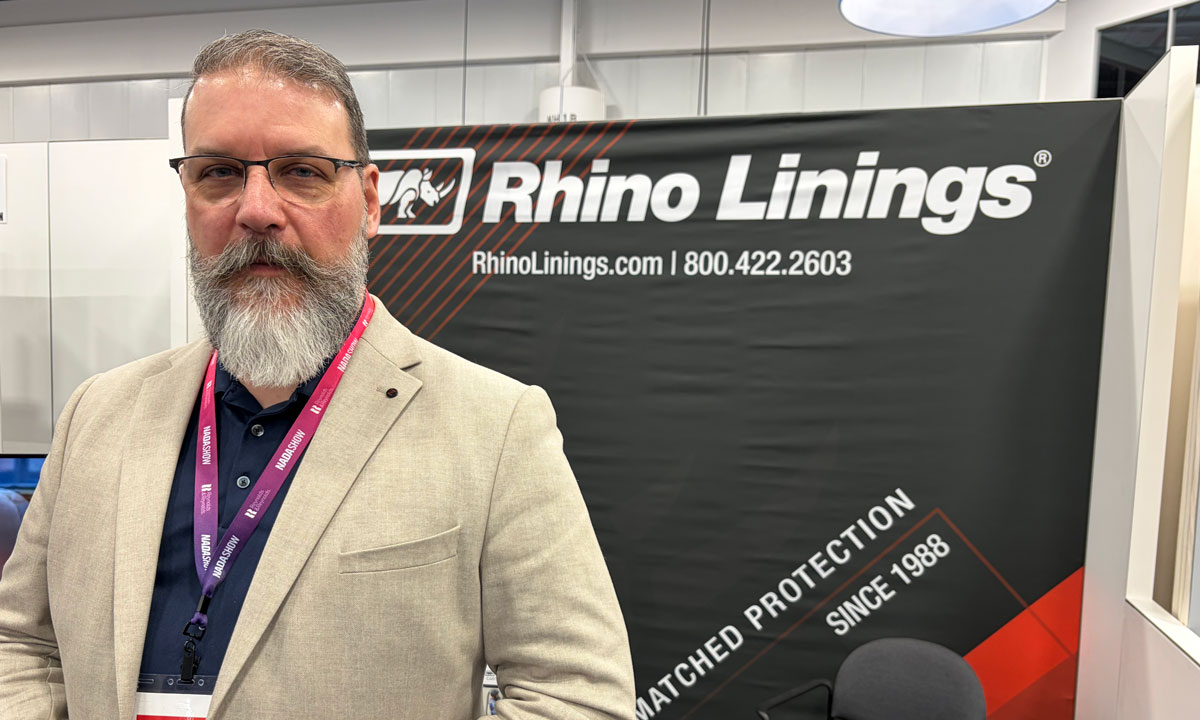
François Rivard, VP Sales & Technical Support
Rhino Linings’ presence at NADA focused on reinforcing long-standing dealer partnerships while showcasing product innovations designed to help dealers improve vehicle appearance, protection and overall profitability. François Rivard, VP Sales & Technical Support, said the company views the show primarily as an opportunity to reconnect with existing customers, many of whom Rhino has worked with for decades, while also demonstrating that, even after more than 40 years in the market, the brand continues to invest heavily in product development and innovation. A key theme at the booth was helping dealers create incremental revenue opportunities, particularly in used-vehicle reconditioning and retail upsells. One of the highlighted products was Rhino Shine, a pigmented top-coat designed to restore and rejuvenate worn or faded spray-in bedliners. Unlike temporary dressings or cosmetic treatments, Rhino Shine is a durable, long-lasting coating that works not only on Rhino liners, but also on factory-installed liners and competitor products. Rivard positioned it as a practical solution for used-car departments looking to improve the appearance of truck beds before resale, as well as a retail product dealers can sell directly to customers. Rhino also showcased newer colour-tintable, UV-resistant coatings that allow dealers to precisely match a vehicle’s paint colour. These coatings can be applied smooth or textured and are intended for exterior protection areas such as bumpers, running boards, door sills and other high-wear surfaces, offering protection without the traditional rough bedliner look. Rivard said this opens the door to more creative and customized applications, including colour-matched partial beds or discreet protection solutions that preserve the vehicle’s original appearance. Unlike franchise-based models, Rhino Linings operates through a partnership approach: dealers are trained and certified to apply the products themselves, with Rhino providing equipment, materials, technical training and ongoing support. Rivard emphasized that training and quality control are critical, given the value of the vehicles involved, and that Rhino will not sell products to dealers who are not properly certified. He said that commitment to consistency and quality helps protect the brand and explains why many Rhino dealer partners have remained with the company for 25 to 30 years.
Ribit AI
Kiera Fogg, Founder & CEO
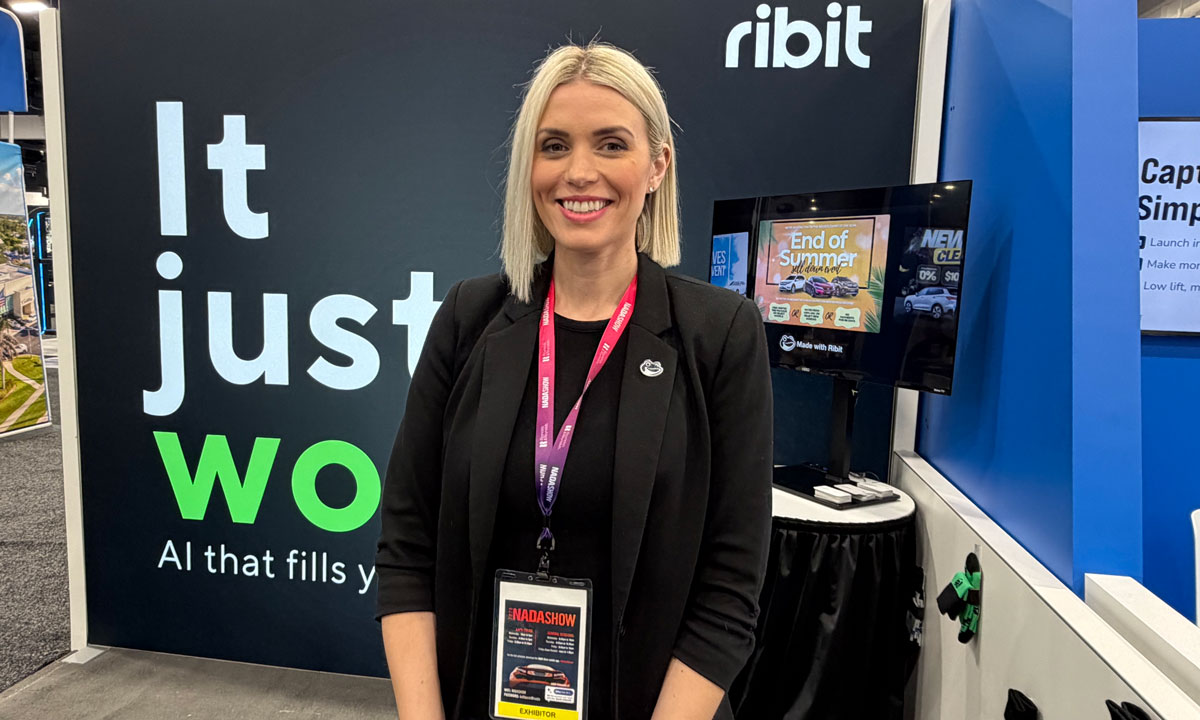
Kiera Fogg, Founder & CEO
Ribit AI came to NADA for the first time as it looks to expand beyond its Canadian dealer base and accelerate growth in the U.S. market. Kiera Fogg, Founder & CEO, said the company was born out of a practical dealership problem: thousands of dollars in lead spend were being wasted because follow-up and engagement weren’t happening consistently. She initially built Ribit as an internal tool while running a digital automotive vendor business, but dealer partners quickly asked to trial it, turning the solution into a standalone platform. Fogg described Ribit’s core focus as reducing fragmentation in dealership marketing and customer communication by helping dealers execute retention and outreach workflows through the customer database they already have. Rather than adding another disconnected automation tool, Ribit ingests the dealer’s existing records, whether 5,000 customers or 100,000, segments them into targeted groups, and delivers ongoing engagement over time. Use cases range from service retention campaigns and equity-based upgrade messaging to re-engaging shoppers who visited the showroom but didn’t purchase within a few days. The platform supports multi-channel outreach including email, SMS, voice, WhatsApp, and optional BDC layering, with the goal of taking marketing execution off the dealer’s plate so staff can stay focused on serving customers on the showroom floor. Fogg emphasized that dealers want to provide a strong customer experience, but the industry’s challenge is less about a lack of automation tools and more about navigating endless disconnected systems that don’t work together. Ribit aims to make outreach feel more personal and less like generic marketing, while ensuring dealers don’t miss opportunities sitting inside their own database. The company’s current client base is strongest in Western Canada, with early traction in markets such as California, Michigan, Florida and Colorado. Fogg said Ribit recently closed its seed round after bootstrapping for several years, and NADA has been valuable not only for dealer conversations but also for forming vendor partnerships that could enhance the platform. Ribit is also preparing a 2.0 release with broader language capability, positioning it for bilingual Canadian use and potential expansion into additional international markets.
Rousseau Metal
Randy Peardon, Director of Sales (Canada)
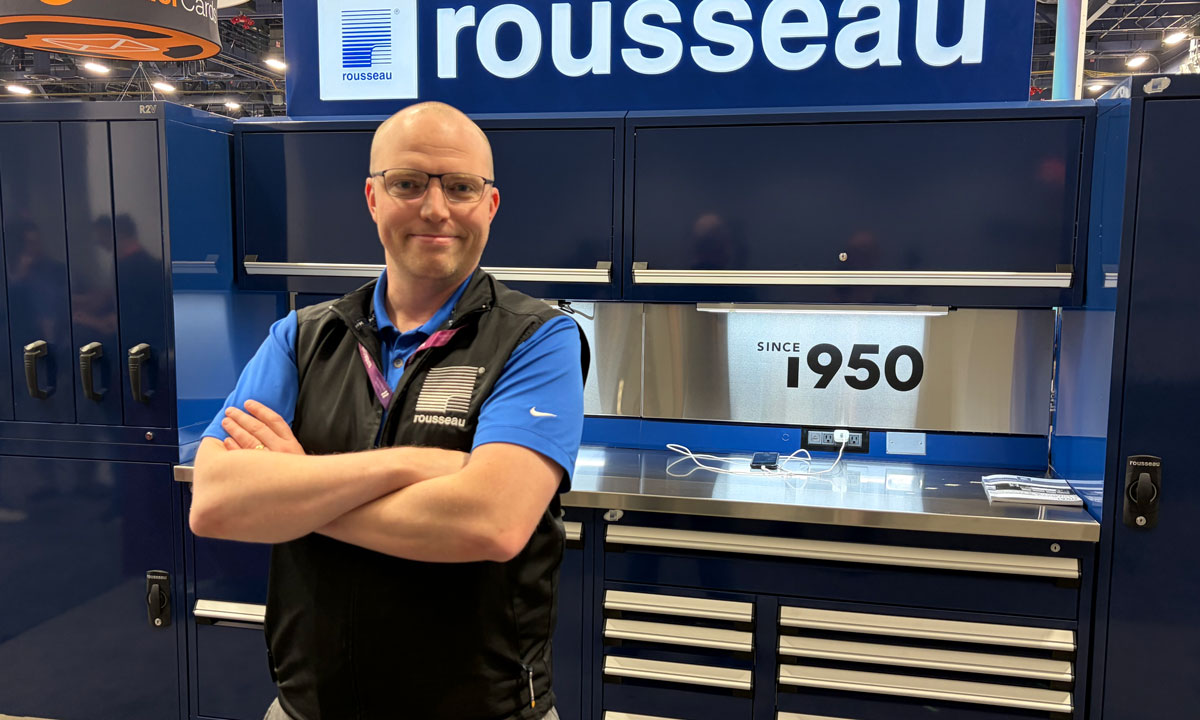
Randy Peardon, Director of Sales (Canada)
Rousseau Metal’s message at NADA centred on the often-overlooked role that physical infrastructure plays in dealership productivity, particularly in fixed operations. Randy Peardon, Director of Sales (Canada), described Rousseau as a third-generation Canadian manufacturer with 75 years of history, focused on modular metal storage, toolboxes and shop-organization systems that help dealers optimize space, workflow and technician efficiency. Rather than positioning its products as high-tech or flashy, Rousseau frames them as “low value, high impact” investments — items that don’t draw attention when they work well, but quickly become friction points when they don’t. Peardon said a technician with the right toolbox and layout can work without interruption, while poor organization leads to wasted motion, frustration and lost productivity throughout the day. A key differentiator for Rousseau is the sheer scale of its modular ecosystem: the company manufactures roughly 120,000 individual components that can be configured into highly customized systems, from toolboxes and shelving to larger service-bay layouts. That modularity allows dealerships to design around their current needs while preserving the ability to reconfigure years later as staffing levels, vehicle mix or service requirements change — without having to rip out and replace entire systems. Peardon said this adaptability reflects a distinctly Canadian approach to innovation, emphasizing flexibility over one-size-fits-all solutions. Rousseau also works closely within OEM dealership standards. Many automakers specify approved colours and design elements in dealership “spec books,” and Rousseau supports those requirements through its powder-coating operations, offering OEM-matched finishes while still allowing customization at the store level. This balance is increasingly important as service departments evolve, particularly with the gradual growth of EV servicing, which introduces new specialty tools and storage needs that vary widely by region and market maturity. Unlike many exhibitors at NADA, Rousseau does not sell directly to dealers. Instead, it operates through a large distribution network of more than 350 partners across North America. At the show, Rousseau’s booth functions as a hub where distributors bring their dealer customers to explore layouts, review new products and discuss service-bay design ideas. Peardon said the show has been busy and productive, reinforcing Rousseau’s long-standing presence at NADA and its role in quietly supporting dealership efficiency behind the scenes, long after the technology conversations have moved on.
RouteOne
Gary Turac, Senior Director, Strategy & Partnerships
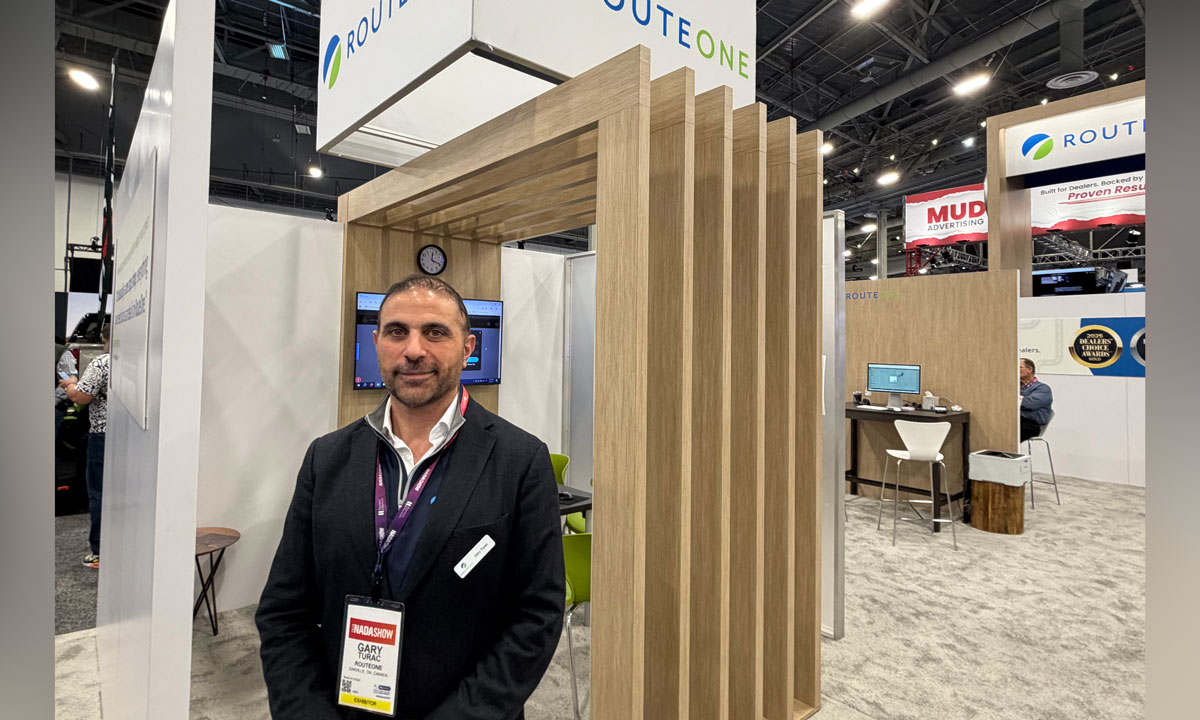
Gary Turac, Senior Director, Strategy & Partnerships
RouteOne’s message at NADA focused on the growing urgency around dealership security, compliance and fraud prevention, with identity verification emerging as one of the most immediate priorities for both dealers and lenders. Gary Turac, Senior Director, Strategy & Partnerships, said fraud has been steadily increasing over the past several years but is now accelerating rapidly, with one OEM citing an increase of nearly 50 per cent in the past year alone. As vehicle prices rise and financial transactions become more complex, the industry is seeing more cases where fraud occurs at the front end of the purchase process, making stronger verification essential. Turac emphasized that while lenders have long had backend safeguards in place, the most critical vulnerability remains at the dealership level, where customer identification is collected, documents are handled and credit applications are initiated. With FINTRAC compliance requirements already in effect and enforcement expected to intensify, lenders are increasingly pushing dealers to adopt consistent ID verification processes, shifting more accountability to the retail point of sale. RouteOne is working with verification partners to embed ID checks directly into the dealership credit workflow, allowing customers to be validated upfront — ideally before a credit application is submitted — reducing wasted time, improving security and limiting exposure for both the dealer and the lender. Turac noted that the goal is not to create disruption in the showroom, but rather to build a secure, integrated process that fits naturally into dealership operations, including test-drive and pre-approval stages when appropriate. Beyond ID verification, RouteOne is also expanding its broader security and compliance tools. Turac highlighted capabilities such as secure digital document storage, clean-desk alternatives, full audit trails, activity alerts and access monitoring designed to protect some of the most sensitive consumer information handled in automotive retail. The company is also focused on safeguards such as user-level reporting and IP-based controls to reduce the risk of unauthorized access. Turac said many dealers only recognize the scale of their vulnerabilities once they walk through a structured compliance review, and RouteOne is increasingly positioning itself not just as a finance platform, but as a partner helping dealers strengthen processes, reduce fraud risk and meet evolving regulatory expectations.
Tekion
Jay Vijayan, Founder & CEO
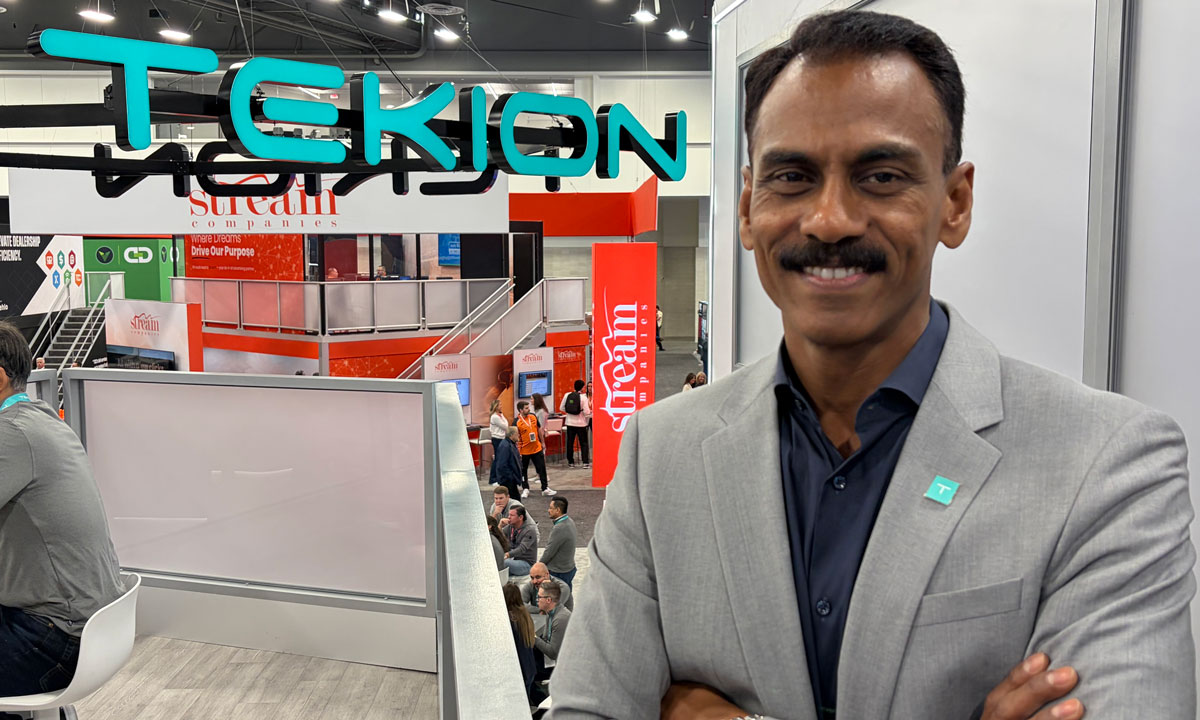
Jay Vijayan, Founder & CEO
Tekion arrived at NADA with a message centred on scale, performance and what it sees as the next phase of AI-native dealership operations. Jay Vijayan, Founder & CEO, said Tekion’s platform now supports more than 3,000 dealer rooftops, with revenue growing roughly 60 per cent year over year, and over 2.4 million vehicles sold and 70 million service transactions processed through the system. He framed that growth as proof that dealers are increasingly willing to modernize core infrastructure when the technology delivers measurable operational gains. A major focus of Tekion’s presence this year was its investment in enterprise-grade AI built directly into the platform rather than layered on top. Vijayan highlighted Tekion’s ISO 42001 certification for responsible AI development, noting it is the only DMS provider to hold the designation — reinforcing its emphasis on data privacy, security and compliance alongside rapid innovation. He also shared benchmarking results suggesting Tekion dealers are outperforming industry averages across key metrics, including fixed-ops dollars per hour, profit per vehicle and F&I performance, positioning AI as a driver of tangible business outcomes rather than a marketing label. Tekion used NADA to introduce several new AI-driven products, including a technician AI assistant designed to help technicians work faster and reduce errors, a voice-enabled service scheduling AI that can handle appointments end-to-end with warm handoffs when needed, and Tekion One (T1), a secure, dealer-specific AI interface that allows staff to query dealership data and potentially execute tasks without exporting information into public AI tools. Vijayan described this as an “embedded intelligence” approach, where AI agents operate across connected workflows rather than in silos, reflecting how customer journeys move between sales, service, parts and accounting. Dealer response at the show, he said, was strong, with heavy traffic at Tekion’s AI demonstrations and growing interest in early-adopter programs. Vijayan noted that conversations have shifted away from whether AI is ready, toward how dealers manage change, onboarding and adoption, a sign that AI has moved quickly from novelty to expectation. He also said Tekion is increasing investment in Canada, building a stronger local team and expanding support as more progressive dealer groups adopt the platform and look for future-proof systems that can evolve rapidly with the industry.
TRADER
Jody Gill, Chief Sales Officer
Jody Gill, Chief Sales Officer
TRADER’s presence at NADA focused on dealer engagement, partner collaboration and continued platform evolution as market conditions shift. Jody Gill, Chief Sales Officer, said the team spent significant time meeting with technology partners, including attribution and AI providers, while also connecting with dealer customers to discuss how the marketplace is adapting to changing inventory dynamics. A key development this year is TRADER’s move into large language model–driven vehicle search, following its global acquisition in late 2024. Gill noted AutoTrader Canada is the first Canadian automotive marketplace to launch an app within ChatGPT, allowing consumers to search for vehicles using natural-language prompts directly inside the interface. The feature reflects changing consumer behaviour around how vehicle shopping begins and leverages TRADER’s expanded development resources to explore new discovery paths while keeping inventory and dealer controls centralized. Dealer conversations at NADA reflected a familiar theme of resilience amid constant change. With inventories rising and vehicles taking longer to sell, retailers are reassessing their marketing efficiency, visibility and merchandising strategies. In response, TRADER is rolling out a broader platform refresh anchored around three pillars. The first is Demand AI, designed to improve marketplace relevance by matching the right vehicle to the right shopper at the right time, with early testing showing stronger engagement and conversion signals. The second pillar is simplified dealer packages, giving retailers clearer options and flexibility to scale visibility based on business goals rather than navigating complex, overlapping products. These packages are already in-market and, according to Gill, have generated favourable early feedback. The third pillar centres on dealer-facing technology, using AI-driven insights to help dealers merchandise, price and manage inventory more effectively while reducing friction in listing workflows. Gill said the overarching goal is to help dealers get vehicles online faster, present them more effectively, and reach in-market shoppers with greater precision. He described the mood at NADA as energetic and pragmatic, with dealers increasingly focused on tools that deliver measurable results in a more competitive and inventory-heavy environment, and with AI now viewed less as an experiment and more as an expected part of the retail and marketing toolkit.
Vehlo
Euwart Burrell Anderson, Executive Vice-President
Euwart Burrell Anderson, Executive Vice-President
Vehlo’s message at NADA centred on consolidation and integration, with Euwart Burrell Anderson, Executive Vice-President, describing the company’s strategy as “better together” — bringing multiple dealership technology brands into a more unified platform experience. Over the past two years, Vehlo has assembled a portfolio that includes DealerPay, Total Customer Connect (TCC), Rapid Recon, Velocity Automotive, Dealerlogix and Text2Drive, with the intent of reducing the burden dealers face in managing dozens of disconnected point solutions. Anderson said the industry’s long-standing friction is that dealerships are forced to log in and out of too many systems, train staff across too many interfaces, and stitch workflows together manually. Vehlo’s goal is to provide “one hand to shake,” where products work as an integrated ecosystem rather than standalone tools. Recent acquisitions have been made strategically, with a focus on fixed operations, payments and the used-vehicle lifecycle — areas where dealers are under pressure to improve efficiency and protect margins. Vehlo now serves roughly 9,000 U.S. dealers and has a growing Canadian footprint of approximately 400 dealerships, driven in part by TCC’s service-lane technology and DealerPay’s payments platform. While much of the Canadian business is managed from the U.S., Anderson said Vehlo maintains regional sales and customer success coverage to support the in-person engagement dealers still value. A major theme in dealer conversations at NADA was profitability beyond new-vehicle sales, especially as affordability challenges push consumers toward used vehicles and inventory ages on lots. Anderson noted that dealerships cannot rely on new-car volume alone to make up margin, which increases the importance of reconditioning speed, merchandising execution and service retention. Vehlo positions its tools as practical operational levers — helping dealers reduce recon cycle times, move vehicles closer to a five-to-seven-day turnaround target, and improve throughput in the departments that drive consistent profit. AI is increasingly embedded across the platform as well, including AI-assisted outbound service engagement through TCC and AI-driven vehicle merchandising via Rapid Recon Engage, allowing vehicles to move from recon-ready to sell-ready in seconds rather than days. Anderson said the company remains selective about future acquisitions, prioritizing assets that fit the ecosystem and deepen its ability to support fixed ops and the broader dealership ownership experience.
Yooz
Laurent Charpentier, CEO
Laurent Charpentier, CEO
Yooz came to NADA with a clear focus on expanding accounts payable automation beyond invoice capture into a more comprehensive, AI-enhanced purchase-to-payment workflow designed for dealership back-office operations. Laurent Charpentier, CEO, said Yooz’s core value proposition remains eliminating manual, paper-based processes that consume time, introduce errors and limit financial visibility, particularly in dealership accounting departments that are already stretched thin. The platform integrates with major dealer DMS systems, including CDK and Tekion, allowing invoices to be captured, coded, approved and paid digitally while maintaining strong controls and auditability. One of Yooz’s newer capabilities gaining attention is automated vendor statement reconciliation, a task many dealership controllers still manage manually by printing statements and matching invoices line by line. Yooz automates that process, reducing reconciliation time and helping accounting teams identify discrepancies faster. Payments are another area of focus, with Yooz handling vendor onboarding and allowing suppliers to select preferred payment methods, while dealers benefit from faster settlement, improved cash-flow visibility, and additional protections around fraud and payment diversion. Charpentier emphasized that Yooz takes a deliberately measured approach to AI, layering it on top of established workflows rather than positioning the system as fully autonomous. That transparency matters in accounting environments, she said, where users need to understand why decisions are made and maintain confidence in controls. Fraud prevention is becoming an increasingly important part of the conversation, as AI-driven document manipulation and impersonation grow more sophisticated. Yooz is using AI to detect altered or fabricated invoices, flag suspicious vendor changes, and identify potential attempts to redirect payments — positioning automation not just as an efficiency tool, but as a defensive one. Yooz continues to see strong growth in Canada, supported in part by its European roots and experience handling complex tax environments, which translates well to Canadian accounting requirements. The company is growing at more than 25 per cent annually and is seeing increasing adoption among Canadian dealers looking to modernize finance operations without adding operational risk. Charpentier said dealer conversations at NADA reflected a growing recognition that back-office automation is no longer optional — especially as fraud risks increase and accounting teams are asked to do more with fewer resources.