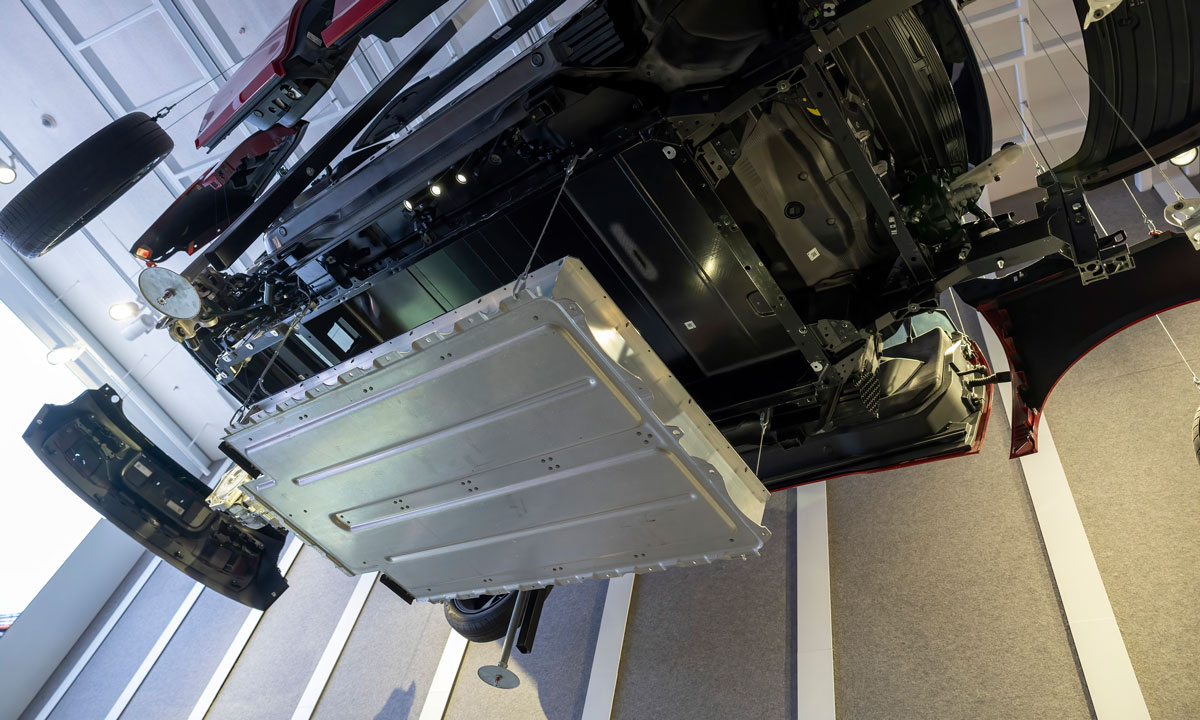
Underside view of an electric vehicle chassis showing the battery pack mounted beneath the floor structure.
Canada and Germany are moving to strengthen cooperation in key industrial sectors, including automotive manufacturing, batteries and next-generation mobility technologies.
Industry Minister Mélanie Joly signed a joint declaration of intent with Germany’s Minister for Economic Affairs and Energy, Katherina Reiche, aimed at expanding collaboration on electric vehicles, hydrogen mobility, critical minerals and advanced manufacturing.
“With this joint declaration, Canada and Germany are strengthening collaboration on EV and hydrogen mobility, advancing battery and critical minerals partnerships, and drawing high-value investment into communities across the country,” said Joly in a statement. “This agreement will help grow and modernize Canada’s auto sector, create good jobs nationwide and reinforce our role as a global leader in next-generation vehicle manufacturing.”
The federal government said the partnership is designed to strengthen supply chains and attract investment into Canada’s auto sector while supporting the transition toward new vehicle technologies.
Canada’s automotive industry remains a major pillar of the national economy. In 2024, the sector contributed $16.8 billion to Canada’s GDP, directly employed more than 125,000 people and supported approximately 427,000 jobs, including through aftermarket services and dealership networks.
Two-way merchandise trade between Canada and Germany reached $30.5 billion in 2024, making Germany Canada’s sixth-largest trading partner and the country’s largest partner within the European Union.
“The geopolitical challenges of our time demand a strategic response,” Katherina Reiche said in a statement. “Together, we are sending out a clear signal — for economic security, for technological sovereignty and for a fresh stimulus to growth on both sides of the Atlantic.”